The last corks of Cadaqués have been sold today amidst tears, hugs and smiles
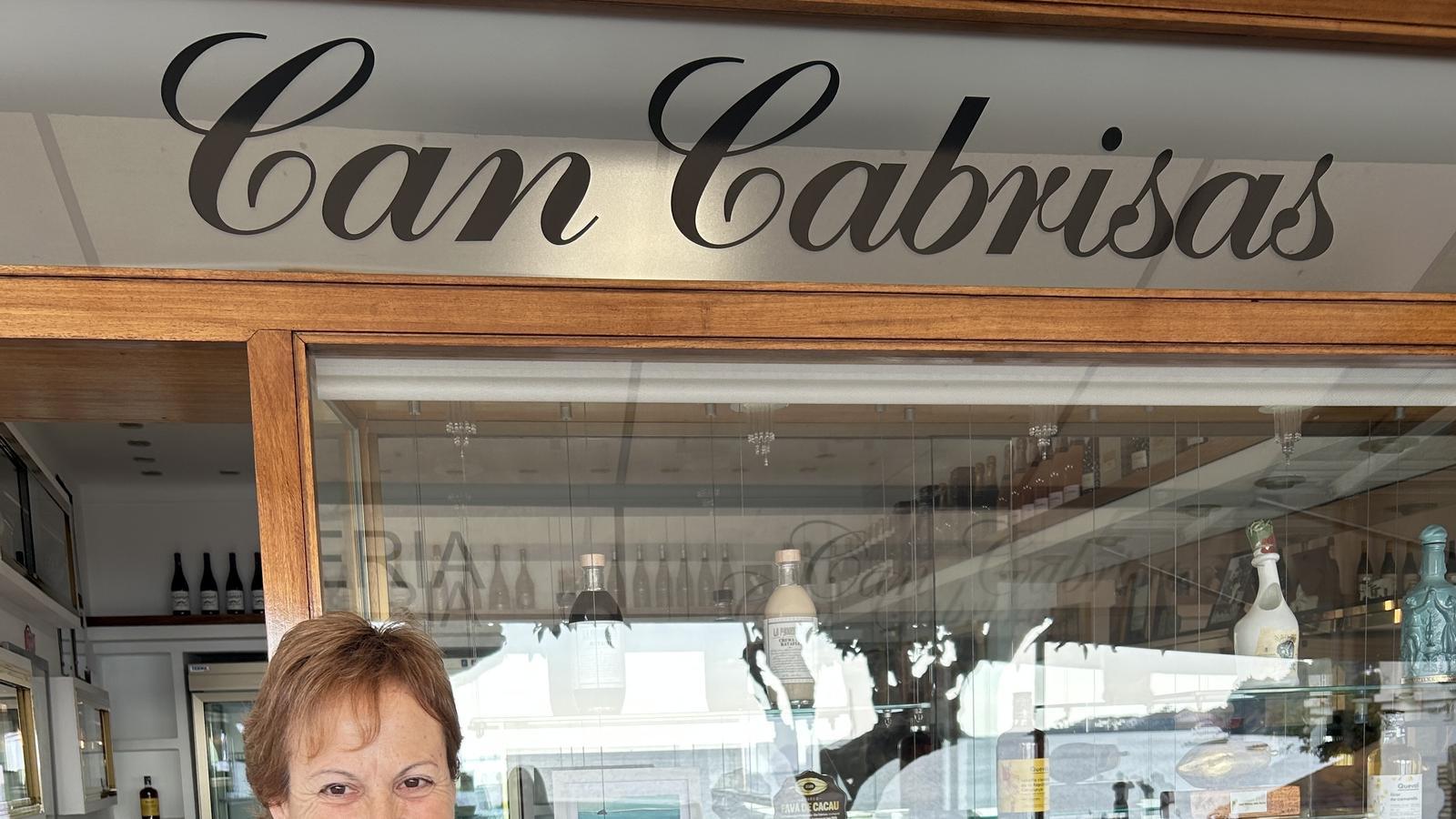
The Can Cabrisas bakery closes its doors today forever with the recipe for the sweet well kept: "It will not be lost"

-
CAT -
CAST
CadaquésIt is Saturday, not yet eight in the morning, and there are already people queuing at Es Portal in Cadaqués, in front of Can Cabrisas. Some have placed orders for boxes of 'taps'; others, for croissants. And there are many who have woken up early to buy whatever they are selling today, which is the final day of a century-old pastry shop. For more than fifteen days, Mercè Cabrisas has not been taking orders for either 'taps' or croissants because things were getting out of hand, she comments. She had to stop when she realized that the demand was higher than the work the workshop itself could handle.
By 10 in the morning, there were no croissants or ensaimadas left. No 'taps' either. There were cream ring cakes, angel hair pastry boats, palmier pastries, and muffins left, which was what people had to settle for. "I have an order for a package of twenty-four chocolate croissants, and another for thirty plain ones," explained Mercè, who says that starting tomorrow she will be on vacation. "A customer suggested it to me; she recommended that I don't say that I am retiring but that I will be on vacation," she says smiling. It is a day of smiles and tears, of hugs and good wishes. "Thank you for having accompanied us in so many lunches and dinners over so many years," says a woman from Cadaqués who only came in to thank them for the work done over a hundred years.

It was 1924 when Sebastià Cabrisas, known as Nenton, inaugurated the pastry shop at Es Portal, facing the sea, between an arch with a flowering bougainvillea and an orange tree. A few years later, he invented the small sponge cake, which he baptized with the name oftap (cork) for the shape it had taken. “Many people have believed that we called them taps because of the stones of the same shape that still exist in Cadaqués and that in the past had served to moor boats; in front of the pastry shop there used to be one,” explains Mercè while wrapping the boxes ordered with taps. “And no, it is not because of that stone, but because my great-grandfather believed it had the shape of a cork stopper.”
The sweet was being sold like others he had also created, such as the matrimoni (marriage), which were two pieces of sponge cake joined with quince jelly, soaked in cognac, and coated with sugar. It was from the moment tourism arrived in Cadaqués, around the 60s, when especially the taps sales skyrocketed. “One August more than twenty years ago, my father, also named Sebastià Cabrisas, sold five hundred in one day,” and from then on everything took off. “The restaurants, the Town Hall itself, and the neighbors have also helped us with the promotion.” And at this point, Mercè points to the photo she has framed behind the counter, in which her father is with Josep Mercader, creator of the Motel Empordà and the Hotel Almadraba in Roses. “They were friends, they must have been around the same age, and Josep Mercader started buying them from him to serve as dessert in his restaurants,” recalls Mercè.
The dessert of the Motel for more than fifty years
In Figueres, the day before, chef Jordi Subirós was preparing at the Motel Empordà the 'taps de Cadaqués' with the same recipe that his father made in 1973, when he started buying them. In a pan on the fire, they prepare a sauce made with coffee beans, instant coffee, lemon peel, pieces of cinnamon stick, and cream. When all the ingredients are combined, they add the 'taps', and then douse them with rum and flambé them. All this in front of the customers, who, seated at their tables, watch as the flame rises. The entire dining room of the Motel Empordà restaurant becomes infused with the smell of the coffee cream from the 'taps', so if one table orders them, you can be sure there will be a second and a third.
What will they do now without the 'taps'? “We will remove the dessert from the menu, of course, there is nothing we can do,” says chef Jaume Subirós, who adds that Mercè Cabrisas visited them at the Motel to explain that they were closing. They have had a close relationship for many years. One of the tables they served the 'taps' to for dessert also asked if they could please take one or two home in a box. It was requested by a family from Figueres, longtime customers of the Motel, who knew that they would no longer find them at Can Cabrisas because they were no longer taking orders. “We will take two 'taps' as if they were a treasure,” said the Figueres resident.

Meanwhile, at Can Cabrisas, people were coming and going. “I am sad because I realize that time passes, that everything comes to an end, that there is nothing that lasts forever,” a neighbor from Cadaqués commented to Mercè. The closing of the centenary pastry shop is a sign of the passage of time, and with its closing, they remembered others that have occurred recently (such as Bar Boia, of the Vehí family) and that will happen at the end of the year: the Rahola stationery store will also close. Time passes for everyone, and the three Cabrisas siblings have spent their lives behind the counter and in the workshop. “I want to do other things,” says Mercè, who kept telling everyone that she wouldn't leave Cadaqués, that she would stay there to live. “I need to see the sea, because it is the landscape that has always accompanied me, since I was little; I see it from my house, and I have always seen it while working behind the counter at the pastry shop.”
Mercè was also asked other questions. The most insistent one: what will happen to the recipe for the 'taps'? Will they be lost? Will they never be made again? Mercè did not have the answers. “For now, we have to close. We each have to find our place, and I cannot decide what my three children, who will turn thirty next year, will do, nor what my nephews will do,” commented Mercè, who added that the three siblings know they must give their children time in case they ever want to decide to start making 'taps'. Perhaps they will. Perhaps not. “The important thing is that we have the recipe well guarded, that it will not be lost, and that we, the three siblings, will not force our children to make them.”
Mercè emphasizes this because the trade is linked to many hours and sacrifices, and involves understanding that they will always have to work more when the rest of the population is on vacation: holidays and weekends. In the summer, no days off. It is the experience they explain, which they recount with joy, because the neighbors, the nearby towns, and the restaurant industry have given them love for having sweetened their days. And on the last day of work, it was moving and emotional to see it. The last 'taps' from Can Cabrisas in Cadaqués were sold today amidst tears and smiles, but who knows if in the near future we will be able to taste more.

