The Catalan invention that revolutionized olive cultivation all over the world
Agromillora celebrates its 40 years by vindicating innovation and boasting of being a global reference nursery

-
CAT -
CAST
The vineyard landscape is an inseparable element of the municipality of Sant Sadurní d'Anoia. This town of just over 10,000 inhabitants in the Alt Penedès is home to more than 60 sparkling wine producers and its fields full of vines, which have turned the region into a benchmark for wine production in Catalonia. But among the clayey soils and the most imposing farmhouses, there hides an agri-food company that, in its own way, also revolutionized the world until it became a beacon within its sector.
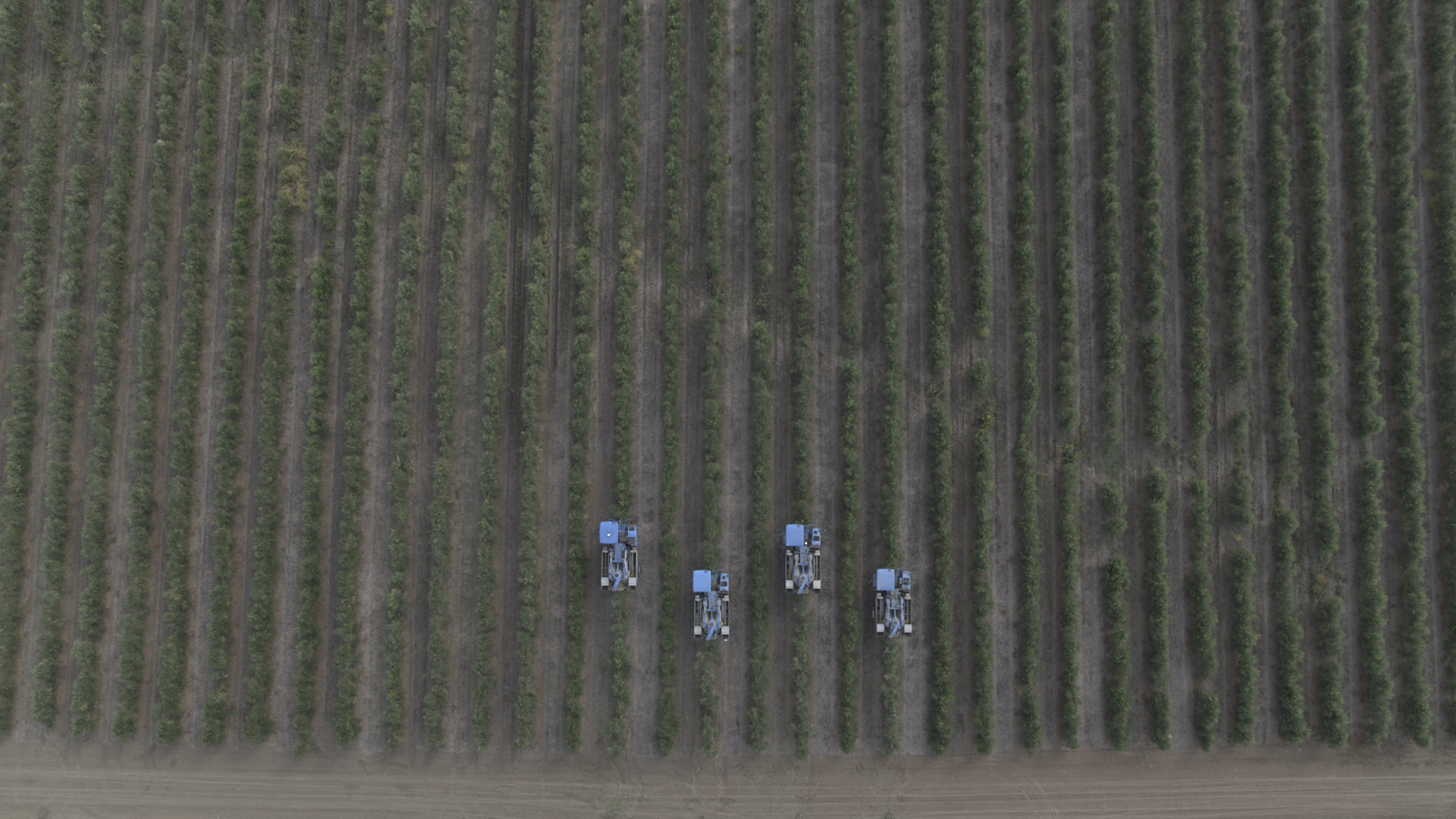
It was precisely the vineyard that inspired Carles Sumarroca, founder of Agromillora, to undertake a project unheard of until the eighties. With the desire to reuse harvesting machines from a family estate, the idea of mechanizing the olive harvest—similar in size to a grape—began to take shape. What if it were possible to set aside manual harvesting and switch to mechanization, just as is done with grapes? After numerous investigations, the right keys were finally pressed. At that moment, the hedgerow olive plantation emerged, a method until then unheard of, but which today is applied all over the world.
"It is not mechanized just because, but because there is a lack of people to work in the field, because the fruit does not touch the ground, because there is also savings in the application of phytosanitary products," explains the communications and marketing director of the Agromillora group, Patrícia Pujades, in statements to ARA. Without a doubt, the great advantage of this technique is the improvement of field yield: in a hectare where it was previously possible to plant between 100 and 200 olive trees—leaving their corresponding separation and waiting several years to obtain a stable production—it is now possible to plant ten times more, while reducing maturation times.
The company, which turns 40 in 2026, has extended this technique to other crops, to the point that hedgerow planting is the only method conceived for some products. Thanks to its strategy based on research and diversification, olive cultivation represents a third of its total turnover, while other crops have been gaining weight such as berries, with a share of 20%; almonds, with a weight of 12%; or vines and stone fruit, with 10% each.
The second revolution
The row planting method was Agromillora's first great revolution, but its founder's ambition steered it towards a second major milestone. It was on a trip to Italy that Sumarroca discovered in vitro plant cultivation, an experience that remained engraved in his memory. The entrepreneur saw it as an opportunity to improve the quality of the fruit plants being planted in the Catalan territory. That is how he decided to launch a research laboratory, combining cuttings and introducing the first crops with micro-grafts.
The results also exceeded all expectations to the point that the company has become one of the reference nurseries on a global scale. The company currently has 11 laboratories and 12 nurseries spread across the five continents, with a presence in 25 countries. Every year, Agromillora delivers around 100 million plants to nearly 3,500 clients that come from the more than 628,000 square meters of its greenhouses. In parallel, the company continues to work with some of the most prestigious universities in the agricultural sector—such as UC Davis or the University of Michigan in the United States or centers like the Institute of Agrifood Research and Technology (IRTA) in Catalonia—to expand its catalog of varieties.

Precisely this last element takes on special relevance in a context marked by climate change, droughts, or diseases in the field. "Our goal is to have the widest range of options possible, because the conditions [of the markets where they have a presence] are very different," points out Pujades.
One of the most evident examples of this progress is the creation of the Lecciana olive variety, obtained through joint work with the University of Bari. The plant is born from a cross between the Arbosana and Leccino varieties and has the capacity to resist Xylella fastidiosa, a bacterium that has killed nearly 22 million olive trees in Italy.
After 40 years of history, Agromillora is already preparing to reach a new unprecedented milestone, this time in turnover figures. This 2026, the company expects to exceed 100 million euros and, looking ahead to the next five years, surpass the 150 million euro barrier, boosting itself in crops such as red fruits, in the commitment to markets like the American one, and in new business segments linked to consultancy on farm management by large investors.
