Sixth arrest for Blocus in Catalonia: an 18-year-old "facilitator" of the looting is detained
Parlon asks to do an "in-depth analysis" of the phenomenon from the social, educational and associative spheres to avoid more young people joining it
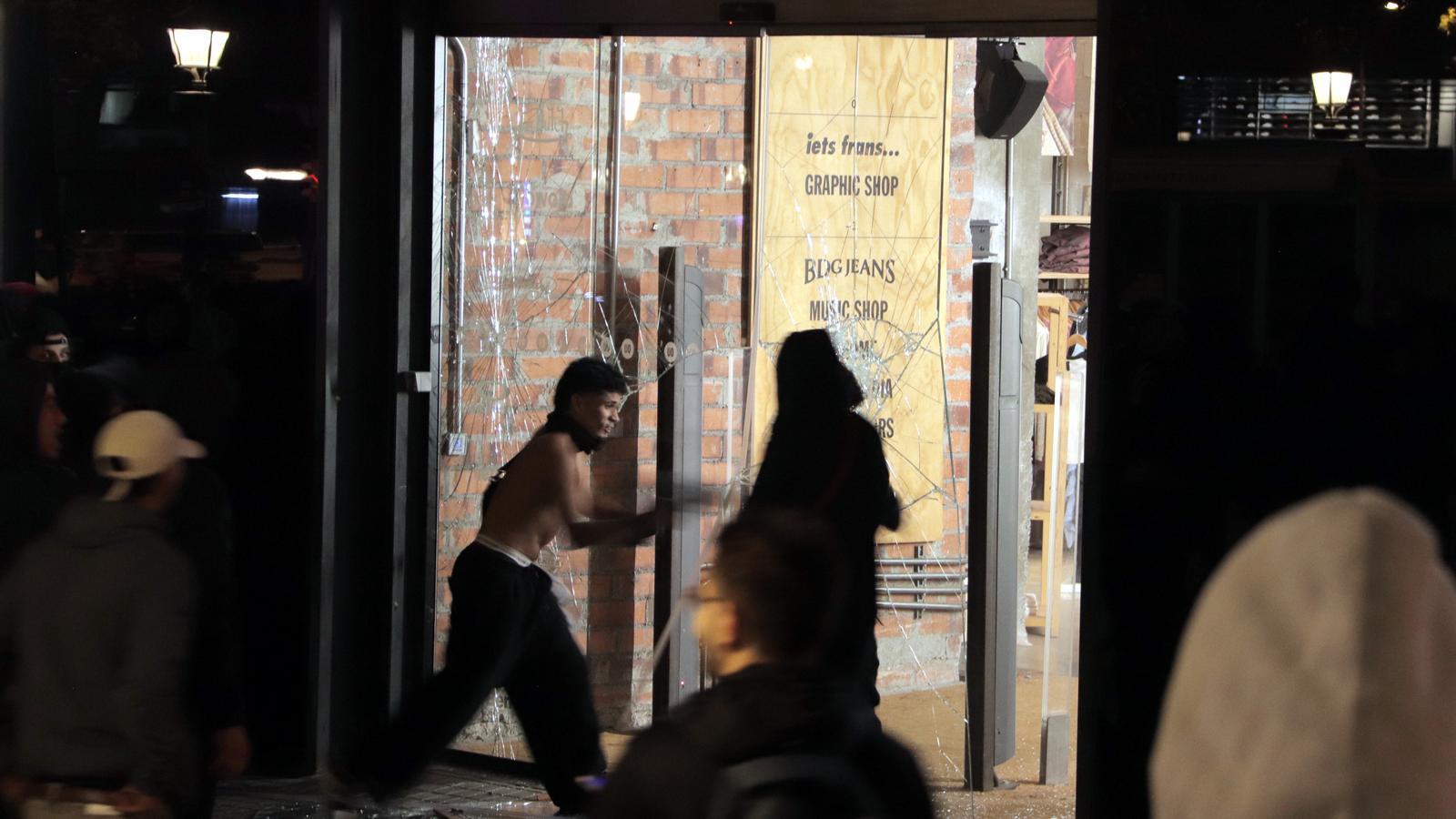
BarcelonaThe trickle of arrests against the Blocus agitators in Catalonia does not stop. This Wednesday, the Mossos d'Esquadra and the National Police reported the arrest of an 18-year-old woman in Barcelona whom they consider an "instigator and coordinator" of the group that carried out the looting of shops in the center of the Catalan capital on October 24.
In total six alleged agitators have already been arrested in Catalonia counting this last one, although the person arrested in Valencia who proclaimed himself the leader of Blocus also incited young people to commit riots and looting in Barcelona. The investigation remains open and further arrests are not ruled out.

According to the investigation, the young woman arrested this Wednesday was an administrator of communication groups that were created to facilitate the coordination of participants in the acts of vandalism and disturbances on October 24th.
Furthermore, it has been confirmed that access to this group had been promoted through the distribution of a poster on TikTok that incorporated a QR code with direct access to a WhatsApp channel. The inquiries have also made it possible to determine that the arrested individual had played an active role in the group's dynamization.
On Tuesday, the Government spokesperson, Sílvia Paneque, acknowledged that one of the government's priorities is for the social networks and messaging platforms where 'Blocus' calls were spread to "provide the names" of the alleged criminals, just as would be requested of "any traditional media outlet".
In fact, the executive is considering taking legal actionagainst these companies to see if they breached regulations, and for this reason, the General Directorate of the Police, with the support of the Cybersecurity Agency, will be tasked with preparing a technical report on the use of social networks and "possible breaches that may be determined". On the other hand, the Central Legal Cabinet, in coordination with the Government Secretariat, will be entrusted with the analysis of potential legal and judicial actions.
The role of platforms and families
This Wednesday, however, the Minister of Interior and Public Security, Núria Parlon, broadened the focus and requested, during the Government control session in Parliament, that an "in-depth analysis" of the Blocus phenomenon be carried out from social, educational, and associative spheres, beyond just the police, to prevent young people from "succumbing" to certain messages on social media.
Parlon said this during a question from Vox: "The issue behind Blocus requires an approach [...] that goes far beyond police work". To carry out this "in-depth analysis", in addition to the "reputational responsibility" of digital platforms, the minister pointed to the role of families in their children's relationship with social media.
In addition, the head of the Interior Department has celebrated and expressed gratitude for the "coordination" between the Mossos d'Esquadra, local police forces, and State security bodies and forces to prevent new riots in Catalan cities with an unprecedented police (and commercial) shielding since 2021, with the protests over the imprisonment of Pablo Hasél.
According to Parlon, the macro-operation was based on three "filters": preventing "young people from organizing" to commit "acts of vandalism," providing "preventive protection" for minors, and notifying parents if their children "were carrying materials to cause harm" when identified by the police.
