The Bacharach clan: the tragic end of a Jewish family in Valencia

- Vicent Garcia Devís
- The Austro-Hungarian of steams
- 160 pages / 20 euros
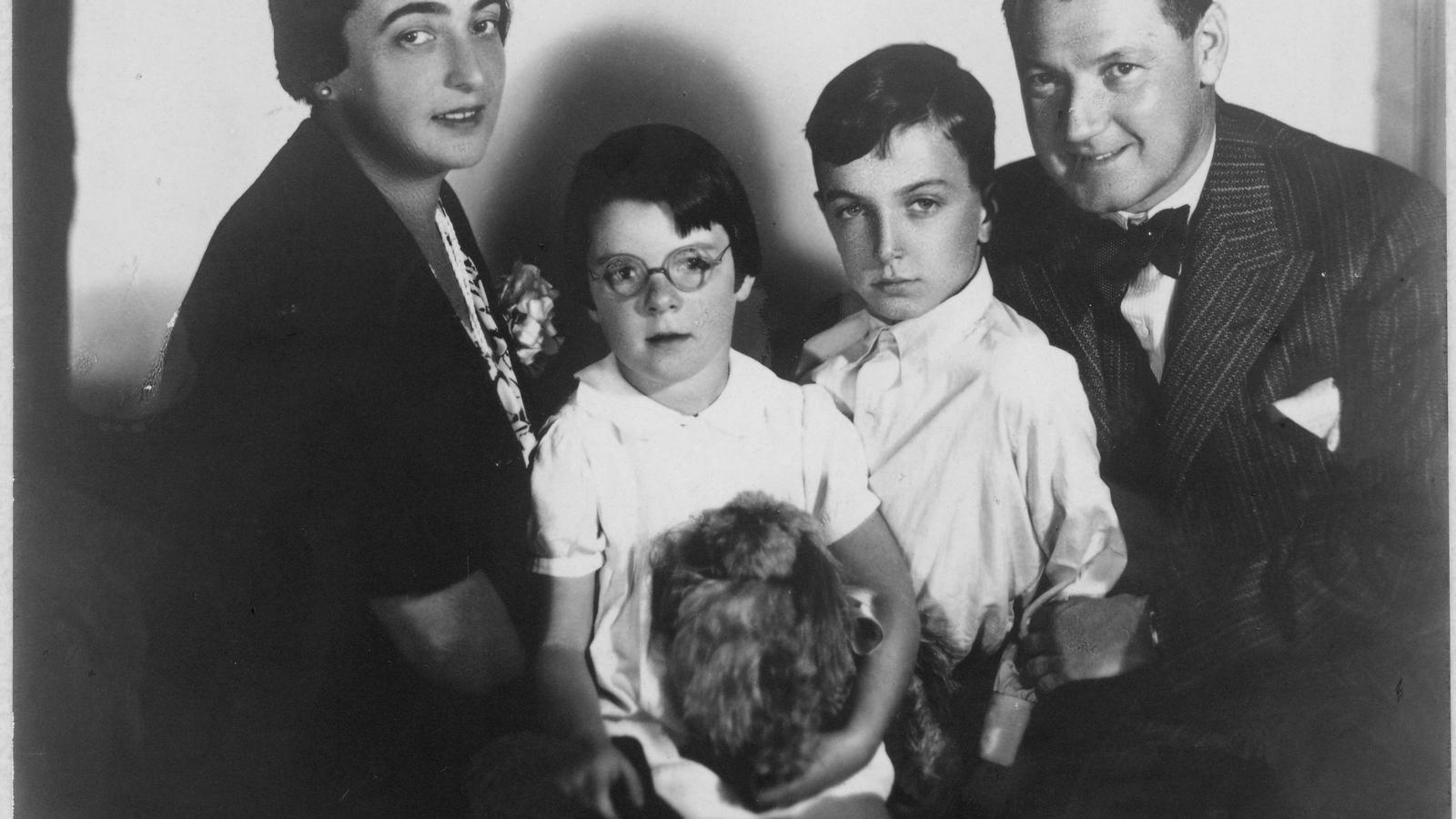
On Monday, June 22, 1936, Engràcia, a maid working at the home of a wealthy German family settled in a central apartment in Valencia, asks for help to open the bedroom door. Something is wrong. The children are not in their room and no one answers her knocking. An electrician finally helps her open the door and what they discover inside is a macabre spectacle: the entire family dead on the bed, the parents, Akiva and Friga, and their two children aged 13 and 10, Wolfang Jakob and Stefanie Johana. They are members of the Bacharach clan, a Jewish family of German origin settled in Valencia since the beginning of the century, who recently arrived in the city fleeing Nazi persecution. Apparently, it is a suicide, as they all died poisoned by gas. The news shocked the Valencia of that time and resonated in major European newspapers. Now, thanks to the research of journalist Vicent Garcia Devís, we can immerse ourselves in the history of this lineage, one of many that are part of the dark crucible of the Holocaust (the family is officially considered a victim of the Nazis), in Akiva. Escaping the wolves (L'Austrohongaresa, 2026).
Garcia Devís goes back to the Middle Ages to find the origin of the clan that would take the name of the town of Bacharach, in the current state of Rhineland-Palatinate, which would grow in Fürth, in Bavaria, and which would eventually spread throughout the world. It is a story of pogroms and persecutions, of always living with fear in one's body, of always feeling pointed out as the different one. Curiously, the interwar period is what seems to give a respite to the Jewish community. Many of them, like Dr. Akiva, would have fought in the Kaiser's army. And settled in Munich, they would form part of high society, the same one that would turn its back on them during Nazism. "The most vulnerable victims of that terror planned by the Nazis were the children and the youngest, initially through social exclusion. Total isolation affected them overwhelmingly [...] Without understanding the situation, they were exposed to racial persecution from the very beginning". The book is a historical reconstruction but also a reflection on European identity and the oblivion that has been imposed on that very dark past.
The author of Akiva does not fail to note that while one part of the Bacharach family will be a victim of the Nazis, to the point that not even in republican Valencia will they feel safe and will end up planning a collective suicide (which, on the other hand, recalls that of the Goebbels family in Hitler's bunker), those who were already settled there and had already triumphed thanks to the patriarch Hugo, will form part of the Valencian Francoist elite, deliberately ignoring their collaboration with Hitler. In reality, the Bacharachs will do the impossible to shake off the heavy burden of Judaism and will end up integrating into the Valencian landscape with great naturalness.

Although it is not mentioned in the book, it is curious that a descendant of the clan, the businesswoman Sol Bacharach, would end up being linked to King Juan Carlos I and would be pointed out as the person responsible for the break-up of the emeritus with Corinna Larsen. Sol Bacharach was married to two illustrious figures such as the Valencian Manuel Broseta, a UCD politician assassinated by ETA in 1992, and the Catalan industrialist Manuel Bertrand Vergés, who died in 2023. We do not know if they all knew the story of the most unfortunate branch of the family that has now been recovered thanks to Akiva.
