Trump assassination on Fifth Avenue
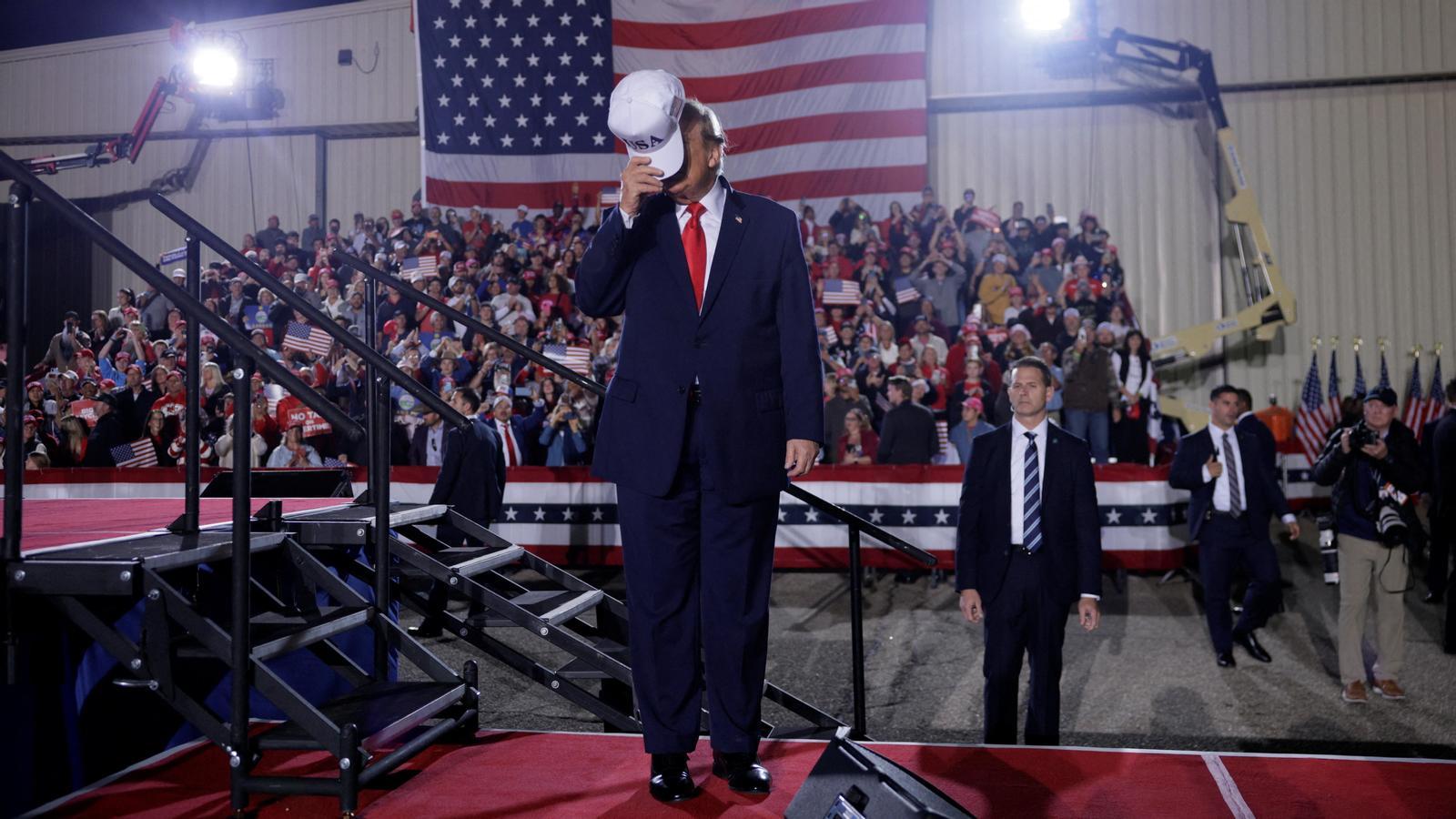

It was 2016, these were not such extraordinary times in the world –perhaps they were brewing then– and a candidate Donald Trump felt invincible: "I could stand in the middle of Fifth Avenue and shoot somebody and I wouldn't lose any voters, okay?" Trump was speaking more seriously than many of us thought. And we know the history since then all too well: a resounding victory in 2016, defeat in 2020 but with a blunt, massive, and devout assault on the Capitol, and an even more resounding victory in 2024. Having proclaimed himself chosen by the Gods, a persistent survivor of assassination attempts, that the Republican Party had mutated into the Trumpist Party was just a detail in this process of political egocentrism that has been experienced in the United States.
Ten years later, times are quite a bit more extraordinary in the world, and Trump has just suffered the most resounding defeat of his political career: much worse, in terms of feeling and perspective, than that of the 2020 presidential election. These are midterm elections and, certainly, the impact in many aspects is limited, but the political interpretation is clear: the United States has indisputably punished its president, Trumpism. The Democratic tsunami, the bluenami, is good news for American democracy and may mark the beginning of the resurrection of the blue party, which had been in a catatonic state for years, incapable, in the face of the tycoon with the quiff. But more than a Democratic triumph, the midterm elections, a de facto referendum on Trump, are above all a massacre for Trumpism, which will have to ask itself if it is in a position to continue hijacking the Republican Party. There is a more cynical way of putting it, but one must not be hasty: are we today facing the beginning of the end of Trumpism?
Trump has not shot anyone on Fifth Avenue in New York. But he has fired in many directions during his first two years of returning to the White House. The more radicalized version that the Republican has shown during this second term, marked by war and hyperactivism in foreign policy –despite his iconic America first–, has discomforted the American population. The president arrived at the polls with a disapproval rating that exceeded 60%. The economic impact of the bombs against Tehran, which have triggered inflation in the country, has been key. But I would like to think that the offensive against democracy that Trump has promoted for two years, and the consequent loss of international prestige of the United States, also explains the verdict of the polls.
And regarding this last point, there is the most urgent question we can ask ourselves now: how will Trump react to the defeat? The Republican has already distanced himself from the Republican massacre and has said that, if his face had been on the ballots, the results would have been very different. The message recalls that of New York's Fifth Avenue, but the context, and Trump's aura of invincibility, is totally different, also for his own party colleagues. Trump is now a wounded animal, and, probably, feels like one. This makes him more dangerous. And the dangers are, above all, for the democracy of the United States, also wounded, and for the stability of this global landscape that is teetering and which, in some way, was also waiting for the American verdict.
