Cristina Fernández Cubas after the Cervantes: "Short stories are like an unfaithful lover, that if you are not aware of them they go off with another"
The writer celebrates the award as a recognition of the genre she has cultivated since 1980
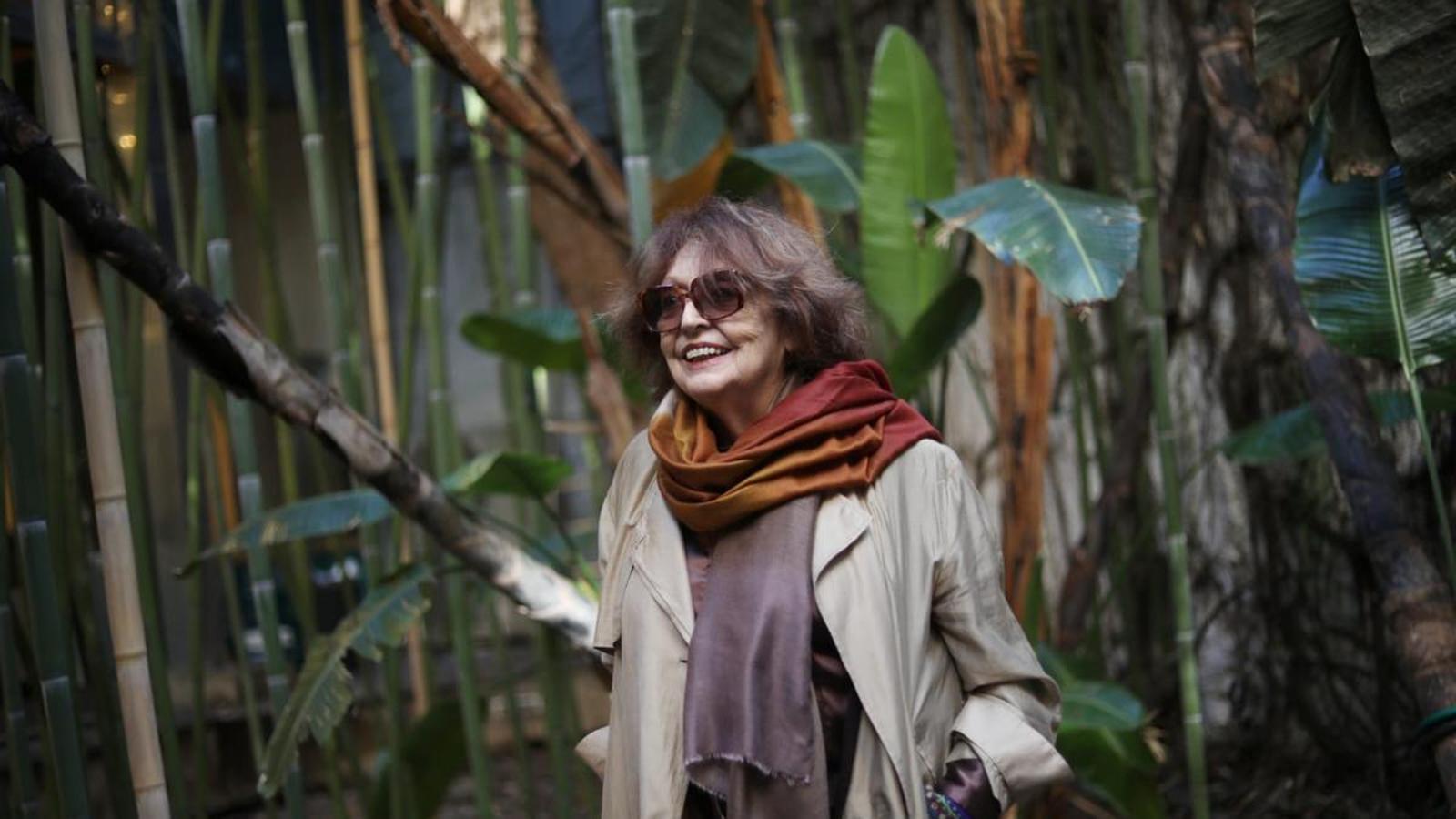

BarcelonaThe 2026 Cervantes Prize winner, Cristina Fernández Cubas, appears with a light step, a long trench coat, and her habitual sober elegance at La Casa del Llibre on the Rambla de Catalunya in Barcelona. It has been only a few hours since she received the call from the Minister of Culture, Ernest Urtasun, who explains that it caught her off guard, mid-way through watching a movie, after a morning of doctor appointments. She says she replied ungraciously: "I was stunned, speechless". Immediately, her phone was overwhelmed with congratulations. "Yesterday I was a zombie all day, and today I have my feet back on the ground," she asserts.
The writer from Arenys de Mar, 81, established in Barcelona for decades, has celebrated above all the assessment made by the Cervantes jury, because it gives a boost to the genre she has cultivated since 1980: "It is an award for me and for the short story as a genre. I am an enthusiast of it as a writer and as a reader". And she recalls: "When I started, publishers did not want to publish short stories. It was an atrocious boldness. I was lucky that Beatriz de Moura was enthusiastic about my stories, and when everyone said «they are strange, they are incomprehensible», she said «they are brilliant»".
Fernández Cubas is the seventh woman to receive the Cervantes since it was established 50 years ago. And she was also the seventh woman to receive the National Prize for Spanish Letters three years ago. She downplays it –"this is changing," she says–, especially because she considers herself an heir to a group of writers from the previous generation who "were few but highly recognized", such as Carmen Martín Gaite, Ana María Matute, and Carmen Laforet. In fact, she will surely celebrate the award with her friend Enrique Vila-Matas, who has just won the National Prize for Spanish Letters. "It seems like a conspiracy!", she exclaims. In recent years, Fernández Cubas has been recognized as a pioneer in the horror and fantastic short story genre and as an admired precedent for the current authors of the trendy genre, especially Latin Americans.
Editor Juan Cerezo, of Tusquets, the label under which the writer has published her entire body of work, reveals that yesterday she had lamented that the prize would interrupt her work, after having spent a very productive summer, despite the heat. "It is true. Short stories are like an unfaithful lover; if you don't keep an eye on them, they go off with someone else," states Fernández Cubas, who especially enjoys the writing process when she feels "involved" in the story. "Since you are in a sensitive state, you discover things you didn't know you knew, aspects of human behavior, and it is an incentive to continue. It's all a bit mysterious," she admits. Now she writes during the day, at the very earliest hour, unlike when she was young, when she was happy as soon as the first streetlights turned on. "Before, on the nightstand there was a book and a glass of water, and now it is full of pills. The nightstand is where you can see people's age," she says.
In any case, the editor will wait. Not only because the author never wants to commit to submission dates, but because she only just published What is not seen last year. This title is what captures the essence of all her short stories. "I care about what is seen, but even more about what is there and is not seen. I like the unsettling part that occurs in real situations. If I get unsettled, the reader gets unsettled. If I get bored, the reader falls asleep. The mood is communicated to the readers," she opines. And she refuses to outline a literary pattern: "I have no formula. Every story is starting over. Otherwise, I would be bored as an oyster. A story is an adventure, and I get myself into such messes... All short story writers are trapeze artists without a net; we can fall at any moment, and this danger is the spice of being a short story writer."
For Juan Cerezo, the Cervantes Prize, endowed with 125,000 euros and awarded by the Spanish Ministry of Culture to the most important authors in the Spanish language, had to go to Fernández Cubas sooner or later: "Everyone predicted that one day she would win the Cervantes and she would say: 'Get away, get away!' She is the best short story writer in Spain, the master of horror and fantasy tales, a pioneer and a woman with an exemplary career: these could be the words of an editor, but they are the literal words of readers, critics, and columnists. It had to happen someday. We are overjoyed."
