Madrid, city of peace and of protest

-
CAT -
CAST
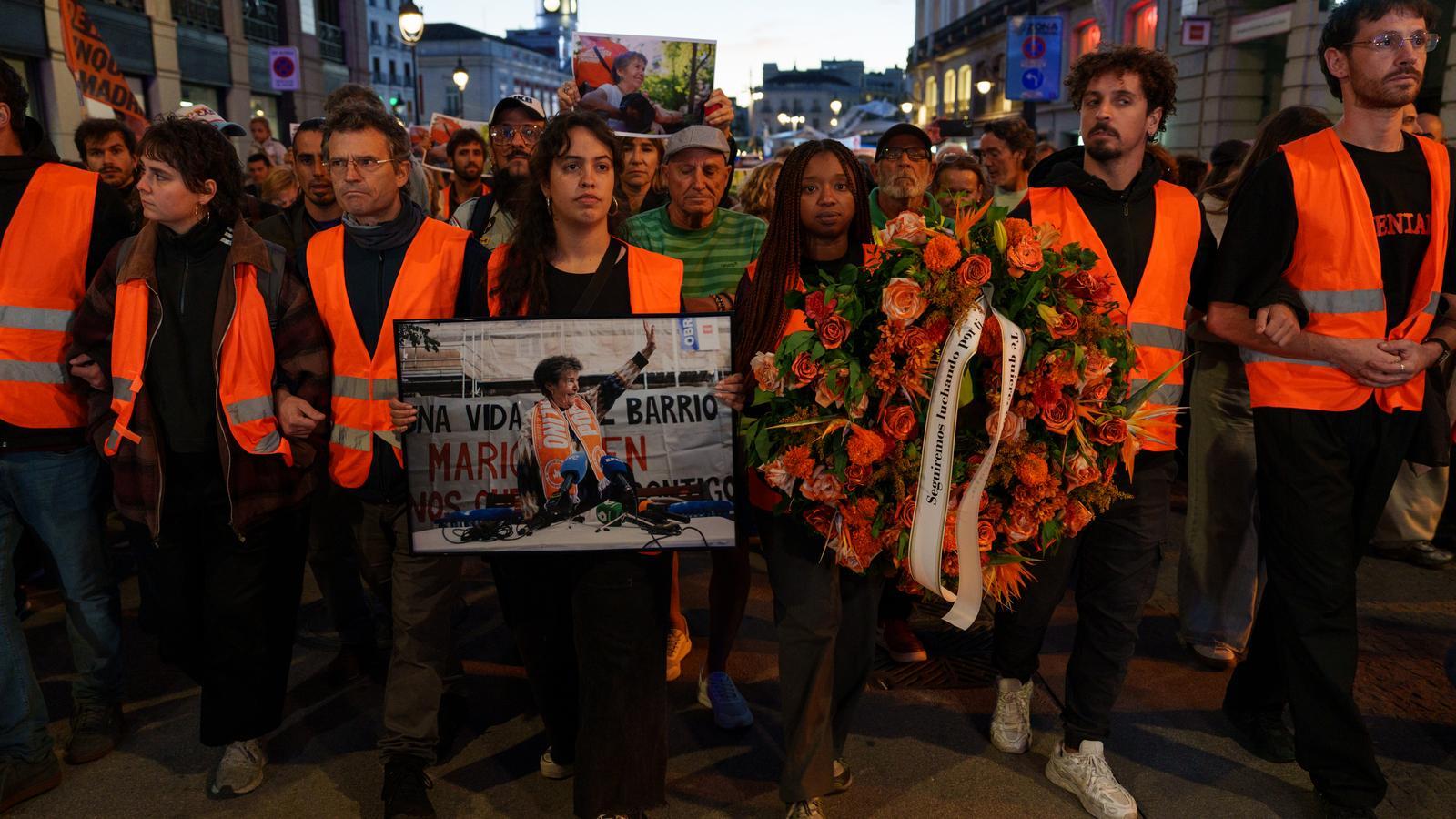
MadridNo one could say for sure now what the turnout will be in the general elections on November 29th, but if there is half as much interest in the rest of Spain as there is inside the M-30 in Madrid, it will be quite high. What is being presented as the mother of all campaigns has had an unexpected start, following the reactions to the eviction of Maricarmen Abascal and her death on Wednesday. The PSOE has pinned all its hopes on the mobilization that has been set in motion following these events. The Socialists are masters at handling emotional climates, but in this case, it is not even necessary. The reaction to the Maricarmen case has been quite spontaneous because there was a lot of accumulated frustration over the housing problem. It had to explode one day and it has done so now, which has given Pedro Sánchez an opportunity to try to overcome all predictions.
The PP, on the other hand, sees itself as the winner because it wants to believe the polls, which give it a wide margin to form a government hand in hand with Vox. However, it is noticeable that the Popular Party members are not entirely at ease, given the precedents. They think that Pedro Sánchez has already been resurrected more than once by rising from his supposed political grave, and they do not rule out the possibility that the campaign will become complicated for them. The lack of confidence is noticeable in that every day they look for ways to gain ground by questioning the organization of the electoral event, the postal vote and that which would correspond to those naturalized as Spanish under the democratic memory law.
On the other hand, the popular party has only accepted one face-to-face debate between Alberto Núñez Feijóo and Pedro Sánchez. It would be better if there were two, to have a broader view, with a first and second leg. They say that these events hardly condition any vote, but I believe that this time there are many reasons to expect that the debate between the two main candidates for the presidency of the Spanish government will have much more interest than other times. In several aspects Spain is an island in a sea of countries that have offered less resistance to the growth of the far right. This time what is at stake is not only whether Feijóo saves his head and finally reaches the Moncloa, but with how much strength he does so. That is to say, to what extent he remains conditioned by Vox. Be that as it may, if the popular leader wins, he will suffer. The far right has now given a relative truce to its possible future allies, but it will bare its claws as soon as it can. The experience of the autonomous governments between the PP and Vox points to this.
Lack of sensitivity
Where I think Feijóo has slipped up the most has been precisely in relation to the case of Maricarmen Abascal, especially after her death. Refusing to participate in the minute of silence called at various institutions has been a grave mistake. But even worse has been remaining passive and not getting up from the chair or the seat while representatives of other political forces – the PSOE and Més Madrid – applauded at the end of these kinds of small tributes. And, on top of that, saying later, as the mayor of Madrid, José Luis Rodríguez Almeida, did, that the minute of silence had only been forty seconds.
What a pity this lack of sensitivity is, which the president of the Community of Madrid, Isabel Díaz Ayuso, manifests by adding the repeated request to the Superior Court of Justice of Madrid to evict the Puerta del Sol. Surely because they spoil the landscape seen from the office she occupies in the old Royal Post Office, today the main headquarters of the regional government.
The demonstrators, for the moment, are maintaining the encampment, while calling for acts and demonstrations that are numerous enough and distinguished by having traveled through the streets in an orderly, respectful, peaceful climate and without incidents. What is intolerable is that ultra groups have appeared near the Puerta del Sol with the clear intention of reaching the core of the protest with a provocative eagerness. The same people who criticize that an electoral campaign can begin with mobilizations in the street say nothing about these threatening appearances and dedicate themselves, instead, to spreading rumors about Maricarmen Abascal, saying that she had debts at the bakery and went to play bingo, as if they were evidence of a supposed personality characteristic of an opportunistic person and one with a life without deprivations.
Meanwhile, the PSOE is trying to take advantage of this atmosphere by leveraging the circumstances in various aspects. To begin with, the permanent deputation will approve the bulk of the measures that the plenary session of Congress rejected in its last vote on initiatives to alleviate the effects of the housing crisis. The Socialists will no longer need the support of Junts on this occasion. The composition of the permanent deputation is not an exact scale copy of the chamber's plenary session. But I do not agree that voting under these conditions constitutes fraud. Each body has its own powers and the one that remains open once elections have been called is not there to do nothing.
There is no doubt that it would be better if Congress had approved at least the first decree on housing policy. But the fact that it did not do so at the time should not condemn to passivity the deputies who are part of something more than a parliamentary "on-call service". If we say that urgent measures must be taken to avoid new situations like that of Maricarmen Abascal, it makes no sense to want to tie the hands and feet of the permanent deputation of Congress, because it has the possibility of increasing the obligations of the administrations to protect cases of greater proven vulnerability.
In any case, the statements that have caused a shudder these days have been those of the former head of government José María Aznar, who has warned that if the PSOE wins the next elections with the same alliances as the last legislature "the constitutional system and the parliamentary monarchy will end". Some –also in Catalonia– would already like this to be true, but it is not at all. What Aznar wants is to concentrate the vote on the PP and for Vox to be a complement that does not get in the way too much. Just like Sánchez, who wants those to his left to finally agree, but just to cover a flank and not to prevent the PSOE from receiving the maximum useful vote in November.
