More than 300,000 French people demonstrate against the cost of living and the protest expands to Germany
The French police arrest almost 300 people, but the authorities speak of protests "with calm"
-
CAT -
CAST
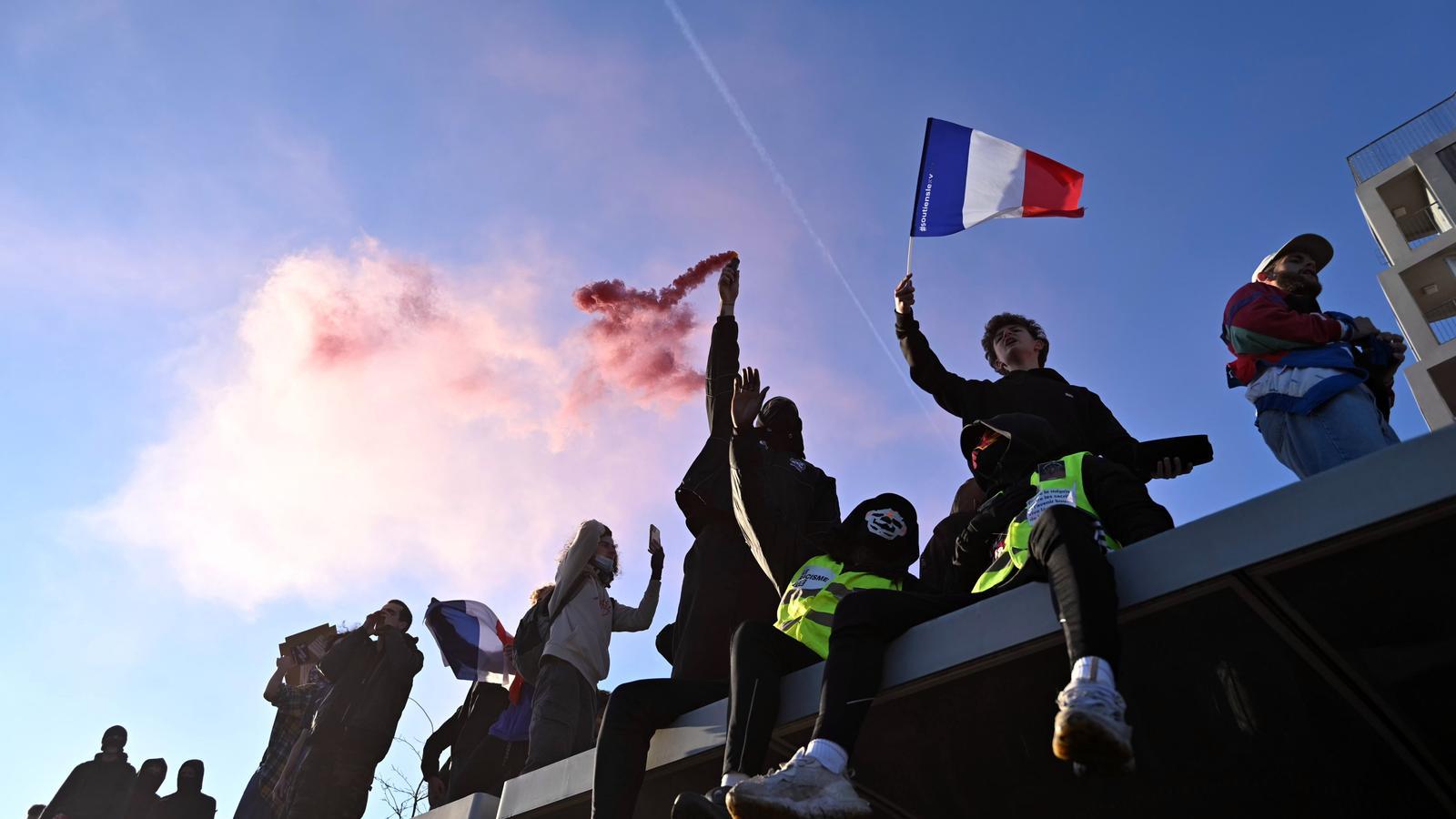
BarcelonaAbout 320,000 people, according to the Interior Ministry, demonstrated this Saturday in different cities in France on the third day of protests against the cost of living. Despite some incidents (in total the police made nearly 300 arrests), the mobilizations took place calmly, according to the latest official report. The turnout was lower than the 550,000 on October 17. There were some incidents at the end of the demonstrations in Paris, Marseille, Rennes, Lyon, Nantes, or Toulouse. The movement has spread to several European countries, and this week Germany joined in, and protests were repeated in Italy.
The marches brought together students –who began the mobilization in September–, unions, and the yellow vests movement, united by the denunciation against the rising cost of living, high fuel prices, rising inflation, and the policies of the Macron government.

"The French economy is doing badly whatever happens, because today we are governed by a bunch of incompetents who play with billions while families have to make ends meet with a few cents", said Jerome Rodriguez, one of the protesters in Paris, to Reuters. The radical left leader Jean-Luc Mélenchon, who has gained support in recent weeks ahead of the presidential elections next April, has led the Paris demonstration. The protests have given a political boost to the far-right leader Marine Le Pen, who is leading the polls for the presidential elections in April, while Macron's potential centrist successors remain divided.
France's top administrative court had upheld the ban on a march between the iconic Parisian squares of the Nation and the Bastille, and had rejected the appeal filed by the unions. Instead, the authorities have authorized a route through the boulevards of the east of the capital, far from the main commercial areas of the center. The authorities have warned that Halloween masks could be used to hide the identity of rioters.

The protests arrive at a delicate moment for the government. On Friday, the credit rating agency Fitch revised the outlook for French debt to negative, highlighting investors' concerns about the country's finances. With public debt approaching 120% of gross domestic product and rising financing costs, Macron's government faces increasing pressure to reduce spending, which limits its room for maneuver. The French government's promises to reform education and ease the cost of fuel have failed to calm the discontent.

In Germany, more than 180,000 people, according to the initiative GenZ-regelt (Generation Z fixes it), have joined the youth protests called in 34 cities, which have mostly taken place peacefully. There have been some incidents at the end of the mobilizations. The protesters demand investment in education, social security, healthcare, climate protection and an affordable cost of living, and at the same time reject a possible return of compulsory military service. There have also been seen protesters in solidarity with Palestine and Lebanon.
Later, in Cologne, the police ordered the march to be suspended because some participants had their faces covered and pyrotechnic material had been used, to which they responded with water cannons.
