Frenkie de Jong's survival manual
The Dutch midfielder makes coaches and teammates fall in love, but not the fans

-
CAT -
CAST
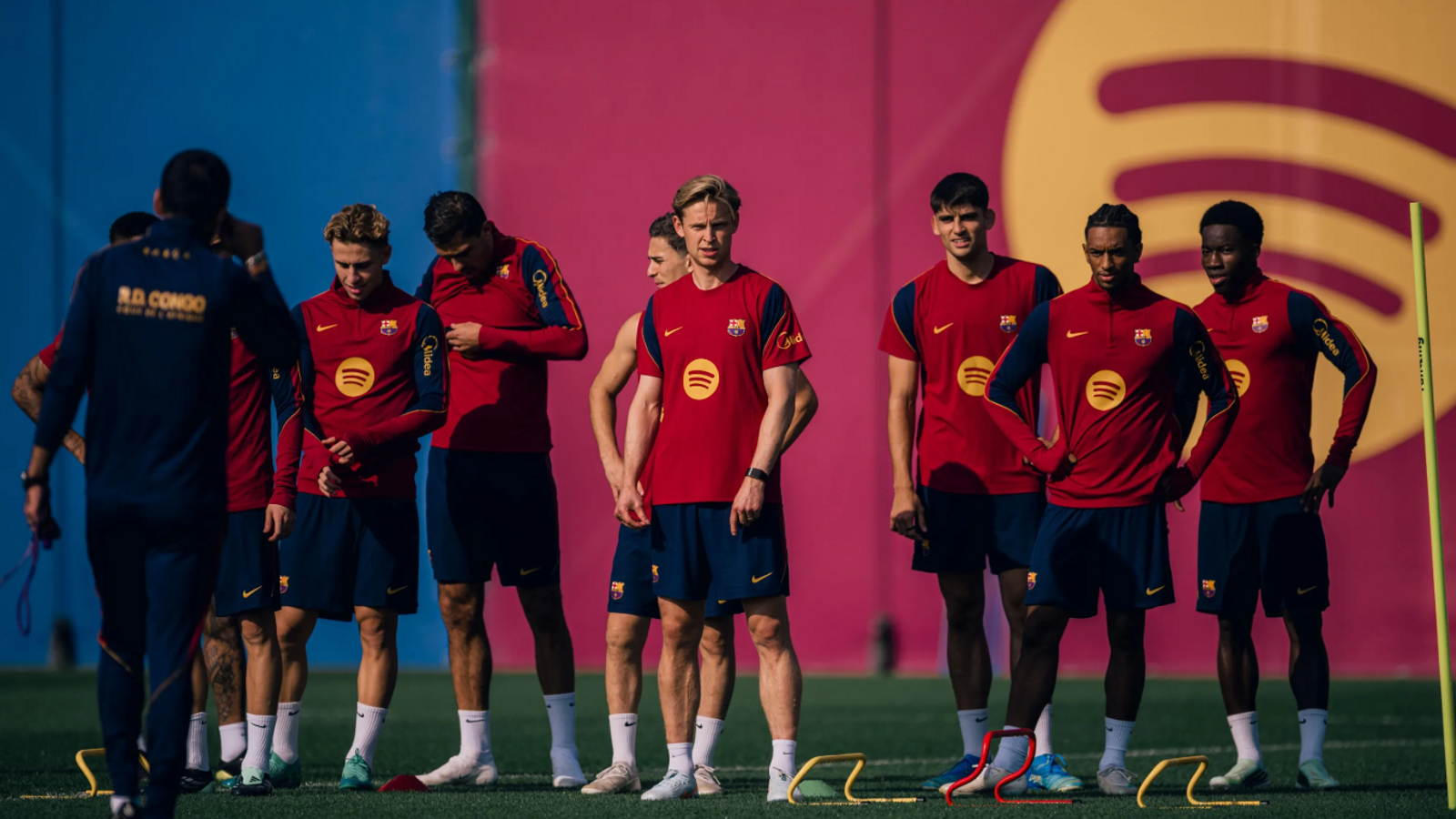
BarcelonaFive months later, Frenkie de Jong returned to the scene. The last time he had been seen defending the Barça crest was at Mestalla, on May 23, on the matchday that closed the League. Against Real Madrid, he stepped back onto the pitch to play the last 15 minutes of a match with urgent needs on the scoreboard. He did so to play as an interior midfielder, even though Hansi Flick had made him train as a center-back, due to the avalanche of injuries in the defense. In fact, De Jong is very likely to pair up today with Pau Cubarsí in the heart of the defense against Alavés (9 PM, Movistar).
When he relieved Fermín in the Clásico, the Dutchman received quite a few whistles. The management of the injury that occurred at the World Cup largely explains this. The version from Barça is that he did not give notice of his injury, that he played with discomfort, and that, once eliminated, he went on vacation to Ibiza instead of prioritizing and starting his recovery in Barcelona. Furthermore, he rejected the medical advice agreed upon by the organization's specialists, which was to undergo surgery for the tear in the medial collateral ligament of his right knee. The history of back-and-forth tension with De Jong is extensive. This summer, however, the situation was different: Barça was signing Rodri and Flick aligned himself with the stance taken in the offices.
The coach even stripped him of the captaincy. For a long time now, however, the fans have been raising an eyebrow at a footballer who arrived with the aura – and the price and the salary – of having to become one of the best midfielders of the decade. After eight seasons, the feeling is that he has never quite managed to escape insignificance. Despite this, there has not been a coach at Barça with whom De Jong has not accumulated a ton of starts and minutes. From Ernesto Valverde to Hansi Flick, passing through Quique Setién, Ronald Koeman, and Xavi Hernández.
Against Real Madrid, when Flick looked to the bench seeking solutions and energy, he chose the Dutchman. The little more than 15 minutes he played worked in his favor. De Jong exhibited personality, took the initiative to ask for the ball, and even came close to scoring. He did so in a more advanced position than the one he is used to. What he offered is precisely what is demanded of De Jong: leadership and impact on the game.
The footballer who wins over coaches, but not the fans
There are several factors that help to understand why the Dutchman is a footballer who amazes coaches and teammates, but who has never quite managed to convince the fans. First, we must look at the origin of his arrival. "Frenkie was a very important signing. PSG and Guardiola's City were also after him and he chose Barça," recalls one of the sources consulted, who shared day-to-day life with the Dutchman at the blaugrana club.
Guardiola's blessing –who considered him a midfielder who "would mark the next decade in European football," as one of the sources familiar with the negotiations to sign him relates to ARA–, having been named the best midfielder of the 2018-19 Champions League edition and the figures of his transfer, nearly 90 million including fixed amounts and variables, generated high expectations among the barcelonismo.
"He hasn't quite established himself, but first we must take into account that he arrived at a complicated time for Barça. With problems at the club and changes of coaches. Later, when he has been well, injuries have conditioned his game and he has lacked continuity. Along the way, other midfielders who caught the fans' eyes more have also been appearing. When he arrived, Busquets was still the starting pivot for Barça and, years later, names like Pedri or Fermín have appeared, who have convinced the supporters more," relates another source who has worked with the Dutchman at Barça.
The big question mark of De Jong with Barça
"He has extraordinary technical quality: reading of the game, possession, dribbling, versatility... He can play as a 6, as an 8... When you watch him play, even in training, you see the very high technical level he has. That is why his teammates also speak very highly of him –adds one of the people consulted–, but he is less flashy than other teammates... Surely because he has a bit less character, he is colder. By this I do not mean that he is not competitive, because he is, but he lacks better numerical records: more goals, assists... He has never quite translated all the potential he has into performance".
If De Jong convinces all the coaches it is, in large part, because of "the reliability" he brings, despite the fact that the fans reproach him for sometimes appearing in the photo of defensive errors due to a lack of forcefulness. "He is a footballer with great talent and great versatility in the middle of the pitch. He has also played as a centre-back, even though it is not his position. He has the capacity to hold the ball, to want it, because it is very difficult for opponents to take it from him. This is also highly valued by his teammates: it does not surprise me that he enchants coaches and footballers, seeing the conditions he has. What is missing is for these conditions to translate into constant performance", they state.
The big question is knowing whether De Jong, who has received offers every summer, but has never wanted to leave Barça, will manage to convince the fans. "Dembélé, for other reasons, also had brutal potential and it took him many years to explode. Perhaps he will explode a little later. The conditions must be met: he is a player who depends a lot on the environment and on the wind blowing in his favor. De Jong has lived for many years with the wind against him, just like Barça", concludes one of the sources. "If he is physically at 100%, for me he is an exceptional footballer", said Flick in the preview of the duel against Alavés.
