The ballot boxes will judge the tragedy of Urda

-
CAT -
CAST
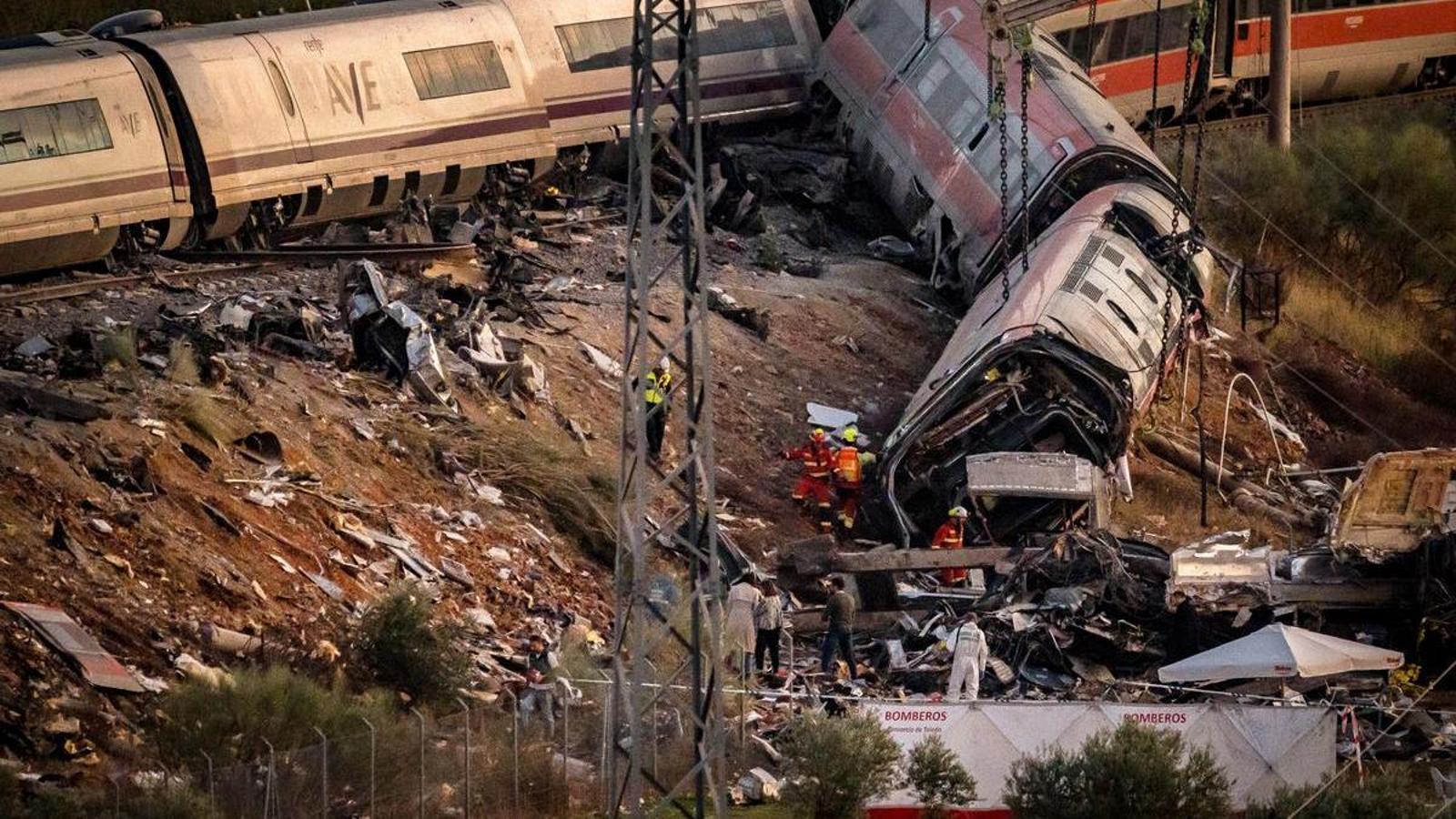
MadridAfter the new railway accident on the Madrid-Andalusia AVE line –and let's not forget Gelida– there have generally been –with regrettable exceptions– a few days of prudence out of respect for the dead and to focus energy on assisting the victims and their families. But it is very evident that the repercussions of all kinds from this tragedy will be very strong. Also in the political space and regarding the election date of November 29th. The train crash had just occurred and a government advisor already told me: "This changes everything, we must return to minute zero of the pre-election campaign, we need to rethink what should be done with more perspective, once we know the causes and effects of what has happened". Perhaps the best definition was given to me by a friend when he told me that "what has happened is very infuriating, it is very infuriating because it is unacceptable". And he added: "It cannot be that I with my mobile phone can locate anything and a railway control center cannot do the same with a train".
Without going deep into technical issues, it is logical that everyone is amazed at how such a serious accident could have happened, and even more so nine months after the one that took place in Adamuz, followed by the one in Gelida –in total, already more than 110 deaths– and others not as serious, but which have also had an impact on the maintenance of communications. For example, the one on October 12th in the Aragonese town of Ricla, where an AVE bound for Figueres partially caught fire, a fact that caused the evacuation of 238 passengers and the disruption of this line for the following days. With good reason, 2026 has been spoken of as the black year for rail transport. Despite all these circumstances, the handling of the explanations has been unconvincing in the first few days, especially because everything has been focused on a supposed human error, which probably existed and was serious, but which by no means exhausts all the responsibilities.
Among the mountain of statements these days, I would highlight those made by some of the technicians at the control center of the Atocha station, in Madrid. The description of their working conditions is quite worrying for themselves, but especially because of the risk it poses to passengers of the AVE trains. It is strange how the unions have not found a way to denounce and solve this situation. The director of the program Mediodía en RNE, Carlos Núñez, spoke last Thursday of a "multicausal" accident, and to explain it he interviewed Laura Higuera, introduced as "middle management at the Atocha regulation center".
What this technician said is that she and her colleagues felt "abandoned" by the Minister of Transport, Óscar Puente, and she reproached him that, since his first statements about the accident, he had "limited himself to pointing the finger, in a blatant way, at a possible human factor, a colleague, when the focus should be on the security systems, which are the ones that are truly failing, as we are seeing". She was referring, obviously, to the stoppage of the trains due to an IT failure, the initial cause of the accident. Nor could the tragedy be avoided because no one from the aforementioned center warned the AVE heading to Seville about the existence of the Iryo train stopped near the town of Urda. This other train had not managed to get moving when it was ordered from Atocha to start up.
The first of these trains traveled about 25 kilometers before the crash. 17 minutes passed. And no one warned the AVE about the Iryo's situation. Óscar Puente –who does not plan to resign and will appear on Tuesday before the Permanent Deputation of Congress– considered it "inexplicable". This issue will obviously be the subject of investigations, including the judicial one. But this was not the only cause of the accident. Just as in relation to the Adamuz catastrophe there were precedents of reports regarding maintenance deficiencies on the tracks, in this case there were also some concerning the LZB safety system, which was left out of service due to the previous IT problem. It was this failure that caused the initial stop of the trains. Now there will be much discussion about the effectiveness of the LZB system. However, on October 5th, the executive director of Iryo in Spain, Fabrizio Favara, said in the Senate that the incident most reported by its train drivers to Adif was the interruptions of the aforementioned system. In criminal law, it is often stressed that "the cause of the cause is the cause of the evil caused," so, while serious, the alleged error of the central control technician who did not warn the AVE driver will not, predictably, be the only aspect investigated for this accident.
Electoral effects
In the political sphere, the question is what effects this tragedy will have, added to other factors, on the campaign and the election result. For Pedro Sánchez and the PSOE, it is "all the more difficult," because nothing compensates for or balances feelings of grief for the disappearance of dozens of people. Particularly, the death of Fátima Báñez has saddened me greatly, former Minister of Labor and Social Security. She faced a very difficult period, starting in 2011, with a country still suffering from the effects of the great crisis of the previous years, with a high unemployment rate, which went down noticeably after a labor reform criticized by the unions. Fátima Báñez always faced it all with a willingness to dialogue and respect for the positions of others. I wish these two characteristics were common in political relations.
What we had seen until now in the electoral pre-campaign was not going in that direction. The role of Vox is regrettable, taking advantage of the railway accident by not stopping for even a day as a sign of mourning. The same cannot be said for Feijóo and the PP in this case. The statements by the popular leader sought to be institutional, but were clear in their obvious implicit criticism of the government. For his part, Sánchez has promised transparency and to get to the bottom of the investigations. Óscar Puente is gambling more than just his current position due to the accident. On the other hand, resignations or dismissals do not always settle political responsibilities. In this case, the ballot boxes will have the final word and the most important decision.
