The United States finally withdraws from Iraq: who will now control the weapons?
The withdrawal of the international troops that were fighting against the Islamic State gives way to the challenge of disarming the militias in the country

-
CAT -
CAST
BeirutHistory repeats itself twice in Iraq. And who knows if there will be a third time. In 2011, the last American troops left the country after almost nine years of war. It seemed like the end of an intervention that had begun with the 2003 invasion and the fall of Saddam Hussein. Three years later, the Americans were back. The lightning advance of the Islamic State and the collapse of part of the Iraqi army forced Baghdad to once again ask Washington for help.
Now they are leaving again. This September 30, the United States has completed the withdrawal of its last troops and is putting an end to the military mission for which they returned to the country in 2014 to fight the Islamic State. The final withdrawal is taking place from Erbil, in Iraqi Kurdistan. Washington will maintain cooperation with Baghdad on security matters, but without troops deployed in the country. The scene has a touch of déjà-vu. But this time the Islamic State no longer controls cities or large swathes of territory.
Baghdad had wanted to make two processes coincide: the departure of foreign troops and the beginning of a stage in which all weapons would be under state authority. The government had also set September 30 as the date for the disarmament of the militias. But the main factions refused. The deadline has now been moved to June 2027. The plan provides for an initial 90-day period without attacks and, afterwards, a progressive handover of weapons.

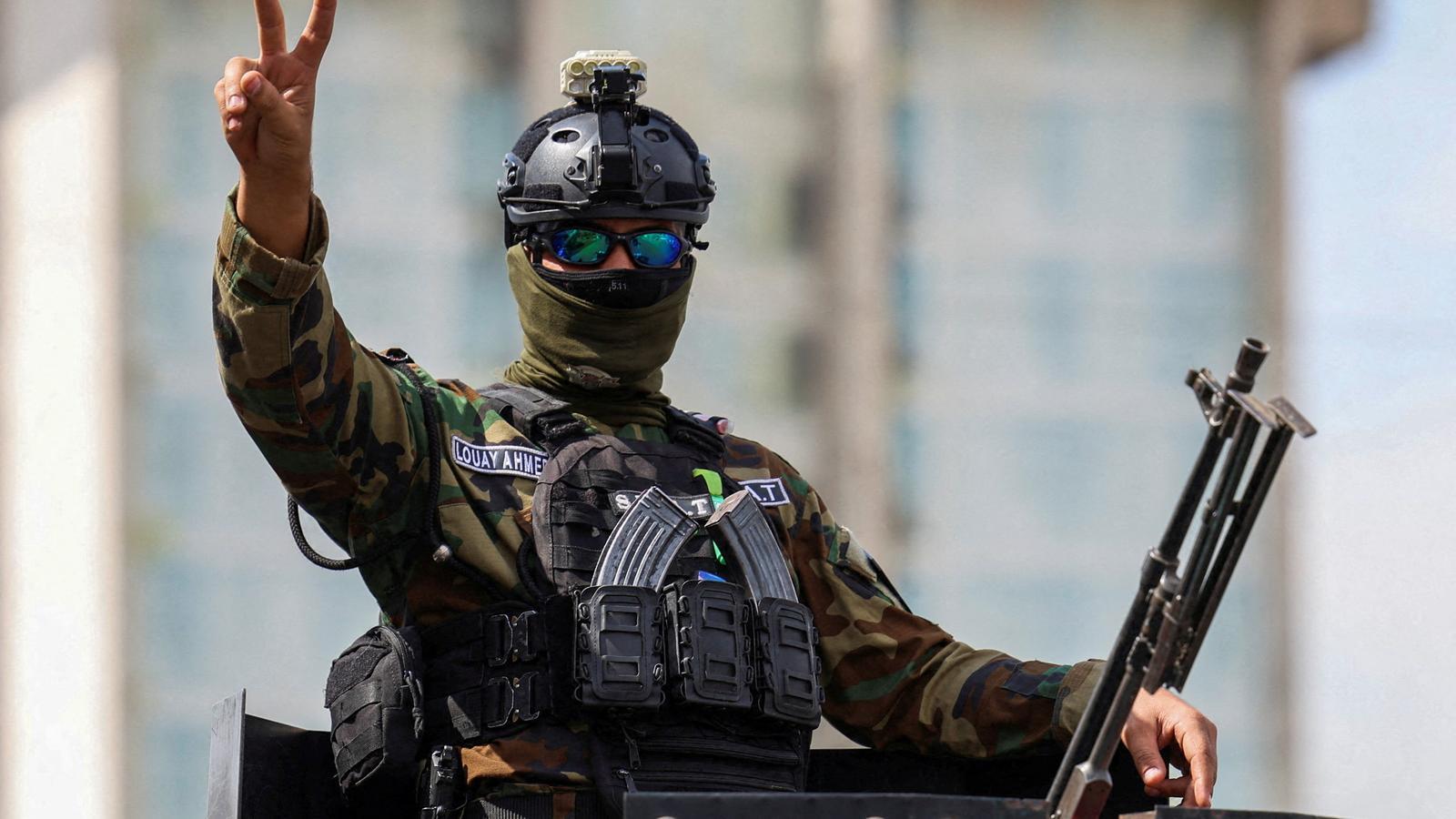
The difficulty is that these militias are not groups completely alien to the state. Many are part of the Popular Mobilization Forces, Hashd al-Shaabi, created in 2014 to fight the Islamic State and subsequently legally integrated into the Iraqi security forces. But some of the most powerful factions maintain their own structures and broad autonomy. Among these are Kataib Hezbollah, Harakat al-Nujaba and Kataib Sayyid al-Shuhada, close to Iran and opposed to handing over their arsenals. Others have shown a different position and have agreed to move towards the integration of their weapons into state structures.
The government is trying to take advantage of these divisions to make slow progress. Its goal is not necessarily to leave thousands of fighters without work, but to put their weapons and their chain of command under state control. The plan even includes offering positions in the security forces to some of those who hand over their weapons. But for the factions closest to Tehran, handing over weapons means losing an important part of their leverage within Iraq and in the region.
In the current war between the United States and Iran, some of these factions have attacked targets linked to Washington and have demonstrated that they can still act in a coordinated manner. Therefore, for Iran and its allies, the American departure represents a victory. For years they have demanded the departure of foreign troops and now they can present the withdrawal as the result of this pressure. But it would be too much of a simplification to say that Iran has gained control of Iraq.
Trial by fire for Iraq
The question that remains open is precisely how far Tehran's influence reaches and how far Baghdad's authority can reach. The Iraqi government wants to demonstrate that it can control the country's security without foreign troops and, above all, that no armed organization can act above the state. The militias themselves have made it clear that it will not be simple. Kataib Hezbollah, for example, has threatened to bring down the government if it considers that it is acting against the country's interests, and has even warned of possible measures against countries in the region that participate in the air blockade of Iran.
This will be one of the great tests for Iraq; the other will continue to be the Islamic State. Although it no longer controls territory and is very far from the organization that conquered Mosul in 2014, its cells remain active. Iraqi forces will now have to directly assume intelligence, surveillance, and counter-terrorism tasks that they carried out for years with American support.
The concern is especially visible in Iraqi Kurdistan. The region has suffered drone and missile attacks during the war between Washington and Iran. The Kurdish authorities now fear having fewer defense capabilities, although Baghdad assures that it is working to reinforce the country's air defenses.
The Americans have left. The real challenge for the Iraqi state begins now. And perhaps here lies the true test for post-American Iraq: not who occupies the bases that Washington has left behind, but who has the weapons and who decides when to use them.

