The left wing of the Democrats begins the pulse against the establishment of the party in the US Congress
The progressive bench launches the candidacy of Chris Van Hollen to dispute the position of Senate Majority Leader from Chuck Schumer

-
CAT -
CAST
WashingtonThe left wing of the United States Democratic Party means business and does not intend to let campaign promises remain mere electoral claims. A good portion of the newly elected senators have already announced that they will not vote for Chuck Schumer, the current leader of the Democratic minority in the Senate, to be the new majority leader starting in January. Schumer is part of the Democratic establishment, and this challenge is the first test for the incoming congresspeople to see to what extent they can twist the arm of the party leadership over the next two years.
The rejection of Schumer is driven by the party's left wing, but it is not exclusive to the heirs of independent senator Bernie Sanders. Beyond Abdul El-Sayed, Peggy Flanagan, and Troy Jackson—who arrive in the upper house under Sanders' wing—among those refusing to support Schumer are much more moderate figures such as Annie Andrews, Adam Hamilton, or James Talarico. They have all also said that they will not support the New York senator.
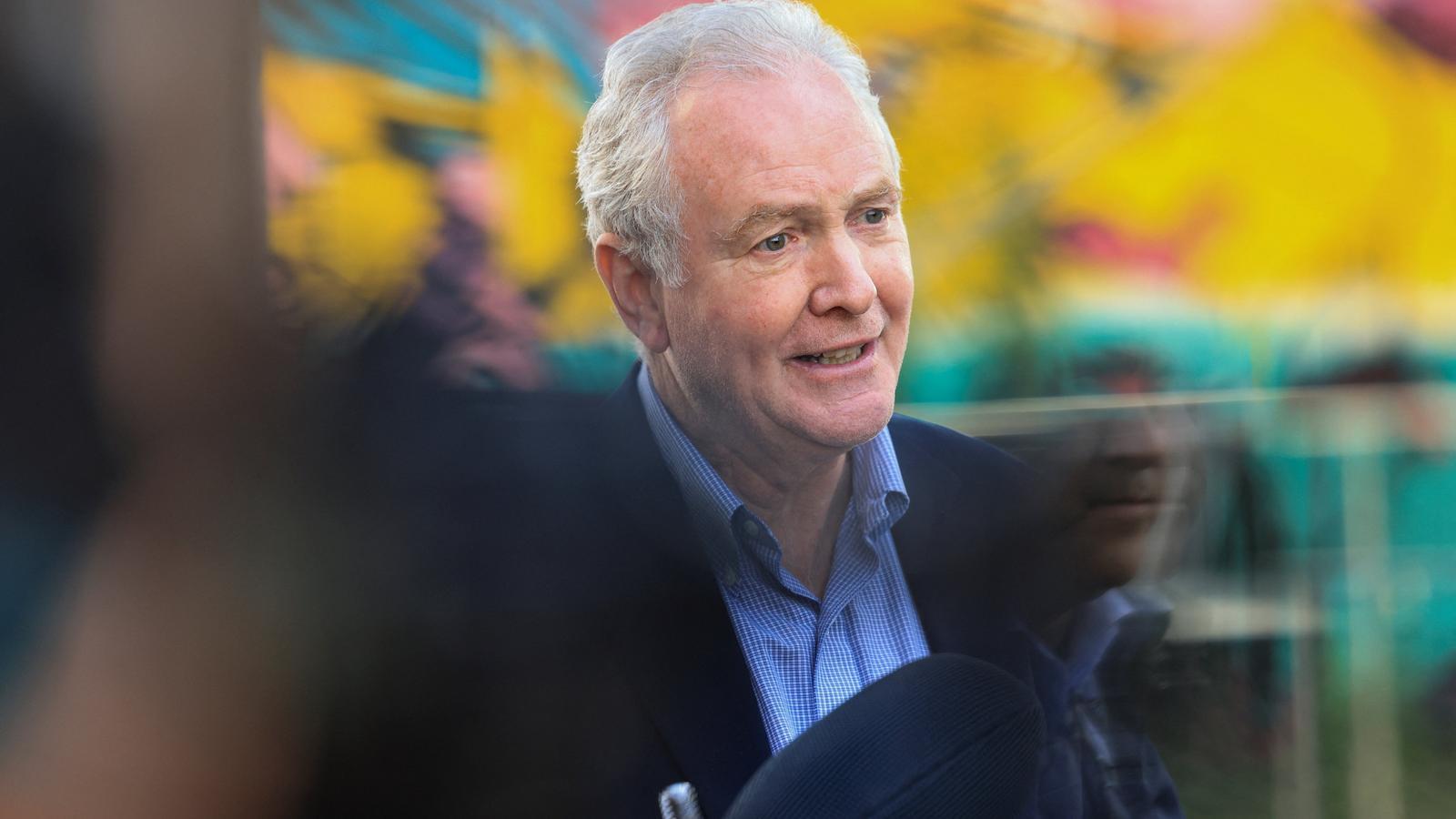
Thursday night, the senator for Maryland, Chris Van Hollen, officially presented his candidacy to challenge Schumer for the position, becoming de facto the alternative for all those new Democrats who want to see a change. Van Hollen became a relatively well-known figure last year, when he traveled to El Salvador to meet with Kilmar Abrego García, a Maryland resident whom the White House had deported in defiance of a federal judge. The senator was part of the campaign that managed to get Abrego García to return to the United States with his family.
In statements to the MS NOW network, Van Hollen said Thursday that he had spoken with a large number of Democratic senators, including those who will be joining the Senate soon, and that he did not believe Schumer had a guaranteed reelection. He said he had the support of "more than ten" of the 55 Democratic senators, including those who will enter in January. Even so, he also acknowledged that the competition with Schumer was "tight".
After nearly 46 years in Congress, 75-year-old Schumer is perceived by the base as one of the main representatives of the Democratic Party leadership. The progressive wing has criticized him on several occasions for his ties to the pro-Israel lobby AIPAC – Schumer is one of the staunchest defenders of Israel within the party – and to the world of Wall Street, from which he has received donations for various campaigns. His more moderate profile and tendency to end up making deals with Republicans to avoid various government shutdowns instead of opting for confrontation during this second term of Donald Trump have also contributed to projecting an image of a lukewarm politician in the eyes of a base that wanted a firmer opposition to the president's abuses.
A key figure for advancing laws
The figure of the Senate Majority Leader is one of the most powerful within Congress. Obtaining this position means being the one who decides the agenda and which bills go to a vote. For this reason, many of the new Democrats who have entered the Senate with more progressive economic proposals want to ensure they place a majority leader willing to help them advance their agenda.
El-Sayed, who has set out to approve one of the most radical proposals, such as establishing public healthcare, is the one who, already during the election campaign, encouraged Van Hollen to take the step. In fact, right after the elections, El-Sayed was the first to break the ice by saying that he would not vote in favor of Schumer. Then came all the other announcements from new senators-elect who would also not support him.
As expected, independent Senator Bernie Sanders has also said that he will not vote for Schumer. “These elections were about change. The Democratic Party must change,” he wrote this Friday on X, saying that change is necessary to fight “against the oligarchs.” The campaign for Van Hollen starts just as this weekend prominent members of the Democratic Party meet in Denver to decide the post-midterm.
The rise of the party's left wing has been driven by the strong anti-establishment sentiment among the base that crystallized during the primary process. Beyond pushing a more progressive agenda, many of the senators who reject Schumer also want to see a real generational change and ensure that the change will not only be symbolic.
A progressive Tea Party
Ousting Schumer, however, has much deeper implications than simply controlling the Senate agenda. It could be the realization that the Democratic Party is truly experiencing its own Tea Party, just as happened to the Republican Party more than a decade ago. The triumph of the ultra-conservative movement that later catapulted Trump in 2016 was confirmed in 2014, when the Tea Party candidate, Dave Brat, ousted the House Majority Leader Eric Cantor, a central figure of the Republican establishment. The result caught the Republican leadership off guard.
The parallel does not mean that the anti-establishment wave within the Democratic Party is exactly the same as the Tea Party, which represented an ultra-conservative shift within the Republican Party. Both movements are located at opposite ends of the ideological spectrum, but they share the will to bring about profound transformation. It remains to be seen if, in January, this finally happens among the Democrats as well and Van Hollen achieves victory.

