Not all oil is the same, nor are all territories the same
The withdrawal must stabilize the market, not make olive oil more expensive for the consumer nor penalize territories without surpluses like Catalonia
-
CAT -
CAST
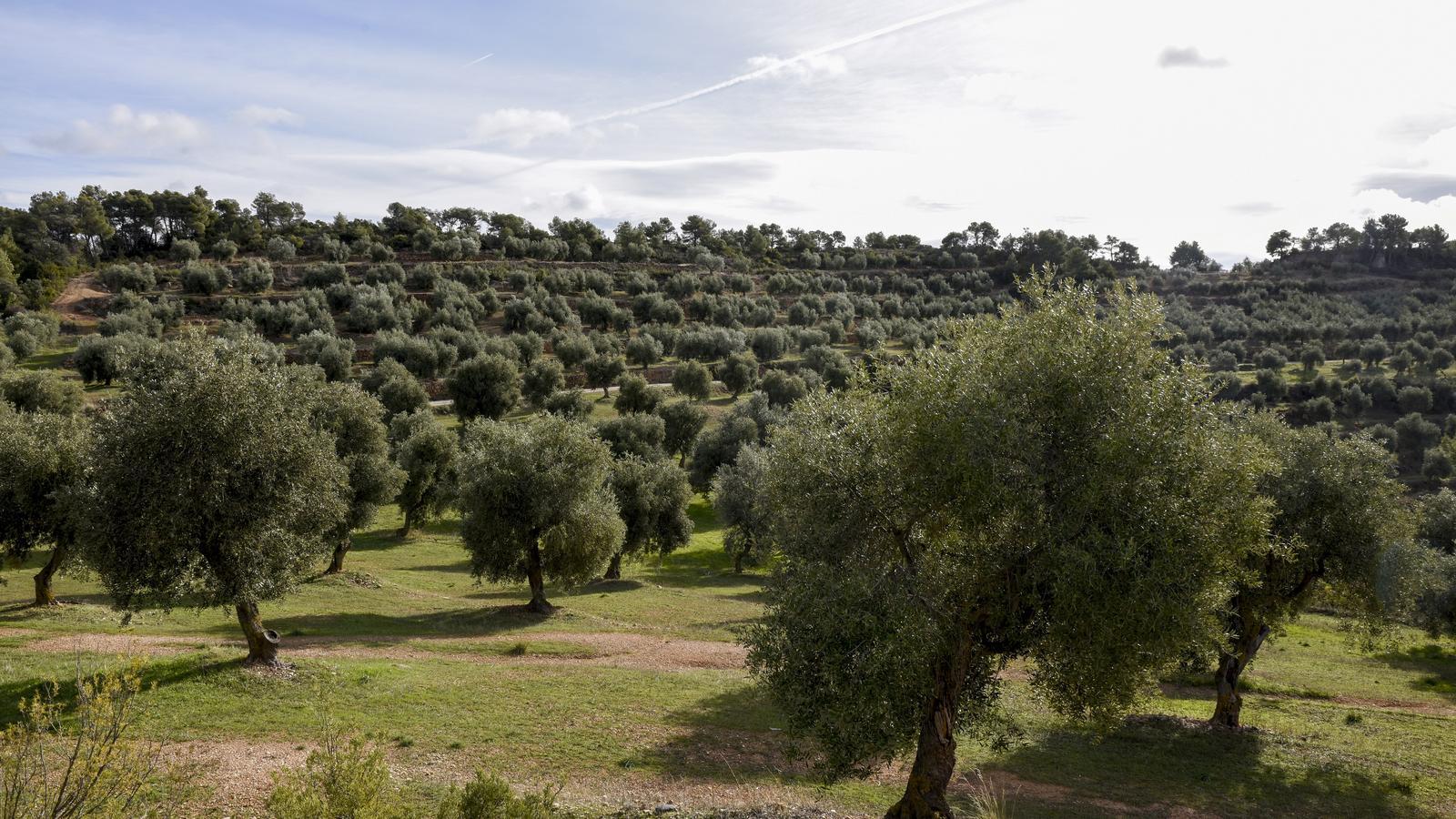
The temporary withdrawal of a part of olive oil production seeks to prevent an abundant harvest from collapsing the prices that farmers receive. It is a tool provided for by European regulations and, if applied well, it can contribute to providing stability to a market exposed to major fluctuations. But a measure designed to balance supply can also generate imbalances if it does not take into account the reality of each territory. And Catalonia is a clear example of this.
The Ministry of Agriculture has activated this mechanism for the 2026-2027 season: oil mills will have to temporarily store 12% of their monthly production starting in November, until September 30, 2027. In total, this is about 188,000 tons that must be withdrawn from the market and stored in their own or third-party facilities. The objective is to avoid an excess of supply that would push prices at origin downwards.
What does it mean for the consumer?
To begin with, it is necessary to distinguish between the price paid at the oil mill and the one we find in the store. The sector's concern lies in the fact that the production cost of extra virgin olive oil in traditional olive farms, often family-run and dry-farmed holdings, is approaching the prices currently paid at the source. If market prices fall below costs, the continuity of these farms is compromised. We are not just talking about economics: the landscape, food culture, and life in the villages are also at stake.
Therefore, the withdrawal acts on the volume available on the market and seeks to sustain the price at source. The objective is not to fix or modify the price of the bottle, nor is it for consumer prices to reach the levels of the 2023-2024 campaign, when we were coming from two consecutive harvests with a production that was very low and insufficient for the average market demand.
Catalonia, a different reality
Why, then, do we ask that Catalonia be left out of it? Because the state snapshot is not the Catalan one. While the country as a whole expects an abundant harvest, in Catalonia a production lower than that of an average campaign is expected. Here there are no surpluses and in the majority of producing areas they do not have lampante oil.
The measure acts in response to a possible fall in the original market prices of the different categories of oil that are marketed. Especially in the case of lampante oil, which will be the category from which the most volume will be withdrawn and which marks the lowest prices on the market, even though Catalan cooperatives mostly opt to produce and market virgin and extra virgin oils.
The impact can be significant. In Catalonia, nearly a hundred cooperatives produce 72% of the country's olive oil. Many sell their entire production and do not have surpluses to immobilize. Forcing them to retain a portion of the oil they need to market can hinder payments to members, the farmers. And if the oil remains stored until next autumn, it can also complicate quality management and the commercialization of the new campaign.
Regulate with criteria and value what we produce
For this reason, Catalonia plans to ask the Ministry for a territorial exception. We do not question the tool or its objective: we agree that mechanisms are needed to avoid price collapses and protect the producer. What we demand is that its application be sensitive to the differences between producing zones and we trust that the review scheduled from December 31st will serve to adjust the measure to the different territorial realities.
It is also necessary to prevent imports from distorting this supply regulation. If the European market is to be sustained and the effort required of producers is not to be neutralized, the inward processing regime, which consists of importing oil from third countries without tariffs or VAT to be re-exported outside the EU, must also be eliminated.
Regulating with criteria means looking beyond global figures. Because protecting the farmer, the territory and the quality of the oil is also protecting the future of an essential food of our culture.
At the same time, there is another task we cannot postpone: explaining the value of extra virgin olive oil. Every bottle concentrates expertise, innovation, collective effort, and commitment to the territory. Catalan oils, especially those produced by cooperatives following traditional production models and protected by protected designations of origin, do not compete only on volume, nor can they be valued solely by price.
To discover their richness, the FCAC proposes an experience with five cooperative oils that will bring us closer to their aromas, flavors, and nuances. These are oils made with olive varieties specific to the different PDOs: Arbequina from Siurana and Les Garrigues, Empeltre and Arbequina from Terra Alta, Farga from Baix Ebre-Montsià, and Argudell and Corivell from Empordà.
Each of them will be accompanied by a different honey—thyme, rosemary, lavender, orange blossom, or heather—in a pairing guided by Laura Masramon, an oil taster and creator of oleotourism experiences, accompanied by chef Jordi Àvila.
You can find them at 'Taste the cooperatives: From the Ebro to the Empordà, honeys and extra virgin olive oils', Friday, November 20th, at 7:30 PM, at the New Oil and Honey Market, in Plaça de les Glòries in Barcelona. Free activity open to everyone.
