DFactory Barcelona District: the new district of the industry of the future is born in Barcelona
The Consorci de la Zona Franca de Barcelona promotes the transformation of the traditional industrial estate of the Zona Franca into a new district of urban, innovative and sustainable industry. DFactory Barcelona District aspires to become one of the great European hubs of advanced technology, talent and economic activity
-
CAT -
CAST
The cities of the future will not be built solely on more sustainable mobility, smart buildings, connectivity, or new digital services. Industry will also play a decisive role in their transformation. And Barcelona wants to position itself at the forefront of this change with DFactory Barcelona District, a project that proposes a new relationship between industry and the city based on innovation, technology, talent, and sustainability.
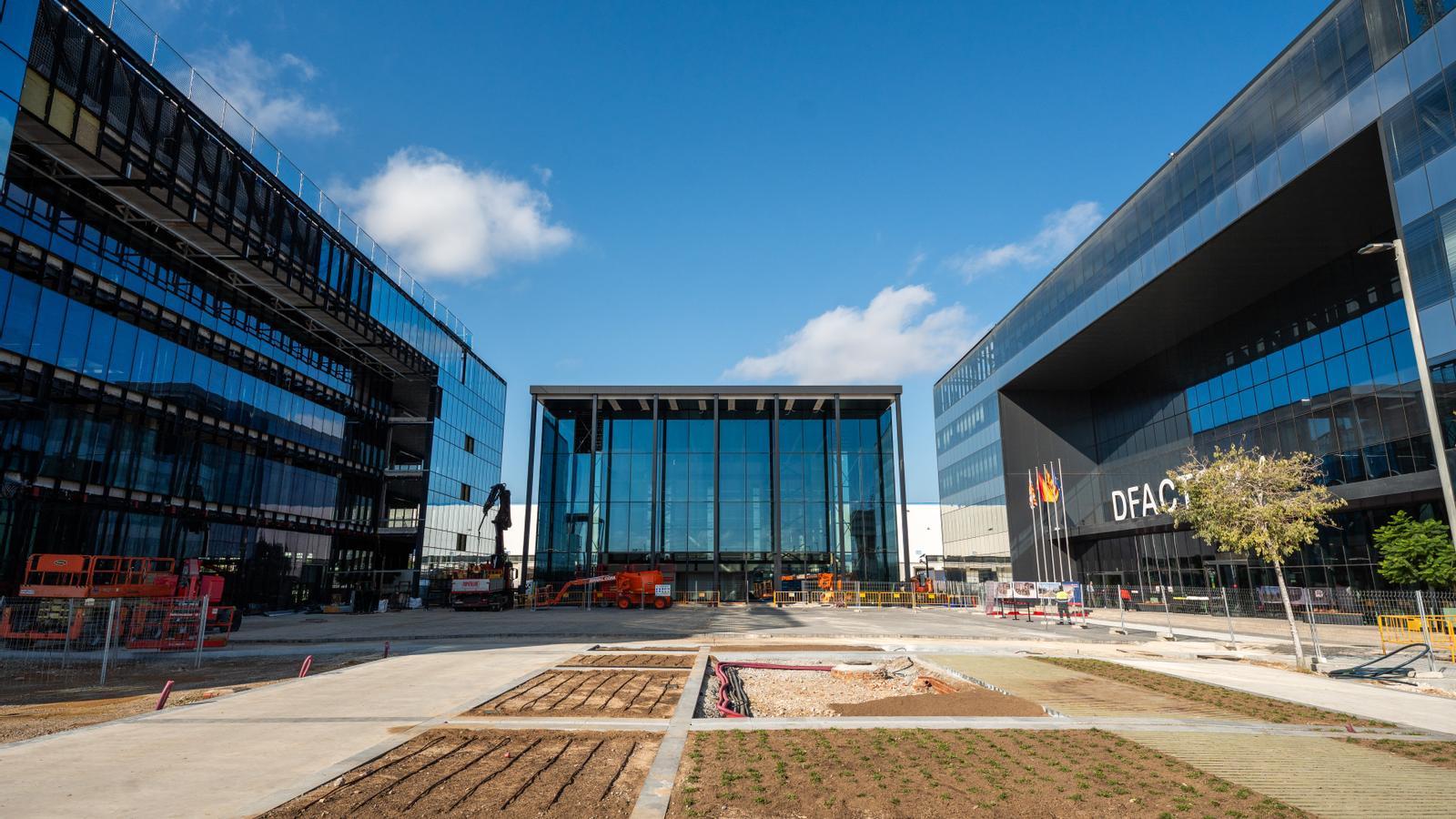
Promoted by the Consorci de la Zona Franca de Barcelona (CZFB), the project represents a step further in the transformation initiated with DFactory Barcelona and seeks to evolve from the traditional concept of an industrial estate toward a true district of opportunities. An environment in which industrial spaces are combined with technology, knowledge, and meeting spaces designed to foster business collaboration.
As the executive president of the CZFB, Pere Navarro, explains, this process responds to a profound evolution in the way the institution's role is understood: "We have moved from managing square meters to generating opportunities." The goal is no longer just to have spaces available for companies, but also to create the necessary conditions for knowledge, technology, and talent to converge, for companies to collaborate with each other, and for innovation to become real economic activity.
A new model of urban industry
The transformation starts from an essential idea: industry and the city can no longer evolve separately. New productive activities are increasingly digital, clean, technological, and compatible with urban environments. For Pere Navarro, "we cannot build the cities of the future with the industrial models of the past". The answer lies in an innovative, digitized, and sustainable urban industry, integrated into its environment and capable of acting as an engine for economic and social development.
Barcelona also gathers a good part of the necessary ingredients to lead this process: industrial tradition, knowledge, talent, innovation capacity, and international projection. On this basis, DFactory Barcelona District seeks to reinforce the city's positioning as one of the main benchmarks for industrial, technological, and urban transformation in Southern Europe.
The starting point is DFactory Barcelona, an ecosystem in which the technologies that we usually associate with the future are already part of daily activity. Its facilities host companies, technology centers, and professionals working in fields such as artificial intelligence, robotics, additive manufacturing, computer vision, or sensor technology. These are technologies that are transforming the way of designing, producing, and developing new products and services and that, furthermore, allow for generating connections and shared projects between very different sectors.
From 14 to 56 companies in five years
In 2021, DFactory Barcelona had 14 companies. Currently, there are 56, four times more in just five years, and its facilities have reached 100% occupancy. It currently generates 500 direct jobs and 1,500 indirect ones. The companies, with a great capacity for innovation, have developed 63 patents, and international growth is on the rise.
More than 30% of the companies present at DFactory Barcelona are international, with companies from countries such as Germany, China, the United States, Denmark, Italy, Switzerland, and Norway. And the interest is increasing: this 2026, more than 1,000 international professionals have visited DFactory Barcelona, 50% more than the previous year, coming from more than 25 countries.
For the General Director of the CZFB, Blanca Sorigué, the data confirm the consolidation of the model: "DFactory Barcelona has become an international meeting point for companies, innovation, and talent in Industry 4.0".
A district designed to generate opportunities
Beyond the construction of new buildings, DFactory Barcelona District proposes the creation of an environment capable of generating connections between companies, technologies, and professionals and transforming these relationships into innovation, business projects, employment, and economic activity.
This concept summarizes the philosophy of the new district: to convert a space historically linked to industrial production into a territory where advanced industry, knowledge, and talent coexist, closely connected with Barcelona and the main international innovation networks. "Transforming a city is not just about transforming its spaces. It is also about transforming its economy, its industry, and the opportunities for the people who live there," maintains Pere Navarro.
The physical transformation of the space therefore accompanies a much deeper transformation of the industrial model. Technology, talent, sustainability, and collaboration converge in the same environment with the desire to turn Barcelona into a benchmark territory for the new industry. Pere Navarro summarizes it this way: "The industry of the future is already working at DFactory Barcelona. And with DFactory Barcelona District, we want to multiply its capacity to generate new opportunities".
From the current 17,000 m² of DFactory Barcelona District, it will grow to nearly 60,000, eventually reaching 100,000 m² in the future. The completion of the Cub building, including the installation of its large screen, as well as the urbanization of the main avenue and the agora space, is scheduled for late November. In December, the completion of the facades and roofs of buildings A and D is planned, along with the urbanization of their respective surroundings, and construction of building B will begin in January 2027. The inauguration of the DFactory Barcelona expansion is scheduled for February 2027, and in March, the Cub building will host its first official event, with activity progressively beginning in buildings A and D.
"With DFactory Barcelona District, we are promoting a new way of understanding industry and its integration into the city. And most importantly, this transformation is already yielding results," highlights Blanca Sorigué.
