Europe's retro-electric cars, secret weapon to stop the Chinese invasion
The Paris Motor Show held a few weeks ago confirms the roadmaps of the main continental manufacturers
-
CAT -
CAST
The outbreak of the emissions scandal or Dieslegate and the Covid-19 pandemic had a major impact on the work plans of large European manufacturers. Suddenly, the major European brands began to manufacture new electric cars, with commercial names and perceived qualities inferior to what their internal combustion engine counterparts offered.
During the 2019-2024 period, large European groups focused their efforts on the segment of expensive, large-sized electric cars, trying to compete with the Tesla Model S, Model X, and Model 3, the electric benchmarks of the moment. This led the brands to bet on expensive, high-power electric vehicles with large batteries like the Porsche Taycan or the Audi e-tron, among others. Their commercial impact on the electrification of the European market was very limited, as they were impossible to purchase for the vast majority of European pockets.
The main Chinese industrial groups, for their part, have taken advantage of the European absence in the segment of affordable and compact electric vehicles to strengthen their position in a strategic space of the market. Luca de Meo, CEO of the Renault group between 2020 and 2025, had the strategic vision to bet on affordable electric cars that reinforce emotional bonds with European buyers, taking advantage of the legacy of models like the Renault 5 or the Renault 4, among others.
Renault's bet has worked perfectly, and currently the Douai plant (in northern France) cannot keep up with the total demand for existing electric Renault 5s, which forces the brand to double shifts to meet existing demand. In fact, sales of electric cars already account for 60% of total Renault registrations in France, which reinforces the commitment of the diamond brand.

Small European electric utility vehicles have also counted on the complicity of institutions, which have found a way to favor and secure jobs in European factories and incentivize production and the local network of suppliers through plans and subsidies for the purchase of electric, European, and economical vehicles (EEE). A win-win in every sense, which, added to the tariffs on electric cars coming from China, have truly revived sales of electrics manufactured in Europe.
A shared strategy
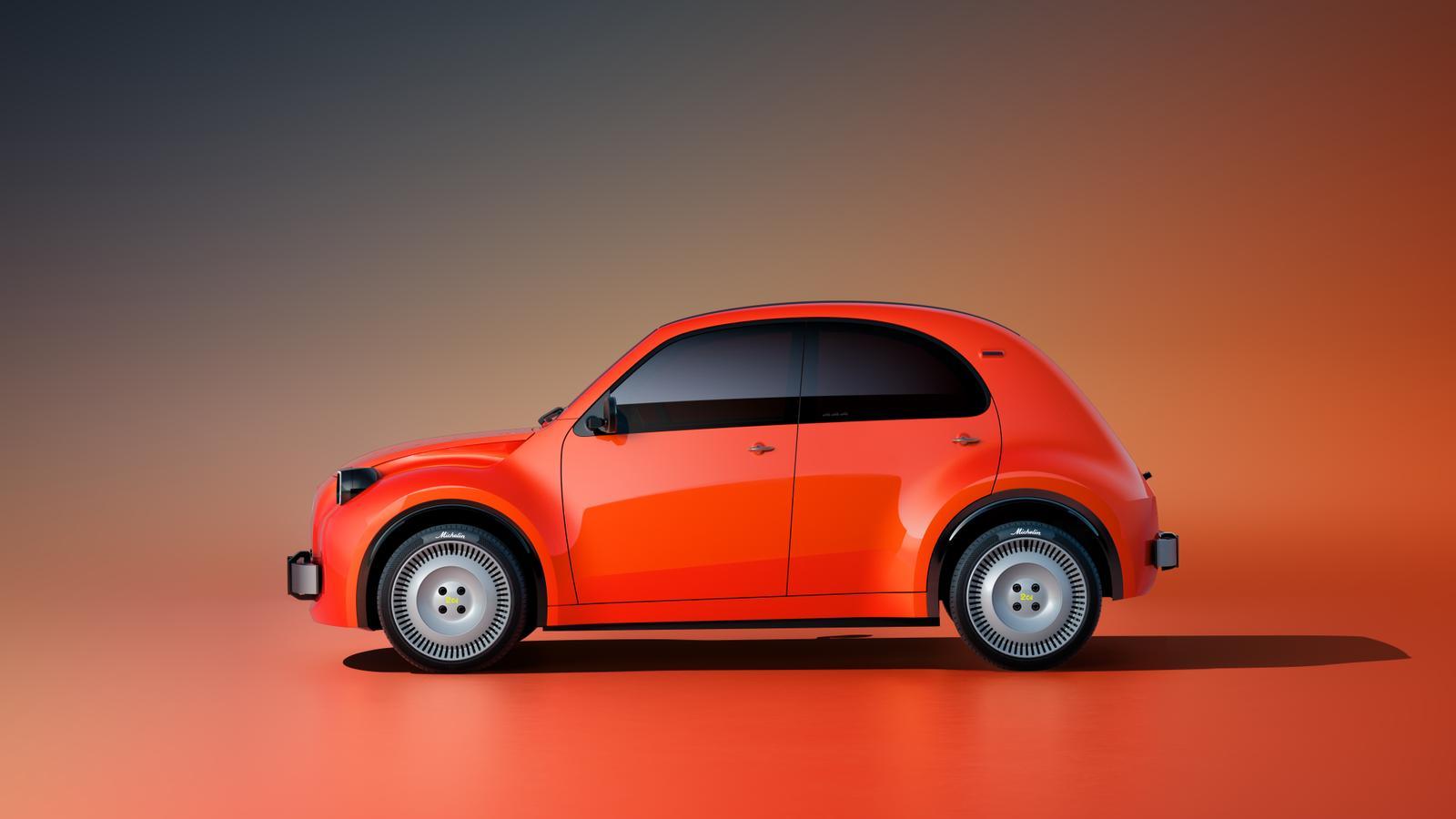
Renault's roadmap and the good results obtained have encouraged the rest of European manufacturers to develop electric cars inspired by classic models, the so-called retro-electric cars. In the big catch-all of retro-electric cars we can include the new Citroën 2CV (a car that will cost less than 15,000 euros), the Renault 4 or the prototype Peugeot E-T16, which shows the main lines of the future 208.

The Volkswagen Group, for its part, has seen how the French strategy has worked above initial expectations and has adapted its immediate strategy to this reality. Volkswagen has abandoned the trade names ID.3, ID.4, or ID.5 and has renamed its new electric vehicles as ID.Polo, ID.Tiguan and, in a few months, ID.Golf.
The Italians at Fiat have also applied the same recipe, and have recovered historic names like the Topolino or the Fiat 500 and 600 to name their electric range, to which the Grande Panda must be added. All of them, rational and affordable electric cars, with selling prices (promotions and subsidies aside) around 20,000 or 25,000 euros.
The good European results have encouraged manufacturers like Jeep (within the Stellantis group) to bet on a similar strategy. The North American brand is already developing an electric Jeep Willys, very similar to the original 1947 model.
Although it is still early to evaluate with well-defined and consolidated performance indicators the real impact of retro-electrics on the electrification of the European vehicle fleet and the increase in sales of European brands, it seems clear that the path initiated by the Renault 5 and Citroën 2CV will allow changing the dynamics of the European automotive market. Only time will tell if this is the strategy that will finally allow European manufacturers to stand up to electric cars made in China, ensure the continuity of local jobs (and the supplier network), and guarantee European technological and industrial automotive independence.
