The Soviet legacy that now puts the security of Europe at risk
Russian gauge railway tracks and bridges incapable of supporting Western tanks create a major bottleneck on NATO's eastern flank

-
CAT -
CAST
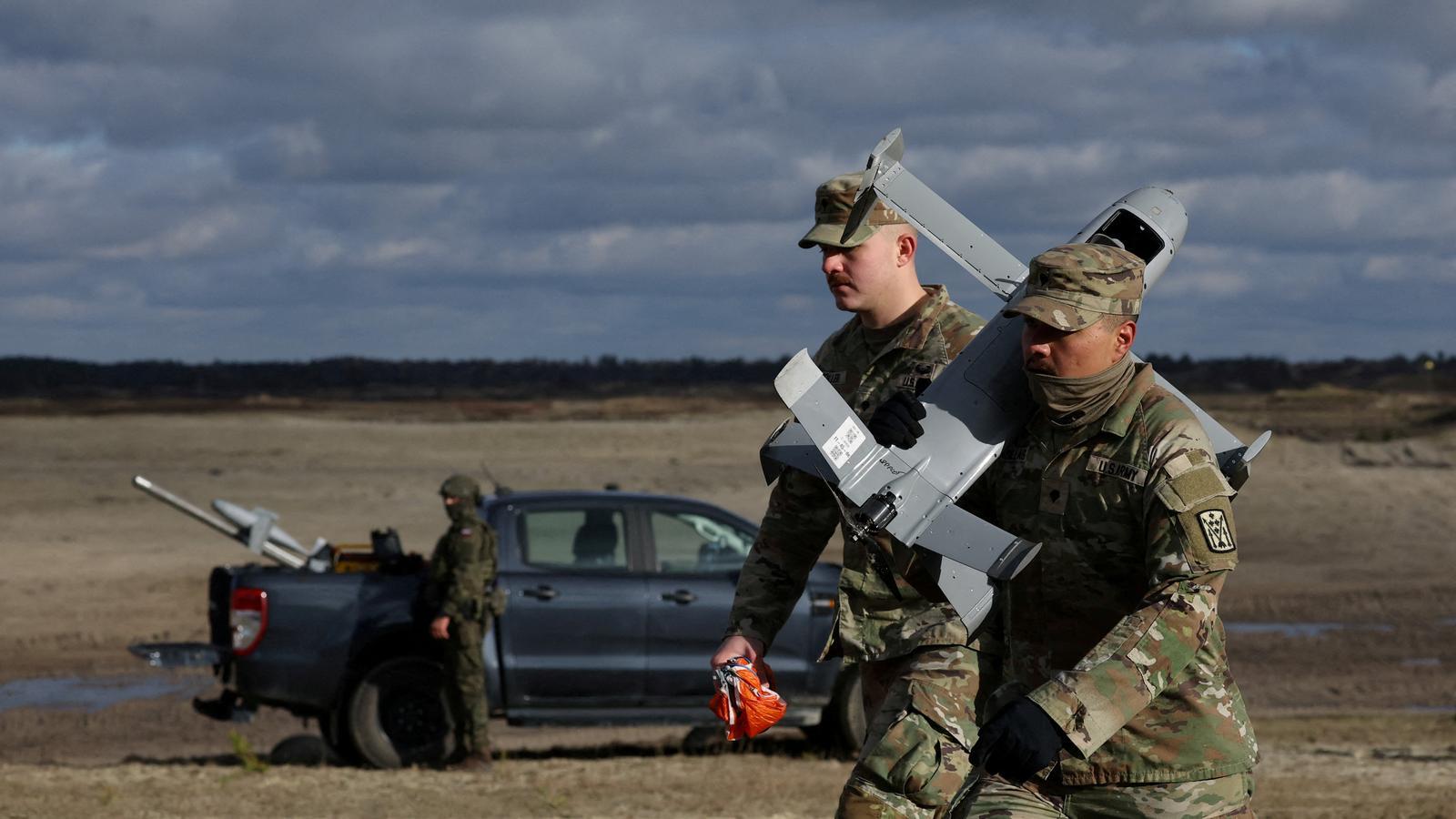
Barcelona“Having the best technology or the best tanks is useless if you cannot get them to where they are needed faster than your rival.” With these words, Ben Hodges, commander of the United States Army in Europe, summarized how infrastructure limitations are a burden on military mobility in Europe.
The Russian invasion of Ukraine has in recent years focused attention on the eastern flank—the countries of Eastern Europe that define the security area against Russia and Belarus and that have often been viewed from Brussels as peripheral—but it has also revealed structural shortcomings that would complicate a NATO response in the event of Russian aggression against a member of the Atlantic Alliance.

Països de l’OTAN
Finlàndia
Rússia
Via Bàltica
Suècia
Corredor Suwalki
Tallinn
mar Bàltic
Estònia
Pärnu
RÚSSIA
Riga
Letònia
Lituània
Panevežys
Kaunas
Vílnius
Bielorússia
Polònia
Bialystok
Varsòvia
Països de l’OTAN
Rússia
Via Bàltica
Corredor Suwalki
Finlàndia
Suècia
Tallinn
Estònia
mar Bàltic
Pärnu
Riga
Letònia
Lituània
Panevežys
Kaunas
Vílnius
Bialystok
Bielorússia
Varsòvia
Polònia
Països de l’OTAN
Rússia
Via Bàltica
Corredor Suwalki
Finlàndia
Suècia
Tallinn
Estònia
mar Bàltic
Pärnu
Riga
Letònia
Lituània
Panevežys
Kaunas
Vílnius
Bialystok
Bielorússia
Varsòvia
Polònia
A large part of the limitations have their roots in the Russian orbit that has historically existed over Eastern Europe, and which still translates into infrastructures designed by Moscow that are now incompatible with Western ones. Moscow's legacy is palpable in some Eastern European and Baltic countries, but also in others like Finland, in railway tracks that are still of Russian gauge –1,520 millimeters compared to the 1,435 standard– and some roads and bridges that are incapable of supporting the weight of Western tanks.
24-hour delays at the borders
If NATO wants to move heavy tanks from bases in Germany to the eastern flank, trains must stop at the border, for example in Poland or Lithuania –two countries that have sections with Russian track gauge–, to change the convoys or the train axles. This process not only slows down the process, but also leaves military material exposed to potential attacks. According to a report by the think tank Globsec, based in Slovenia, railway bottlenecks can cause delays of up to 24 hours in border transfers.
Road transport could be an alternative, but some of those in Eastern Europe do not have enough resistance. These are roads that were designed for standard commercial traffic or Soviet military equipment, which was less heavy, and their resistance is limited to between 40 and 50 tons, while heavy Western tanks can reach 70 and 80 tons.
The Globsec analysis indicates that only 68% of the main roads on NATO's eastern flank can support the military load of the Atlantic Alliance, and only 42% of secondary roads can withstand the transport of heavy vehicles over 60 tons. The report also identifies 167 bridges where military material could not pass.
Limitations also extend to sea and air. Only 62% of the 37 military bases and 14 civil airports meet NATO runway length standards, and many of them do not have enough resistance or capacity to handle large strategic transport aircraft like the C-17. At the ports, the Globsec study warns that there is a lack of high-capacity cranes, military-use ramps, and parking areas.
NATO's Achilles' heel
However, not everything can be explained by the long shadow of Moscow. In some cases, infrastructure deficiencies are due to a lack of investment and network upgrades. And technical fragmentation is compounded by bureaucratic hurdles at the borders, with waiting times of between 4 and 6 hours due to a lack of unified digitalization.
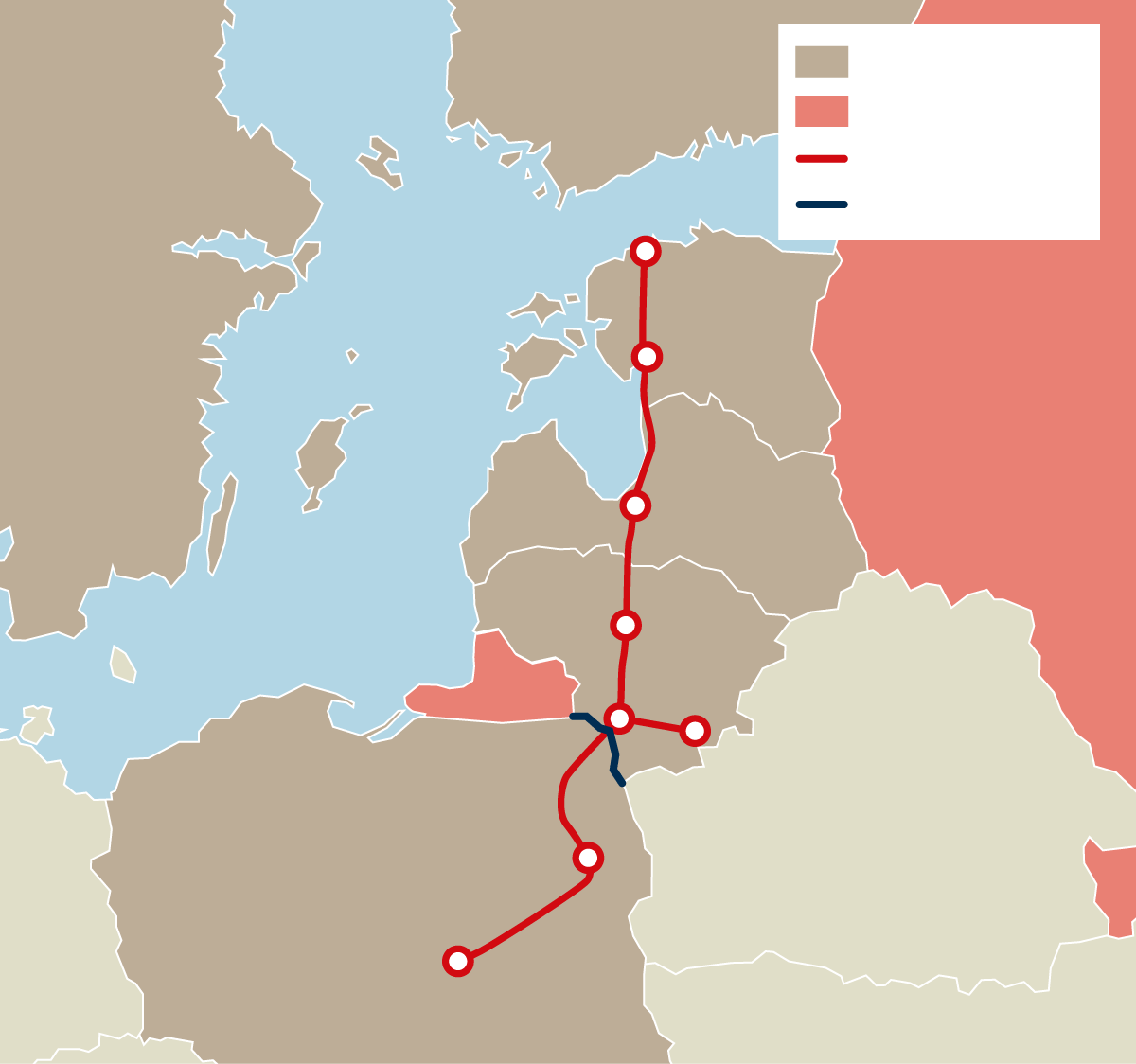
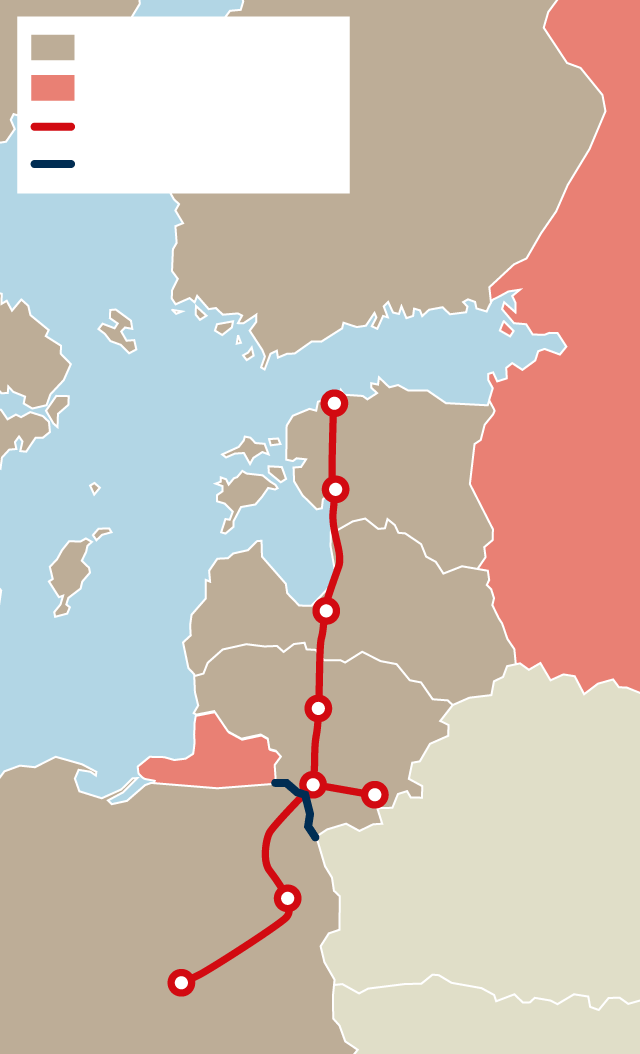
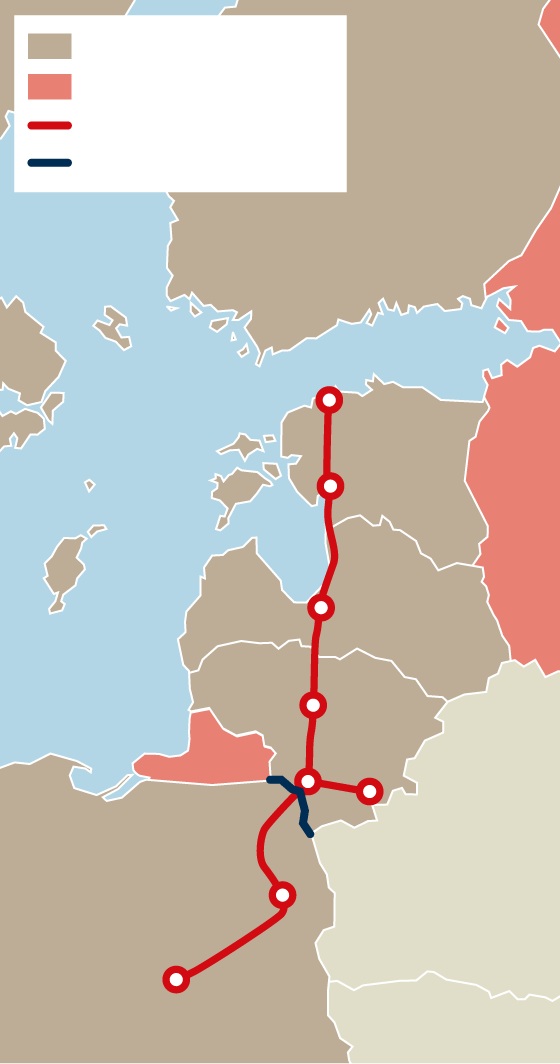
Beyond infrastructure, geography also conditions defense logistics. The only link between continental Europe and the Baltic countries is a strip of about 70 kilometers between Lithuania and Poland, known as the Suwalki Gap. Considered NATO's Achilles' heel, the Suwalki Gap is bordered by Belarus and the Russian enclave of Kaliningrad –which is heavily militarized–, and the risk is that Russia could seize this strip, cutting off the Atlantic Alliance's access to the Baltic states.
Aware of the vulnerability, Poland recently deployed an operation after Polish and NATO intelligence services warned of possible sabotage attacks from Russia.
“The most urgent challenge”
“Mobility has become the most urgent challenge for European infrastructure,” points out Lithuanian MEP Petras Austrevicius in an article in which he argues that “a large part of Europe is still inaccessible” and that the EU must prioritize investment in the eastern flank in order to be able to move goods and military equipment more quickly. “Europe must move from awareness to implementation,” argues Austrevicius.
If awareness arrived with the war in Ukraine, implementation is still proving elusive. The Rail Baltica project, which aims to connect the Baltics with the European railway network, is a priority project for the EU, but it is mired in a deep crisis due to years of accumulated delays and a budget that has quadrupled. Via Baltica is its equivalent for roads. The route, of nearly 1,000 kilometers, runs from Poland to Estonia, and has generated tension among the member countries: Poland and Latvia accuse the Baltics of putting NATO security at risk by not advancing quickly enough in the completion of the project.
The two initiatives, however, do not resolve the underlying problems. To do so, the EU has set the goal of having a military Schengen area that would allow permits for transporting troops and military equipment to be processed in a few hours in cases of emergency. The initiative, however, touches on delicate issues for the states, such as territorial and border control, and negotiations are being finalized under a warning from Brussels: “Solid logistics networks can make the difference between winning and losing a war,” warned the Transport Commissioner, Apostolos Tzitzikostas.
