Saudi Arabia joins the war and launches an attack with the US against pro-Iranian militias in Iraq
The bombings have been directed against the FMP general headquarters at various points on the Iraqi map

-
CAT -
CAST
JerusalemTension in the Middle East is escalating again. Saudi Arabia took a step forward this Wednesday in the war against Iran by participating directly, alongside the United States, in bombings against the pro-Iranian militia Popular Mobilization Forces (PMF) in Iraq. Riyadh's military involvement marks a turning point in one of the most tense moments in the region since the ceasefire in April and demonstrates the strategic shift driven by Donald Trump, who is increasingly reinforcing his commitment to the Saudi kingdom as one of Washington's main Arab allies in the region.
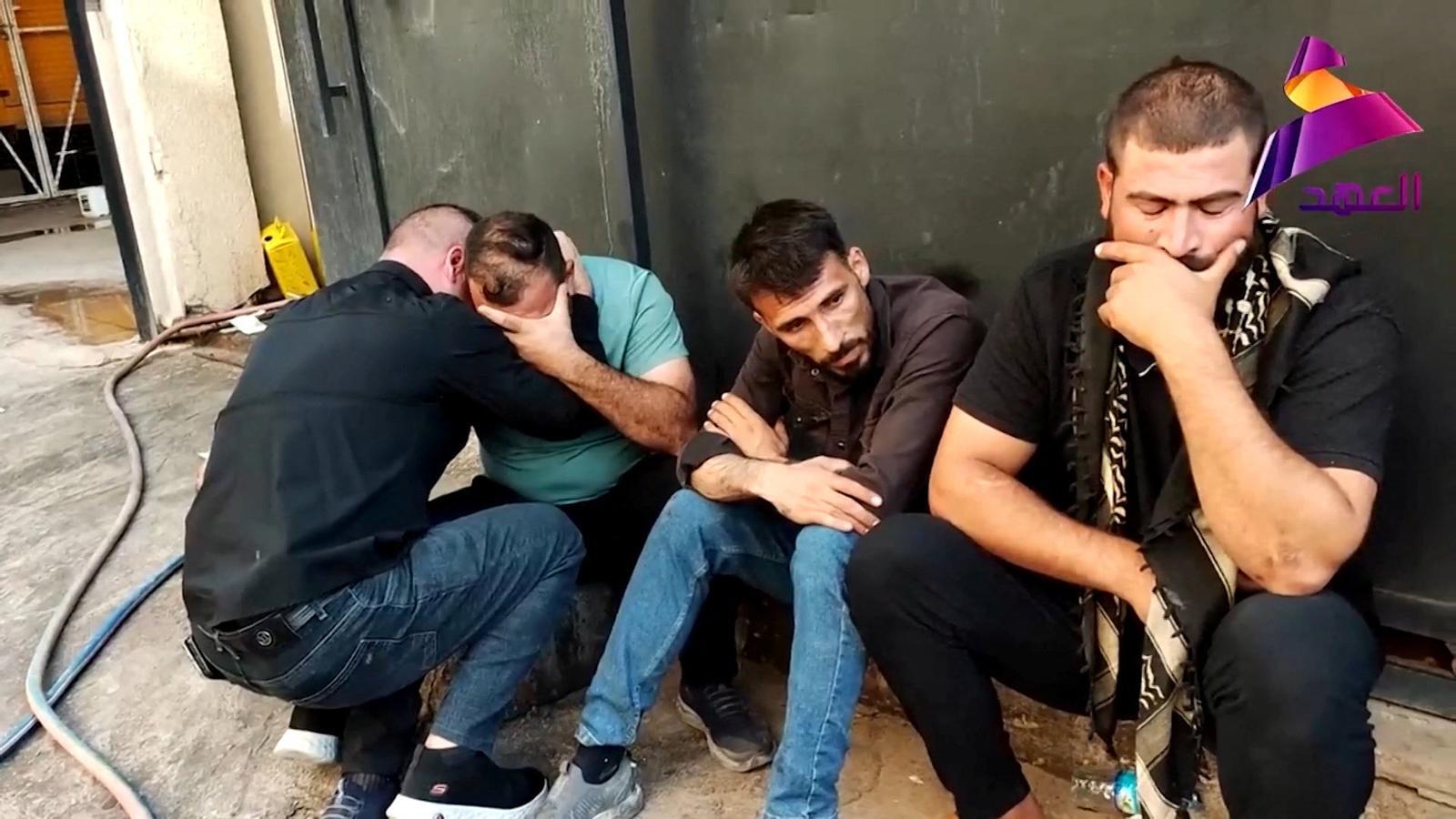
The operation, which according to the PMF has caused at least twenty deaths and thirty injuries, represents Saudi Arabia's most evident involvement to date in the war between Washington and Tehran, which began on February 28. According to the United States Central Command, today's bombings are a response to over thirty drone attacks coordinated by the Iranian Islamic Revolutionary Guard against American forces and Saudi energy infrastructure over the last 72 hours. For its part, the Saudi Ministry of Defense has confirmed Riyadh's participation in the joint offensive and has stated that the kingdom "does not seek escalation," but that it "will respond to any aggression" against the country.
The scale of the attacks is significant. The bombings have affected PMF facilities spread across seven Iraqi provinces – Baghdad, Wasit, Nineveh, Basra, Kirkuk, Karbala, and Diyala – and have forced the Iraqi government to convene an emergency National Security Council meeting. The crisis has also had immediate diplomatic consequences: the visit tomorrow of Iraqi Prime Minister Ali Al-Zaidi to Jeddah to meet with Crown Prince Mohammed bin Salman has been postponed indefinitely, according to two senior Iraqi government officials cited by the Israeli media "The Times of Israel.
The cross-border attacks of recent days have put an end to the brief truce that had been in place over the weekend, after the US president decided to halt a bombing campaign that had already been ongoing for two weeks and Iran seemed to respond with a temporary de-escalation. The new offensive, however, once again places the Gulf at the center of the conflict and fuels fears of a new regional escalation.
Trump reinforces his commitment to Riyadh
The Saudi military involvement comes just a week after Washington and Riyadh finalized a civil nuclear cooperation agreement that opens the door to the development of a Saudi nuclear program without some of the safeguards traditionally required by the United States. An agreement that the White House has linked to a key piece of its regional policy: the normalization of relations between Saudi Arabia and Israel. Washington continues to pressure Riyadh to join the Abraham Accords, a possibility that, although it still seems distant at the moment, has regained strength due to the current escalation.
The offensive also comes just hours after the meeting between United States President Donald Trump and Israeli Prime Minister Benjamin Netanyahu, at the White House, a meeting that both leaders have described as "excellent." After the meeting, Netanyahu stated that they both "fully" share the goal of preventing Iran from obtaining a nuclear weapon and defined the alliance with the US president as "a wall of granite." "We have a common commitment. We do not want this fanatic regime in Tehran to have nuclear weapons to threaten the United States, world peace, and the existence of Israel," said the Israeli prime minister. Netanyahu also insisted that this goal will be achieved "through diplomatic channels or by other means."
More tension in the Gulf
The day was also marked by more military incidents in the region. The Jordanian army announced that it had intercepted five Iranian missiles targeting its territory, while Washington stated that other projectiles launched by Tehran against American forces deployed in the country had also been neutralized.
Furthermore, a drone impacted a methane tanker owned by a Greek company at the Egyptian port of Damietta, according to the maritime security company Ambrey. The country's government reported that a fire had occurred at the port, affecting two ships, but did not detail the cause.
At the same time, the Houthis of Yemen, allies of Tehran, are considering imposing taxes on commercial vessels crossing Bab el-Mandeb, the strategic passage connecting the Red Sea with the Gulf of Aden, after having decreed a maritime blockade against Saudi Arabia last week, according to Reuters. There is no timetable yet for implementing this measure, but if it comes into force, it could become a new threat to international trade and global oil transport.
In parallel, Iran has rejected a proposal from Oman to jointly manage the Strait of Hormuz, maintaining its position that the control of the planet's main energy artery must remain under Iranian influence, as confirmed to Reuters by a senior Iranian official. According to this same source, the United States and Saudi Arabia are reportedly pressuring Oman to promote plans for the strait that Tehran considers unrealistic.
