Catalan teachers detect the first 'curis', the new gateway to harassment through social networks
The Mossos send a communication to some high schools to know how to act in front of this new phenomenon

-
CAT -
CAST
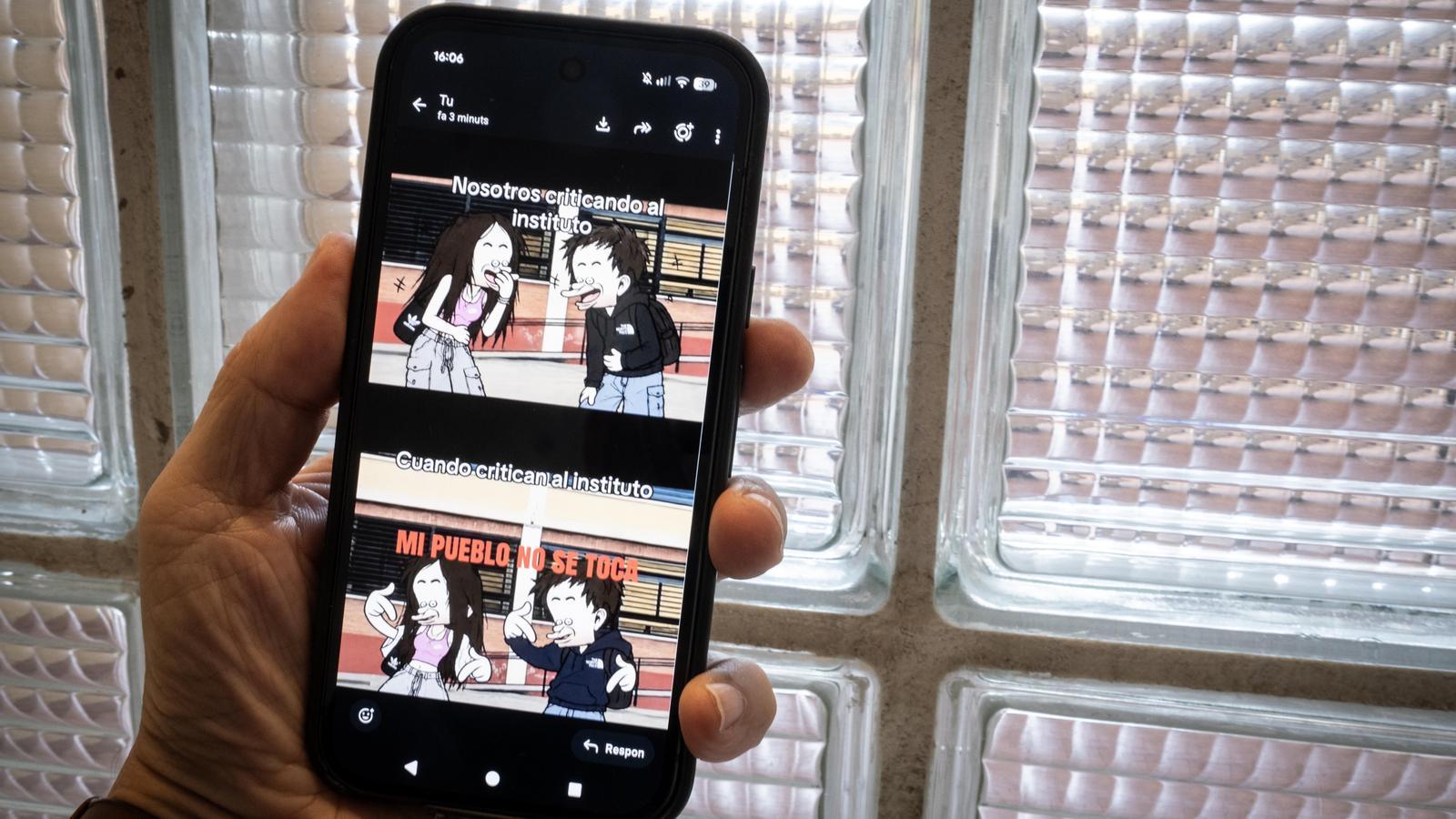
BarcelonaMore than fifteen years ago, a new form of communication spread through Catalan high schools: the informers, Facebook groups—back when there was neither Instagram nor TikTok—where one could send information, gossip, or a message directed at someone to be published anonymously. Now, the Mossos d’Esquadra use these informers as an example to ask high schools to be alert to a new phenomenon on social media: curi profiles. As already happened with the informers, the curis can be a danger because they are a new space where cases of bullying can occur. However, the Mossos warn that the curis have a capacity for diffusion and impact that is “considerably higher” due to the characteristics of current social media.
But what exactly are curis? “They are accounts that are very often created on social networks like TikTok or Instagram featuring drawings, caricatures, memes, or videos about people who represent the educational community. They can be students, teachers, or even school staff members,” explains Elia López, a professor at the Faculty of Education of the University of Barcelona (UB). To make these memes, characters from movies, cartoons, or video games are used that can represent situations of school life, but for practical purposes, all the followers of the profile—usually students from the same high school—know who they are referring to. The problem, as always, is where to draw the line between a joke and mockery or, directly, bullying.

Various teachers and some administrations of public and charter high schools have explained to ARA that they have already detected profiles of this type in their institutes – usually, the name of the profile is a combination of the word curi and the name of the educational center–. Furthermore, they assert that, for the moment, they have seen it more as “foolishness,” although they admit that it is difficult to access these profiles to truly assess what is being published there. “Generally, the little we have been able to see are videos with the teacher’s back turned and people laughing, but it is very difficult to track this type of content. Here, there also needs to be important work on the part of parents to report it if they detect such publications,” requests the director of a public high school in Tarragona.
“It is a phenomenon that has become very fashionable and is increasingly present and visible in educational centers in Catalonia and the State, mainly among secondary school adolescents, although it can also appear in the final years of primary school,” details López. He explains that some examples of content that can lead to bullying are posts that ridicule a classmate or some type of cartoon that caricatures a teacher with offensive comments.
Warning from the Mossos to the institutes
As has happened in other parts of the State and the world, before the curis become a problem, the Mossos already sent a communication a few weeks ago to some high schools asking them to be alert and detailing how to act in case of detecting cases of cyberbullying. Among the risks that the Catalan police point out with the curis, there is the spread of rumors, the public exposure of students or teachers, the publication of images without consent, harassment or cyberbullying, discriminatory comments, conflicts of coexistence between groups of students, identity theft, and the dissemination of personal data. In this sense, in the same communication they explain that “the main problem tends to be that students initially perceive the content as a joke, but anonymity facilitates the publication of content that can cause emotional harm or real conflicts within the center”.
Faced with this danger, the Catalan police explain to educational centers that “accumulated experience shows that it is important to act preventively, working on digital coexistence, responsibility in the use of social networks, and early detection of possible situations of harassment or rights violations”. In this sense, one of the centers that has already started is Vedruna Escorial Vic, which, despite not having detected worrying cases, is aware of the existence of curi profiles in its center. “We have them controlled and we are monitoring them so they do not become a problem, but right now they are not a worrying issue”, explains Pol del Pozo, a 2nd-grade primary teacher at the school.
He details that, for the moment, this school year teachers are being trained in media literacy, digital security, algorithms, and critical thinking regarding social media so that next year the same teachers can train the students starting from primary school (6 years old). “The goal is not for us [the teachers] to be trained to detect problems like the curis but to teach the students from a young age so that they know how to move safely in the digital world”, describes the teacher.
-
When there is only humorous content or "gossip"
- Monitor the evolution of the phenomenon.
- Inform management teams of potential risks.
- Address it in safe internet talks.
- Encourage early reporting of content that could lead to harassment.
-
When insults, humiliations, or rumors appear
- Collect screenshots.
- Activate the school's internal coexistence protocols.
- Assess potential cyberbullying situations.
- Coordinate with families and guardians.
-
When personal data, threats, or criminal content appear
- Police assessment.
- Preservation of digital evidence.
- Possible proceedings depending on the published content.
- Communication to the platform to remove content.
- Possible alert indicators for schools:
