Is Trump's endorsement good or bad for Netanyahu?
Seeks to reinforce the Israeli prime minister, but bilateral tensions and mistrust towards the American president question its electoral impact

-
CAT -
CAST
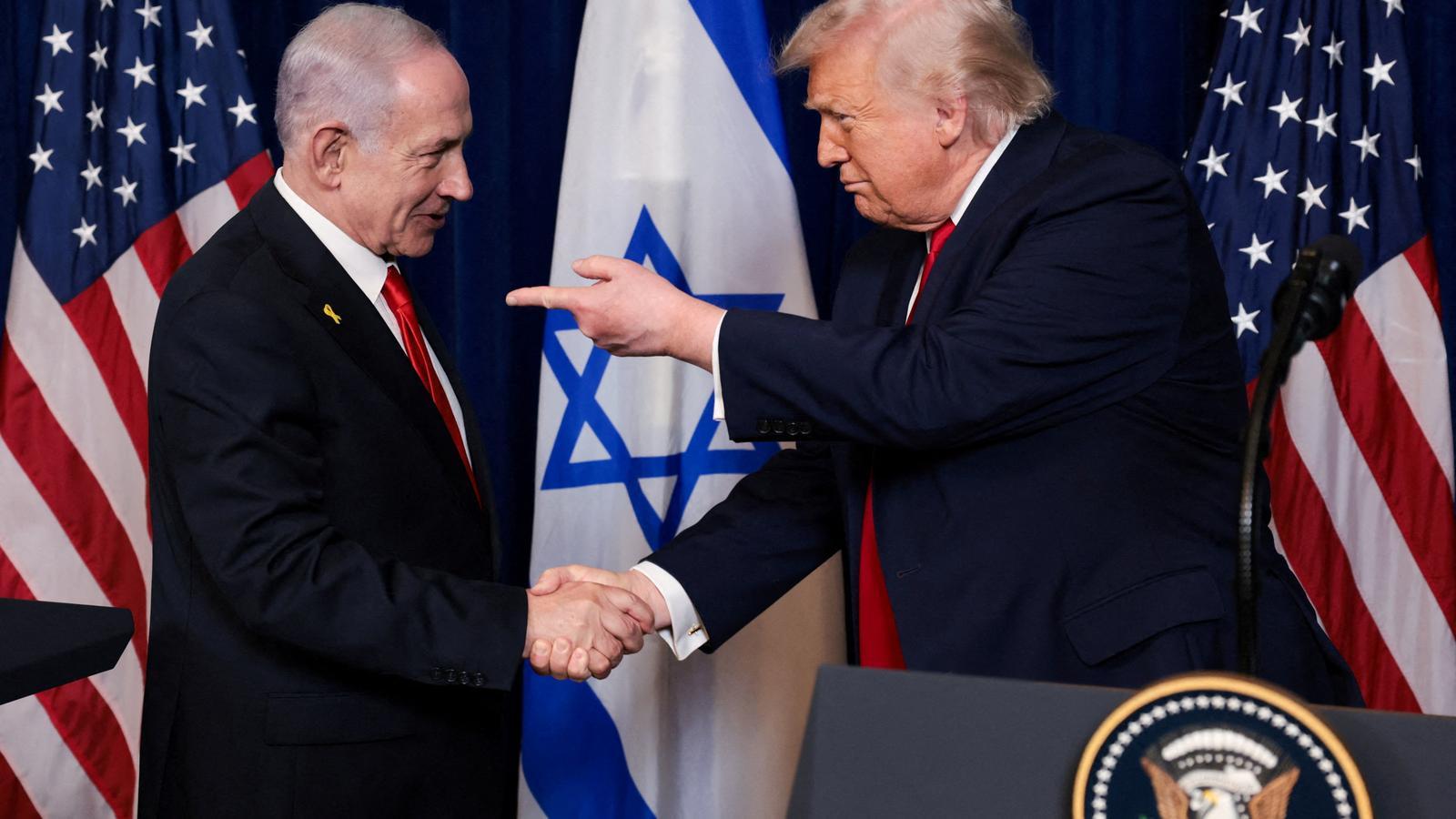
JerusalemBenjamin Netanyahu wants to reach the polls with an image of strength: that of a prime minister capable of speaking as an equal with the President of the United States. Nine days before the Israeli elections, Donald Trump offered him an opportunity to project this image. The American president described the Israeli leader as a “warrior prime minister,” expressed his “full and total support” for his reelection, and attributed to him a decisive role in the offensive against Iran, which began in February. But the endorsement has a paradox: it can strengthen Netanyahu among his voters and, at the same time, serve as a reminder that Washington does not always share his priorities.
Netanyahu thanked him for the gesture and promised that “both will finish the job together”, and his campaign team released a video featuring previous praise from the president. The message was clear: the relationship with Washington is one of the main credentials that the Israeli prime minister wants to showcase to the voters.
Trump's support allows Netanyahu to claim his international weight and once again place Iran and regional security at the center of the debate, two areas in which he wants to project firmness and leadership capacity. All this, in an election that is being framed as a referendum on the handling of the Hamas attacks of October 7, 2023, the wars that have shaken Israel and the region, and the corruption trial he has been facing since 2020.
In this context, Trump's endorsement raises a key question: can it translate into votes? Several analysts doubt it. The prime minister's supporters already consider him the leader best positioned to deal with Washington, while his detractors see in this proximity a dependency that has not prevented the United States from pressuring Israel to accept decisions contrary to its preferences.
“I don’t think Trump’s endorsement will have any effect. Those who support Netanyahu will continue to do so, and those who oppose him will continue to oppose him,” explains Ilana Shpaizman, a professor at Bar-Ilan University, to ARA. According to the expert in Israeli politics, Israelis do not tend to give much weight to endorsements from foreign leaders, and even less so at a time when confidence in the American president has diminished precisely in the area where the Israeli leader has his main electoral argument: security.
According to the research center Israel Democracy Institute, the proportion of Israelis who trusted the American president as a leader committed to Israel's security fell from 64% in March to 41% after the agreement signed in June to stop the war with Iran, considered insufficient by many citizens. A survey by the Jewish People Policy Institute (JPPI), a think tank on the future of the Jewish people, published in July, pointed in the same direction: only 7% of respondents said they trusted Trump a lot, while 45% stated they did not trust him at all. In March, during the military operation against the Persian country, high trust had reached 34%.
This mistrust, however, does not imply a total rejection of the alliance. According to the JPPI, two-thirds of Israelis believe that the country should coordinate with Washington whenever possible, but that it must act according to Israel's own interests when there are disagreements. The distinction is key: defending cooperation with Washington does not mean fully trusting Trump or taking for granted that both governments share the same priorities.
And it is precisely in this distance between the need to cooperate and the differences in interests where tensions have surfaced between Trump and Netanyahu. In recent months, the American president has pressured Israel to accept truces in Gaza and Lebanon and has tried to put an end to the war with Iran. The Israeli prime minister, on the other hand, has defended maintaining military pressure as long as he considers that the threats remain in force.
The cooling of the Trump-Netanyahu relationship
The disagreement has become visible in specific episodes. In March, after the Israeli attack on the Iranian South Pars gas field, Trump said he had asked Netanyahu not to repeat operations of that kind. The agreement with Iran also generated criticism in Israel. In June, Trump scolded Netanyahu by phone for the escalation of attacks in Lebanon and the plans to bomb Beirut, which threatened negotiations with Tehran. At that moment he snapped at him: "You are completely crazy".
In Gaza, Trump pushed for a ceasefire. Although Netanyahu accepted the American plan in October 2025, in August 2026 he rejected a new proposal that linked the disarmament of Hamas with the gradual withdrawal of Israeli troops. He insisted that Israel would not leave the Strip until Hamas was completely disarmed. In September, during the Israeli leader's visit to New York for the UN General Assembly, they did not even meet.
Before the elections, the opposition wants to exploit this contradiction: Netanyahu presents his proximity to Trump as a guarantee of security and influence, but the disagreements between the two call its extent into question. The endorsement may reinforce the prime minister's image of leadership, but it will hardly sway the vote of the undecided, who are more concerned with security and his handling of the war.
