The ultra-Orthodox, the uncomfortable partner who can decide the future of Netanyahu
While the pressure grows for everyone to assume the same military obligations, the Haredi parties that defend the exemptions can be key to forming a government
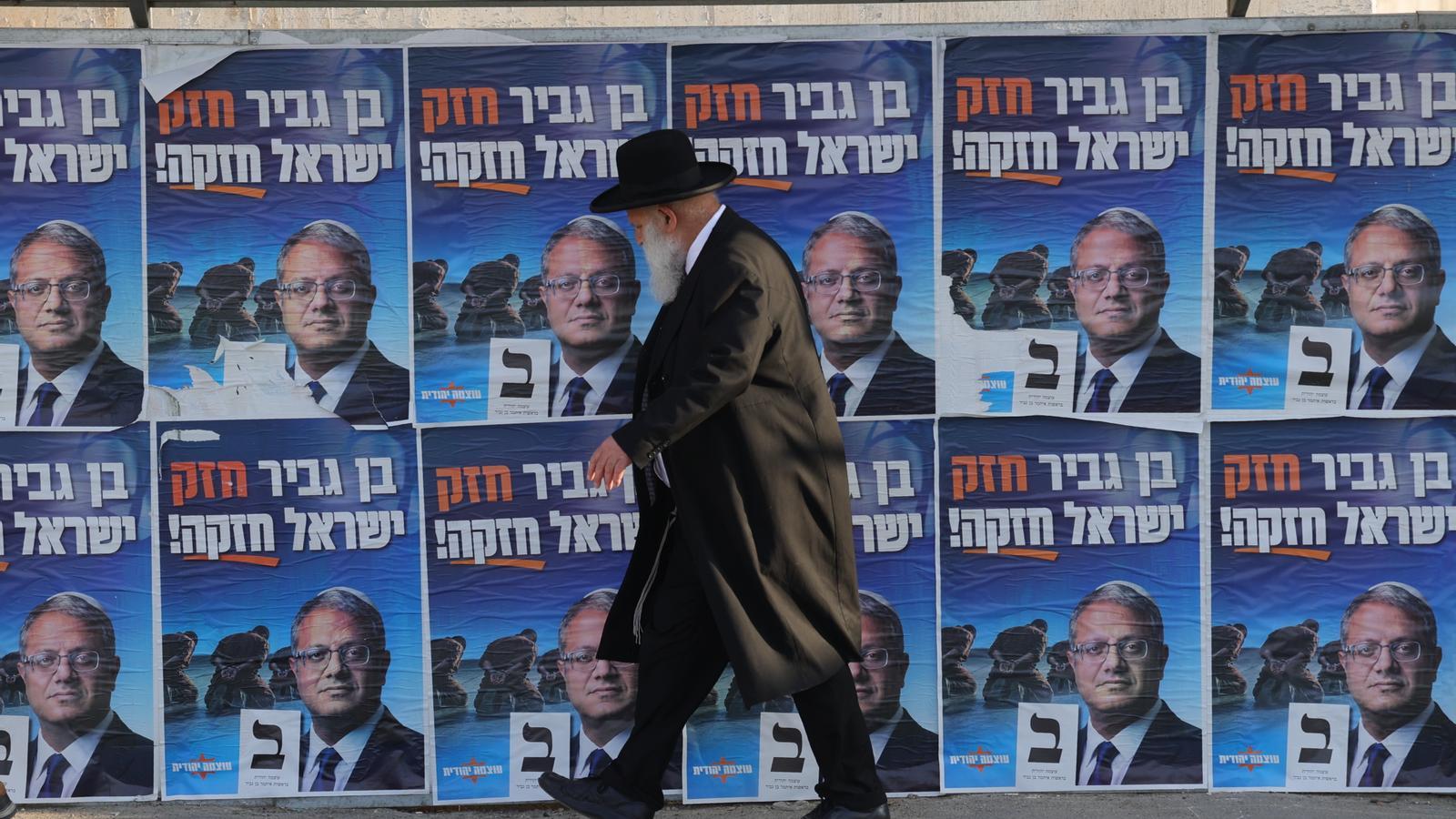

-
CAT -
CAST
JerusalemReturning to Israel has become an arrest for some citizens. Forty-two ultra-Orthodox men who arrived on Tuesday from New York were arrested by military police at Tel Aviv's Ben Gurion Airport, accused of evading military service. Twenty-seven of them agreed to join the ranks and were released, and thirteen went through a judicial process and were then imprisoned, although they eventually agreed to go into the army and have been released. But two more went directly from the airport to prison for having avoided recruitment for more than 540 days.
The episode, a few days before the Israeli elections on October 27, illustrates one of the country's great dilemmas: while pressure grows for everyone to assume the same military obligations, the ultra-Orthodox parties that defend the exemptions continue to have the ability to sway the formation of the government and condition the political future of Benjamin Netanyahu.
Shas and United Torah Judaism, the two main ultra-Orthodox parties, are not the largest factions in Israel, but they can have a decisive weight in a Parliament of 120 deputies, in which 61 seats are needed to govern with a majority. The polls place them at around seven or eight seats each. Together, between fourteen and sixteen deputies with whom they can condition the negotiations.
The Israeli proportional system gives small parties great negotiating power when their seats are decisive for forming a majority. This explains the weight that Shas and United Torah Judaism have traditionally had in the governments of Benjamin Netanyahu, who returned to power in 2022 with the support of both. But the alliance has been strained by the dispute over military recruitment. Last year United Torah Judaism left the government because a law had not been passed that satisfied their demands for exemption from military service. Shas, for its part, withdrew its ministers and resigned from the positions it held in parliamentary committees to pressure the prime minister. Both parties also resorted to boycotting parliamentary votes to defend their demands.
Now they want to condition the next executive. The leader of Shas, Aryeh Deri, has stated that the party will not enter nor support a government that does not pass a law to regularize the situation of the students of the yeshivas, the Jewish schools of Talmudic study, and protect their exemptions. United Torah Judaism maintains a similar demand, although it leaves the definitive decisions regarding possible alliances in the hands of its rabbinical leaders.
The origin of the dispute dates back to the early years of Israel, when Prime Minister David Ben-Gurion allowed a small group of students from Talmudic schools to be exempt from military service to dedicate themselves to the study of the Torah, in a context marked by the consequences of the Holocaust. With the growth of the ultra-Orthodox community, which has one of the highest birth rates in the country with an average of 6.5 children per woman, according to the research center The Israel Democracy Institute, that exception became a national issue. It is estimated that some 80,000 Haredi men (ultra-Orthodox Jews) between 18 and 24 years of age are eligible for military service and have not enlisted.
For ultra-Orthodox leaders, the study of the Torah is an essential contribution to the survival of the Jewish people and they fear that the army will expose young people to an environment incompatible with their religious norms. But the wars on different fronts started after the Hamas attacks of October 7, 2023, and the successive mobilizations of reservists have intensified the debate over who assumes the risks of the country's defense. In June 2024, the Supreme Court established that general exemptions could not be maintained without a valid legal basis and that the state had to begin drafting eligible men.
A dilemma for Netanyahu
In this context, the dispute could place Netanyahu before a political dilemma if after the elections he needed the ultra-Orthodox parties to form a government: satisfying their demands could facilitate a parliamentary majority for him, but it would expose him to criticism from Israelis who demand an equitable distribution of military obligations. Rejecting the demands of these allies, on the other hand, could make it difficult for him to form a government.
Netanyahu's rivals want to put an end to ultra-Orthodox military exemptions, but discrepancies over possible alliances could complicate the formation of an alternative government and strengthen the negotiating power of Shas and United Torah Judaism. Gadi Eizenkot, Netanyahu's main rival and leader of Yaxar, defends universal military service and rules out, for now, governing with the ultra-Orthodox parties, despite having shown himself open to reaching an agreement with Shas. Naftali Bennett, from the center-right, proposes cutting public funds to ultra-Orthodox individuals who evade military service and allocating some 8.64 billion euros to soldiers. Avigdor Lieberman, leader of the nationalist and secular right-wing party Yisrael Beiteinu, rejects both a government with Netanyahu and a pact with the two ultra-Orthodox parties.
Four days before the elections, ultra-orthodox parties may once again hold the key to governability in Israel. Both Netanyahu and other aspirants to power will need to negotiate alliances to gather a majority, and the weight of religious parties may place their demands regarding military service at the center of the talks to form the next government.
