Kaja Kallas loses her voice in Europe
The decision of the European team that has to represent Europe in the negotiation with Russia highlights the isolation of the Estonian woman

-
CAT -
CAST
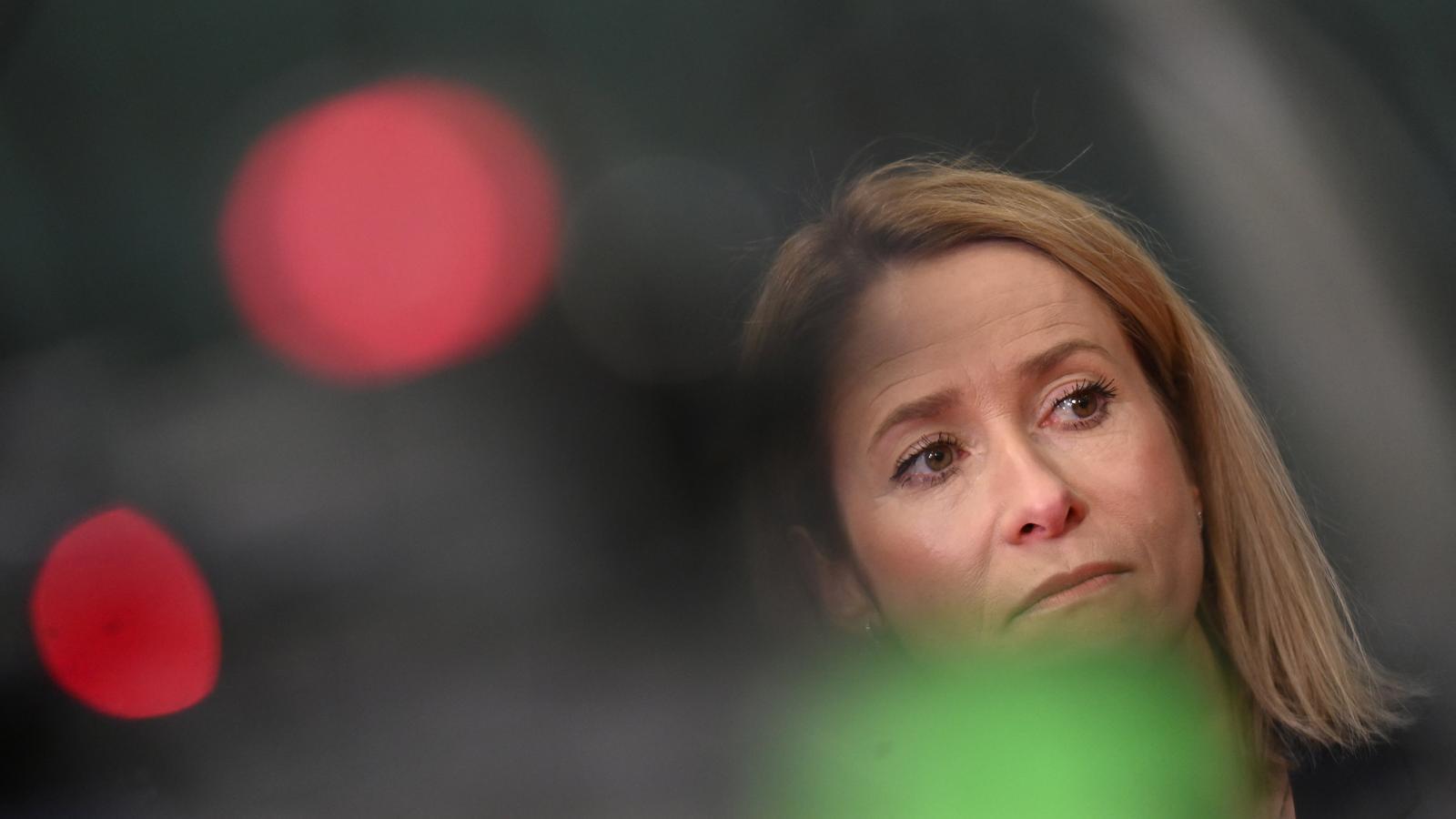
BrusselsThe sidelining of the European diplomatic chief was consummated with a silence. Not a single head of state or government who was at the Dublin summit last week criticized her or discredited her in public. It was not necessary. The evasions and statements that tiptoed around her figure certified the distrust that Kaja Kallas elicits within the bloc.
Hours earlier, the Estonian leader had proposed herself to head the negotiations with the Kremlin. Her insistence and attempt to make her worth known were of no use (she asserted that she is “prepared” for the job and claimed that the leaders had chosen her in 2024). Friedrich Merz, Emmanuel Macron, and the president of the European Council himself, Antonio Costa, acted as if they didn't hear it. The format that was agreed upon during the meeting relegated her to a testimonial role: it would be the heads of government of Germany, France, Italy, the United Kingdom, and Poland, together with Costa and the president of the European Commission, Ursula von der Leyen, who would sit at the table with Washington, Kyiv, and Moscow.
The scene revealed no secret in Brussels. Except for a few counted exceptions –such as Spain or Estonia–, Kallas is not a consensus figure in the European Union, much less to negotiate with Russia. Her family history (her mother and grandmother were deported to Siberia in Soviet Estonia) and an implacable rhetoric (she has gone so far as to state that the dismemberment of Russia would not be a problem) have forged her as a firm leader with Vladimir Putin’s country. A firmness that some capitals see as a burden for the negotiation.
But Kallas’s isolation goes beyond her wariness of Moscow and fuels a deeper debate about the very function that a high representative of the European Union must have. Who should hold the diplomatic wheel of the bloc if not the person who has been chosen to do so? Her marginalization cannot be separated from a background offensive by some member states to clip the wings of the European External Action Service, the community diplomatic body that the major capitals disapprove of because it competes with their own chancelleries.
Some voices in Brussels point out that Kallas has opened two fronts at once: one against the member states and the other against the President of the European Commission – with whom frictions have emerged over the control of the bloc's foreign policy –, a fact that has left her in a position of weakness. Ursula von der Leyen, who is known for her reputation of always wanting to have the final say, had already tried to take the diplomatic reins from Kallas's predecessor, Josep Borrell. However, the consolidated track record of the Estonian leader combined with the firmness of her messages (on issues like the Gaza war) had made an impact on public opinion and had given him a certain amount of support within the bloc. This is not happening with Kallas.
Marginalized in the Middle East
The Russian path is not the only diplomatic route where the Estonian leader is barred. This week another scene has once again made evident her loss of weight in international relations, in this case with the Middle East. While Kallas was in Brussels to host the Mediterranean security forum, the European Commissioner for the Mediterranean, Dubravka Suica, traveled to Syria and Jordan.
This is no ordinary trip. Jordan is the most influential Arab actor in the defense of Gaza and the main humanitarian and economic corridor in the region. That the Commission's leadership bypasses the High Representative on a mission of this caliber confirms that Kallas has been left out of the inner circle of community diplomacy in the Middle East.
The trend goes back a long way. It has been some time since Suica became the EU's usual interlocutor with Israel and the United States; this year she has already held at least four contacts with the Israeli Foreign Minister, Gideon Saar. Kallas's marginalization was an initiative of Tel Aviv. After it transpired that, in a closed-door meeting, she had compared Israel's treatment of the Palestinians with what the population of South Africa received under apartheid, Saar decided to break off relations with her entirely. But, instead of closing ranks with its head of diplomacy, the very next day the community executive sent Suica to Tel Aviv to keep the dialogue channel open.
Kallas and Suica embody two opposing strategies. The Estonian's belligerence worked at the beginning of the invasion of Ukraine, when the consensus that it was necessary to be firm with the Kremlin prevailed. But the board has changed and her loss of support has left her in a dead end. Now that things are going badly on the Ukraine front and Europe's priority is to find a place at the table of the great powers, her profile seems outdated.
