Does Trump have any control over Netanyahu?
The Israeli prime minister has managed to convince the US president with arguments previously used with Biden, Obama and Bush
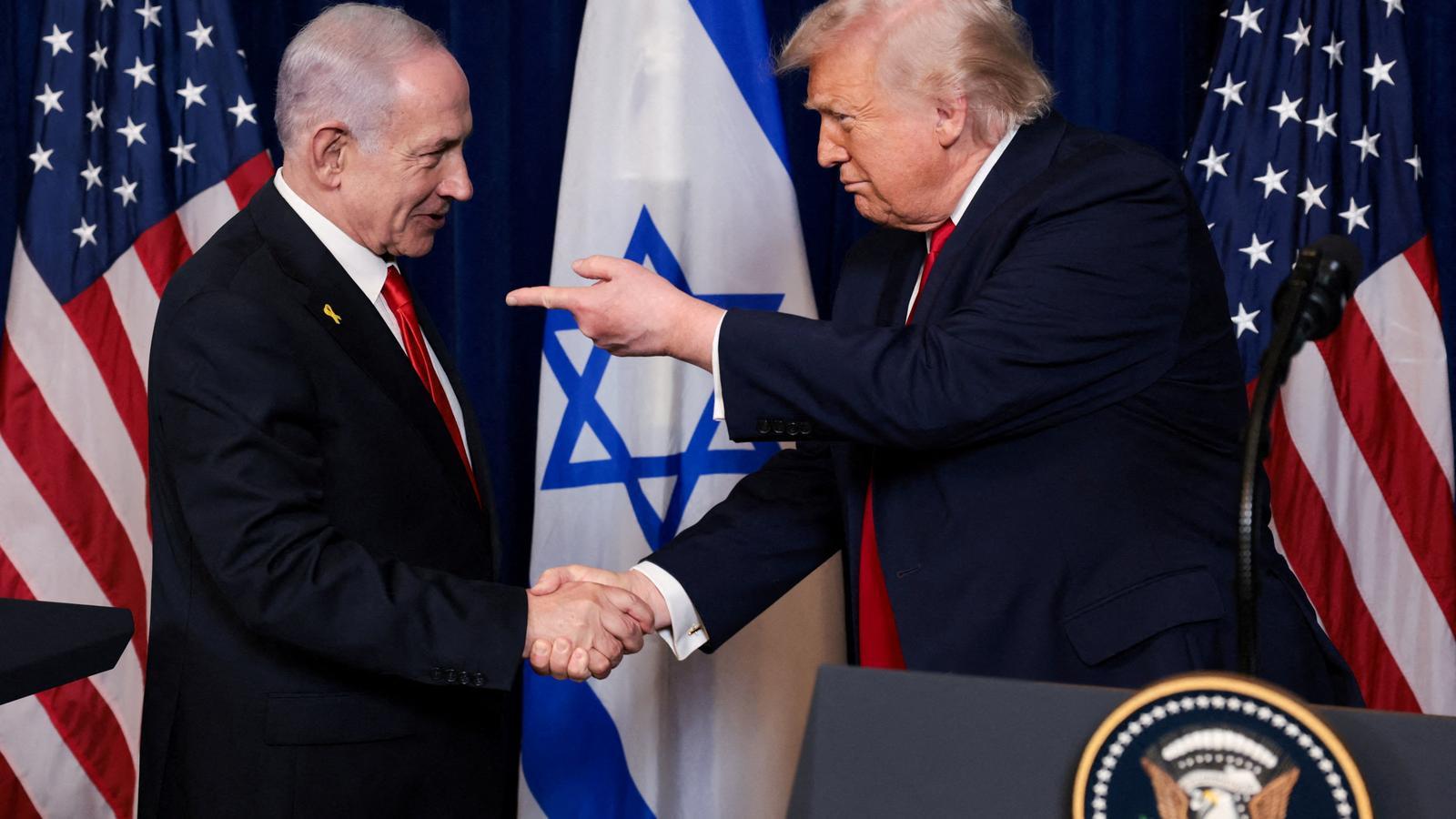
-
CAT -
CAST
Washington“You are crazy”, “if it weren’t for me, you would be in prison”, “everyone hates you”. These were some of the words that the President of the United States, Donald Trump, addressed to the Israeli Prime Minister, Benjamin Netanyahu, last week. He told them directly in a phone call, and then he himself confirmed it to the media.
he pushed him into war against Iranpushed him into war against Iran in the same way he tried to push other American presidents.
Nevertheless, after these statements, Trump assured that his relationship with Netanyahu is solid. “We work very well together. I really like Bibi”, he said in an interview with the New York Post. In another interview, Netanyahu said that they both have “tactical disagreements”, but since they have “common goals”, they do agree “on what is principal”. “He respects me, I respect him. We always find a way to settle our differences”, argued the Israeli leader.
Netanyahu's influence on American policy in the Middle East is known, but it has taken on a new dimension during Trump's second term. Netanyahu was not only the first foreign leader to visit the White House when Trump began his new presidency, and the only one who has already traveled to Washington seven times in the last year and a half to speak with him —during Biden's presidency he only did so once—. He is also the one who has led the US into a war they never wanted to start.
According to the New York Times, these trips culminated in February, when Trump agreed to attack Iran after a presentation by Netanyahu in which he insisted on two points. First, that Iran was ready for a regime change that the United States and Israel could facilitate. Second, that waiting longer would be counterproductive because it would allow Iran to accelerate its missile production and better defend its nuclear program.
after Israel attacked Beirut and Iran responded to the attackAn uncontrollable Netanyahu
Trump is showing himself to be increasingly nervous and impatient to resolve the war in Iran, that war he assured he would resolve "in a few days" or at least "very quickly," because during the election campaign he promised not to involve the US in new conflicts and to focus on improving the lives of ordinary Americans. Nevertheless, more than 100 days have already passed since Israel and the US attacked Iran, on February 28, and the war remains active and energy prices and economic uncertainty continue to grow.
The end of the war is now so uncertain that Trump himself has even suggested that the Strait of Hormuz could remain blocked until September. Meanwhile, the United States Congress has approved a resolution to prevent the president from continuing with the war, but it has little chance of succeeding because Trump himself will foreseeably veto it.
The war in Lebanon blocks diplomacy
What is going wrong? On Wednesday, Israel and Lebanon agreed to renew the ceasefire and set a date to begin a new round of talks the week of June 22. But this truce is in danger after Israel attacked Beirut and Iran responded to the attack. When Iran attacked Israel this Sunday, the first time since the ceasefire began in early April, Trump assured that he would call Netanyahu and ask him not to respond. This Monday, the two spoke by phone, and Netanyahu said that, "for now," Israel is stopping attacks against Iran. But the evolution of the conflict in the coming hours will reveal how much power Trump has over the Israeli.
According to the White House, the US is not part of these attacks, but Trump could ask the army to intervene to help Israel. In another interview this Sunday, Trump said that Netanyahu will have to comply with the ceasefire being negotiated by the US because "he is not in charge".
"He has no choice. I am the one in charge. I am in charge of everything. He is not in charge," he told the Financial Times. In his opinion, Sunday's attacks do not put the ceasefire between Israel and Lebanon at risk, nor do they jeopardize negotiations between the United States and Iran. At the same time, he told the Fox channel that he was not happy with Israel and its attacks. "If Bibi attacks again, this will continue as it has for the last 47 years or the last 3,000," he said in other statements.
On the Israeli side, an army spokesperson said they have approved more interventions in Lebanon and that Israel must demonstrate "its ability to defend itself." Former Israeli Prime Minister Naftali Bennett has also advocated for retaliation: "A weak or symbolic response will indicate to our enemies that the blood of our citizens has been shed with impunity; therefore, Israel must act with strength and effectiveness."

