The campaign begins that will be a referendum for Netanyahu
The elections of October 27 put the prime minister to the test after three years marked by the war, with a fragmented opposition and no clear majority

-
CAT -
CAST
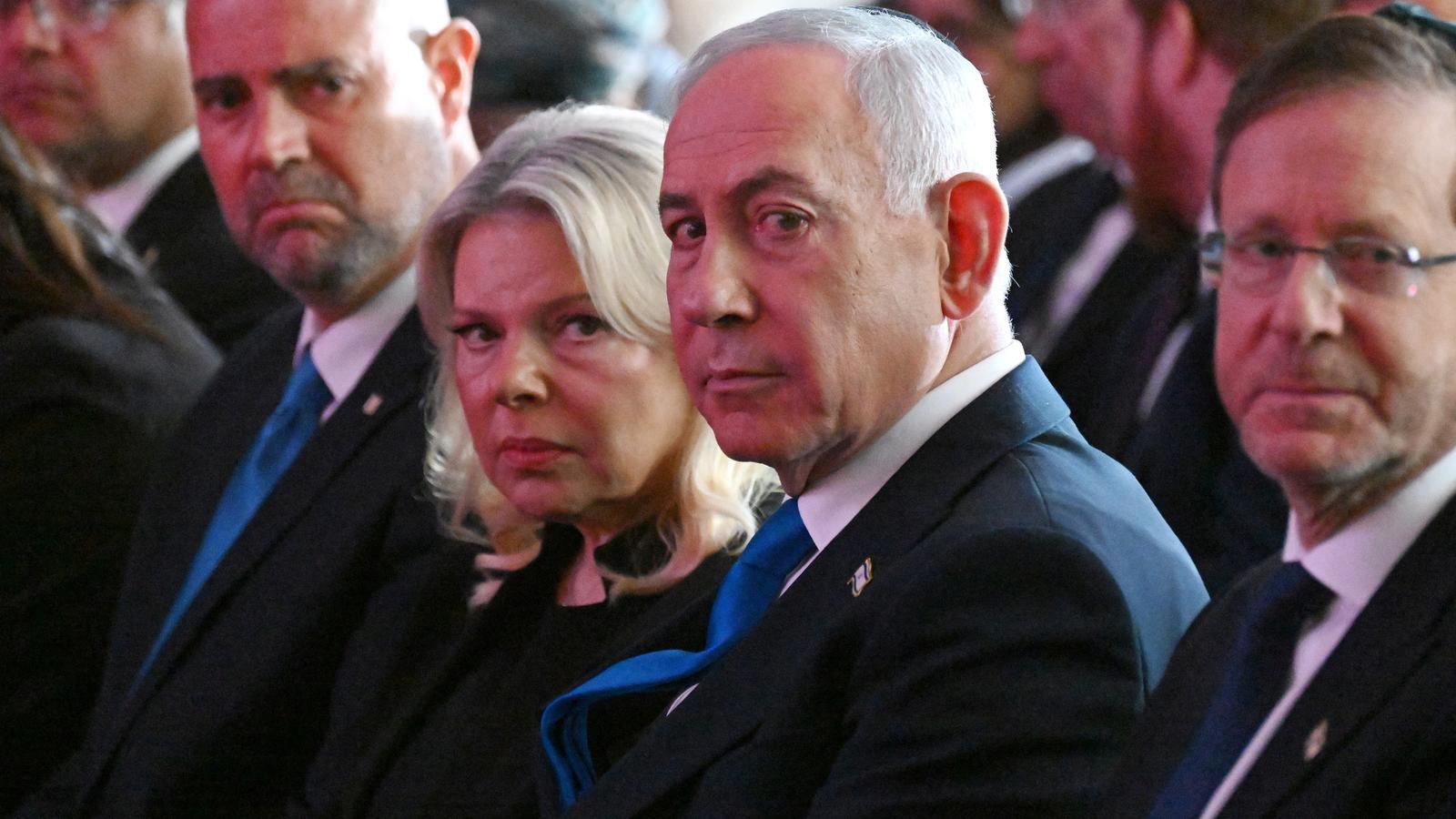
JerusalemIsrael enters an election campaign with a familiar feeling: politics is once again revolving around Benjamin Netanyahu. But this time the prime minister arrives at the polls after three years that have transformed the country. On October 27, Israelis will vote for the first time since the Hamas attack of October 7, 2023, which shook Israel and triggered a war that has spread to several fronts, from Gaza and Lebanon to Iran, Syria and Yemen.
Security is the central axis of Netanyahu's discourse in the face of voters' concerns. The prime minister defends the military operations against Hamas, Hezbollah, and Iran as a demonstration of Israel's strength and presents himself as the leader capable of protecting the country. This week, during the events of the third anniversary of October 7, he returned to this argument and warned that Hamas could attempt a new attack before the elections to influence the result. “Israel is the strongest country in the Middle East and our enemies are weaker than ever,” he stated during a cabinet meeting the day before the anniversary. “I tell all our enemies: look at what we have done to you on seven fronts. Do not mess with us.”
For his supporters, the message keeps the leader's image alive as Mr. Security. For his opponents, however, security is now one of his weak points, especially because of October 7th. The attack, which left 1,200 dead and 251 hostages in Gaza, occurred under his government and, three years later, there is still no state investigation to establish responsibilities. In the Strip, moreover, Hamas remains present despite Netanyahu's promises to achieve a “total victory”.
The weight of that day at the polls is difficult to ignore: 68% of Jewish Israelis state that October 7th will be a central factor when deciding their vote, according to a survey by the research center Israel Democracy Institute published in September.
In this sense, the debate over the government's responsibility has intensified following the warnings that the United Arab Emirates and Egypt had reportedly relayed to Israel before the attack and the statements by Avi Gil, Netanyahu's military secretary, regarding that morning. In an interview yesterday on Israel's Channel 12, Gil asserted that security officials had repeatedly warned of the risk of an escalation and suggested that the government had prioritized the survival of the coalition over a deal to release the hostages, which could have saved some of the victims.
But Israel will not head to the polls with its eyes set only on Gaza. The war has spread to several fronts, from Lebanon to Iran, passing through Syria and Yemen, and has strained relations with some of its allies. The United States remains Israel's main strategic partner, but the bond with the Donald Trump administration has not been free of friction, especially due to disagreements over Iran and the future of Gaza. In Europe, the diplomatic wear and tear is more evident: eleven European countries and Canada have announced trade restrictions on products coming from Israeli settlements in the West Bank, among which are the United Kingdom, France, and Spain.
An electoral race without a clear majority
The electoral snapshot is, right now, one of fragmentation. A poll published yesterday by the Israeli media Zman Yisrael gives 24 seats to Yaxar, the party of Gadi Eisenkot, the main political rival of Netanyahu, and 20 to the prime minister's Likud. The opposition bloc would obtain 55 seats, compared to 51 for the parties that support Netanyahu, and the Arab formations would total 14. A poll by Channel 13 draws a different scenario: 55 seats for Netanyahu's bloc, 50 for the opposition, and 15 for the Arab parties. In this last poll, Yaxar and Likud are tied at 20 seats.
The differences between polls reflect an open race and complex parliamentary arithmetic. Neither scenario gives the blocs the 61 seats necessary to reach a majority in the Israeli Parliament. It will not be enough, therefore, to be the most voted party: alliances and post-election pacts may end up deciding who governs.
In this context, Gadi Eisenkot, former chief of staff of the army, emerges as one of the main rivals of the prime minister. His military career allows him to challenge Netanyahu on one of his main political arguments: security. Eisenkot shares part of the language and priorities of the Likud electorate, but seeks to attract voters disillusioned with the prime minister's management, especially following October 7th.
The opposition, however, remains fragmented. Naftali Bennett, from the right, and Yair Lapid, from the center, have allied with Yachad (Together), while Avigdor Lieberman, of the secular right, leader of Yisrael Beytenu, and Yair Golan, of the center-left, at the head of The Democrats, aspire to play a decisive role. The Arab parties will also be determining factors in the parliamentary balance.
However, the electoral campaign goes beyond the political future of Netanyahu, who also faces a corruption trial that began in May 2020. The economy, military service for the ultra-Orthodox, the situation in the West Bank, and the relationship between religion and State are also now part of the debate. Furthermore, there is concern regarding the integrity of the electoral process: according to the Israel Democracy Institute, 51% of respondents believe it is very likely that foreign actors will attempt to interfere in the elections.
With eighteen days left until the elections, Israel will head to the polls with several fronts open: the war and security, the responsibilities for October 7th, Netanyahu's political future, and an opposition that still has to prove it can articulate a majority. The question will not only be what path the country wants to take, but also whether voters continue to see Netanyahu as the leader capable of protecting them or if they believe the time has come for a change.
