Martinet: the restaurant that will save an artisan delicatessen in Barcelona's Eixample
Inside a shop we find a unique establishment with dishes made from ingredients elaborated by themselves

-
CAT -
CAST
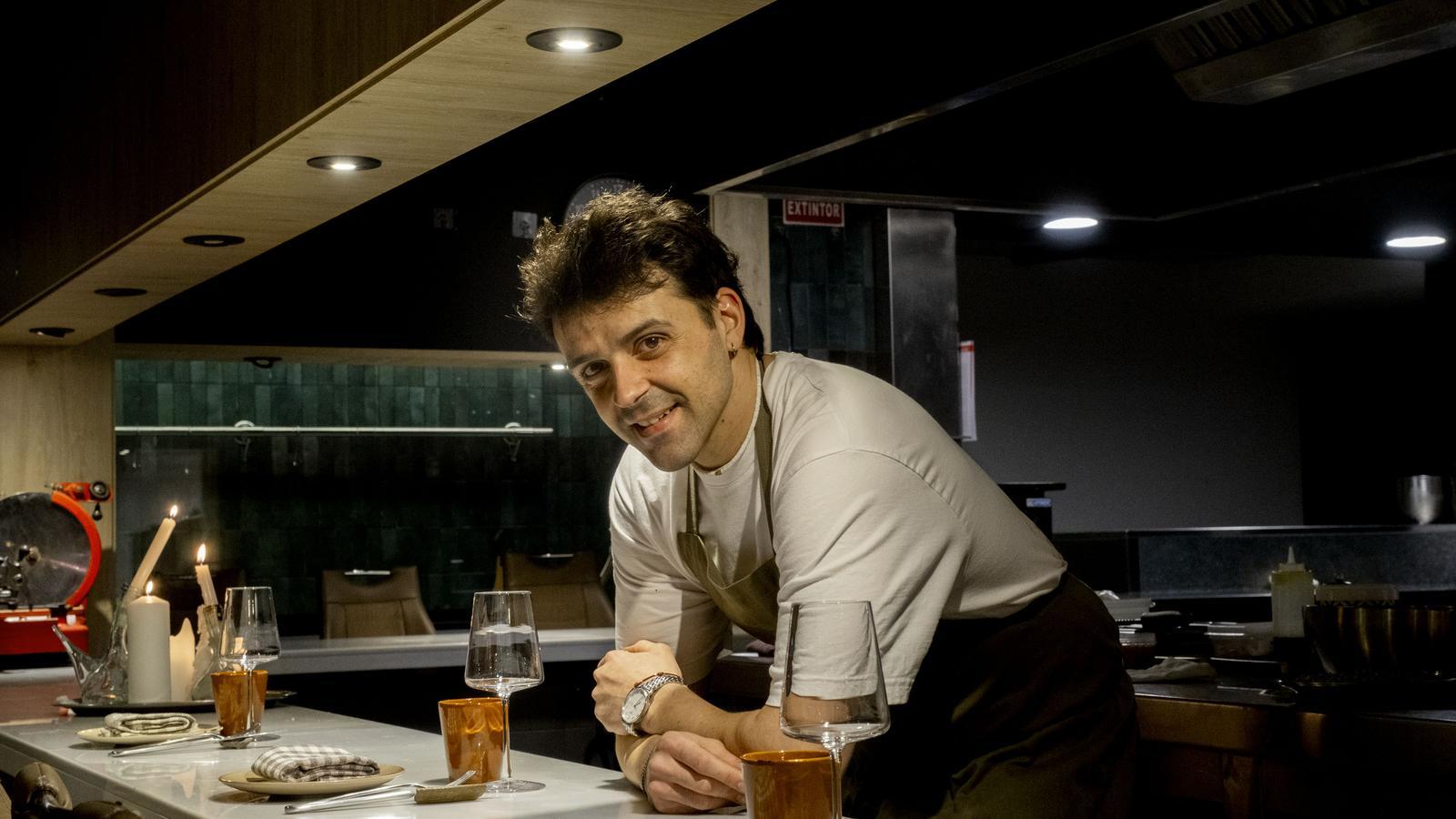
“I am a romantic”, Gerard Martí tells me. Probably because I am too, I have enjoyed his proposal so much. Gerard is a young chef, butcher, and whatever else is needed. His family runs the Casanovas butcher shop, at Carrer Calàbria, 113, in Barcelona. It is the fourth generation dedicated to it. They are aware that these are difficult times for the trade. Many artisan butchers are closing and there is no succession. The Martí family, however, have found a way to make the business profitable: combining the butcher shop with a restaurant. And the restaurant in question has turned out to be very surprising and recommendable.
It is called Martinet and the name is advertised from the shop window. With some tiles, some porrons – a symbol of the place – and some candles. In the foreground, the shop, and in the background, an elegant metal bar extends, creating an intimate atmosphere in case you go there for dinner. Martinet comes from Gerard Martí’s surname. It all began with the paternal grandparents opening a stall at the Mercat de Santa Caterina. Then the grandparents opened the shop. His father, Joan, opened the one now on Carrer Calàbria and created the catering service, and Gerard has now given it a twist by offering succulent dishes that you won't find anywhere else.

I'll give you examples. One of them is a unique sea and mountain dish: squid stuffed with black pudding and morels in cream. The idea is that the pudding is not stuffed with intestine, but that the squid itself acts as the container. “My goal is for everyone to like black pudding”, says Gerard. Other brutal dishes are fried egg with Iberian pork terrine and scallop with sobrassada oil and kaffir lime. Not to go any further, the same ham butter, which accompanies the bread, is pure vice. They also have a lard toast with Iberian hollandaise sauce and truffle to lick your fingers, and a simple but effective peas with perol sausage dish. They do it all themselves. Pure craftsmanship brought to restoration.
Gerard, who had always wanted to be a chef like his father, has fun experimenting, creating dishes and giving play to “elaborations that had always been done”, he says. He wants to recover them and put them on a plate. They have enormous differential value. His father, Joan, who runs around there, explains to me that many techniques used in restoration now have always been used in charcuterie. “What is cooked ham if not slow cooking? Or what is a frankfurter if not an emulsion?”, he asks.
New ideas that make you salivate
Meanwhile, Gerard is experimenting with making pastrami with Iberian pork shoulder, and tells me that he will soon be adding a chicken and prawn sausage to the menu. I'm already salivating. The restaurant has a capacity of about thirty people, and now serves dinners on Thursdays, Fridays, and Saturdays, and also offers weekday lunches. From Monday to Friday, it offers a set menu for 19.95 euros, in which you can choose a main course and two side dishes, a kind of combo plate that is already proving very popular in the neighborhood. The dishes on the set menu are a little simpler than those on the à la carte menu, but they have the same quality standard.
Being a hybrid establishment, where the two businesses coexist in symbiosis, implies that people dining there know it is a shop, with the bustle that entails (which I personally love), and that in the evenings, when you arrive, with everything perfectly identified, it doesn't surprise you to enter a shop with a counter. The project already has everything it needs to run, which is a good kitchen and a good menu at a reasonable price (going à la carte costs around 40 euros). Gerard is clear about it: "The intention is not to lose the essence, but with margins we cannot compete with large surfaces. This is the plan to save the shop. Make our own preparations, sell very good things and focus on local people to fight against mass tourism." While this project begins to take shape, he explains all the improvements he wants to make to condition the entire premises. Small things, considering all the path they have already covered.
