Are infiltrations by mossos common? This is how they have tried to sort them out in recent years
Sources consulted by ARA mark 1-O as one of the key dates on which the Information Commissariat better defined its methods

-
CAT -
CAST
BarcelonaSuddenly, the protesters begin to shout: "Out, police!" Shortly after, two people leave the protest walking and disappear around a corner. Who are they? Normally, a pair of agents from the Mossos d'Esquadra, from the General Information Commissioner's Office, who dress in plain clothes and listen closely to the demonstrations, especially those that may have a violent component. Now, let's assume that the demonstration has ended in riots and the protesters gather in an assembly to decide the next steps. It is also not strange that there are camouflaged Mossos agents to hear what they will do.
These are common situations in which Mossos Information agents can be found camouflaged in the middle of a protest. Can they be compared to last week's infiltration into a teachers' assembly where future strikes were being prepared? Various police sources admit that they cannot. People who have known this task closely explain that it is not common, and even less so in recent years, for agents to camouflage themselves in union meetings and social movements that are not violent in nature.
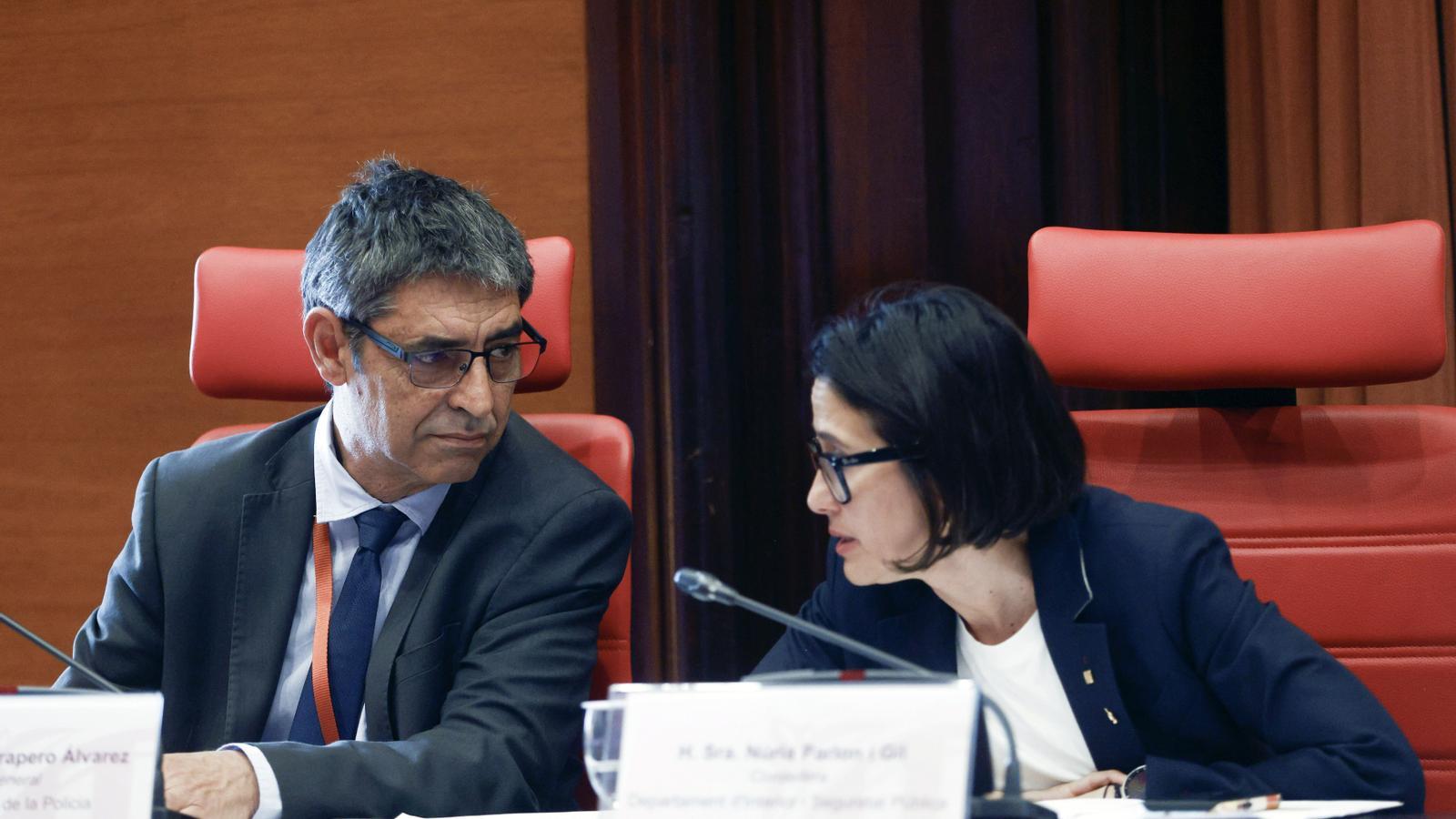
The infiltration has angered the teaching collective, who were already indignant – and even more so in the midst of union negotiations – and has generated a strong controversy that has led the opposition parties to call for the dismissal of Josep Lluís Trapero as director of the police. The Minister of the Interior, Núria Parlon, has tried to get out of it by reaffirming confidence in Trapero, apologizing, admitting it was a mistake and opening an internal investigation. Right now, at the General Information Commissioner's Office, there is a strong hermeticism about this operation, but consulted sources insist that they are convinced that they have done nothing outside the law, even though there is already a complaint filed by the unions.
Cases of national police officers infiltrated in Catalan social and independence movementsMore limits
In 2017, according to various sources, the information service was reorganized internally and limits were better defined, including those for undercover operations that are now at the center of the controversy. The cases of national police officers infiltrated in Catalan social and independence movements –which have nothing to do with the assembly case, as they were agents with a double identity– also led the force to reconsider some of its information gathering techniques.
This does not mean that there were constant infiltrations in assemblies at that time. In fact, police sources explain that they have never been common, but it is true that from that moment on, it was much better framed in which situations these practices could be used. These are techniques that "expire" as mediation work increases and also because information could increasingly be found in open sources, such as social networks. They say it's a "past screen".
Therefore, active listening has been attempted to be limited in potentially dangerous environments, such as anti-system demonstrations that can end in riots. In these cases, the objective is to know what they will do in order to plan the operational resources that the police will deploy at that location. Normally, we are talking about cases in which there are no clear interlocutors and they act from clandestinity. And this is where there are more internal criticisms of the assembly case: various sources consider that it made no sense to go there when unions, which have clear interlocutors, usually make public in one way or another where they will block roads. In the union sphere, the same sources add, it has never been an objective to conduct permanent active listening, nor is it in the case of social movements that are neither violent nor clandestine. For this reason, some sources do not fully understand what happened last week and wonder if some guidelines that had been followed until now may have changed in recent months.
The former head of the Mossos, Eduard Sallent, who recently left the police force to dedicate himself to the private sector, has also spoken out in a social media post. "In Catalonia, infiltration is not, in general, a good operational option. Everything points to operational security not being adequately planned. This should worry and occupy political and police leaders. Actions like this can erode trust between citizens and the police force," stated Sallent, who was also head of Information for the police.
One of the measures announced by Parlon is to review the decree that organizes the Mossos to better define information methods. This Friday, police unions met with Trapero and commanders of the force, and the director reaffirmed the commitment to updating protocols for current society, according to union sources. The same sources state that Trapero made it clear that acknowledging an operational error in Parliament and opening a reserved inquiry does not mean that blame has been directed at the force.
Crisis after crisis
This crisis could not have come at a worse time for the Ministry of the Interior. Parlon and Trapero were already in the crosshairs of teachers –and public opinion– for the pilot plan to put plainclothes police officers in schools. The two controversies, moreover, coincided with two very violent murders in Barcelona and Esplugues and the debate about insecurity re-emerged.
Internally, within the Mossos, there are also certain sectors expressing discontent because they believe that the help that the presence of police officers in schools can provide has been underestimated. Some sources also criticize the way the pilot plan was communicated to the force: they regret that there was a lack of information and that some commanders should have known about it earlier. Sources consulted by ARA point out that it was a plan that the director of the police took on and that he even met with the assigned officers to carry out the pilot test. Not everyone shares Trapero's personal approach to decision-making.
The Mossos force is also at a key moment. Above all, there is anticipation. In the summer, the current chief commissioner, Miquel Esquius, will very likely retire, and this will reopen the debate about who should be the new head of the force. There are already several names being put forward in the police stations. And with the arrival of a new chief, changes are expected. Since the arrival of Trapero and Esquius, some internal changes have been made –recently several pieces have been moved in the Criminal Investigation General Directorate, for example–, but the vast majority of commissioners –the highest rank in the force if the major is not taken into account– have not moved from their posts. There is a feeling that with the new leadership, the profound changes that have not yet arrived will be addressed.
And a new promotion of commissioners will also very probably arrive, which will lead some superintendents to reach the highest rank in the corps and have to assume more responsibilities. Both the election of the new head of the corps and that of the new commissioners –which was the last straw in the relationship between the previous minister, Joan Ignasi Elena, and the then chief commissioner, Josep Maria Estela– will be a thermometer of the harmony between Núria Parlon and Josep Lluís Trapero. The consulted sources do not believe there is a bad relationship between them, but they admit that the fact that Trapero arrived with Illa’s backing –who announced his position in an electoral debate before winning the elections– and not Parlon’s –who opted for a team she already had at the Santa Coloma de Gramenet City Council– has made the relationship not always easy.
