Where to eat in Berlin: from 'currywurst' to kebab to caviar ice cream
The city is famous for its diversity, which is also represented in its restaurant offerings
-
CAT -
CAST
BerlinBerlin is a city that the more you visit it, the more it enchants you. It is diverse and open-minded. Full of nooks and crannies where it reveals its character, making it a kind of bubble in the middle of Germany. That is why it has been the chosen place for people who came from much more conservative regions to build a home there. This is explained to me by the cook René Frank, chef of the renowned restaurant Coda. A restaurant "that could only be in Berlin". Thanks to his knowledge of the city and that of the people who are part of the Coda team, we are about to visit places to subsequently make a list of the most recommendable ones. From cafes, cocktail bars, pastry shops, and, of course, where to eat a good René Frank, chef of the renowned restaurant Coda. A restaurant "that could only be in Berlin". Thanks to his knowledge of the city and that of the people who are part of the Coda team, we are about to visit places to subsequently make a list of the most recommendable ones. From cafes, cocktail bars, pastry shops, and, of course, where to eat a good currywurst or a kebab, two of the most representative and popular dishes.

'Currywurst', a rather unrefined delicacy
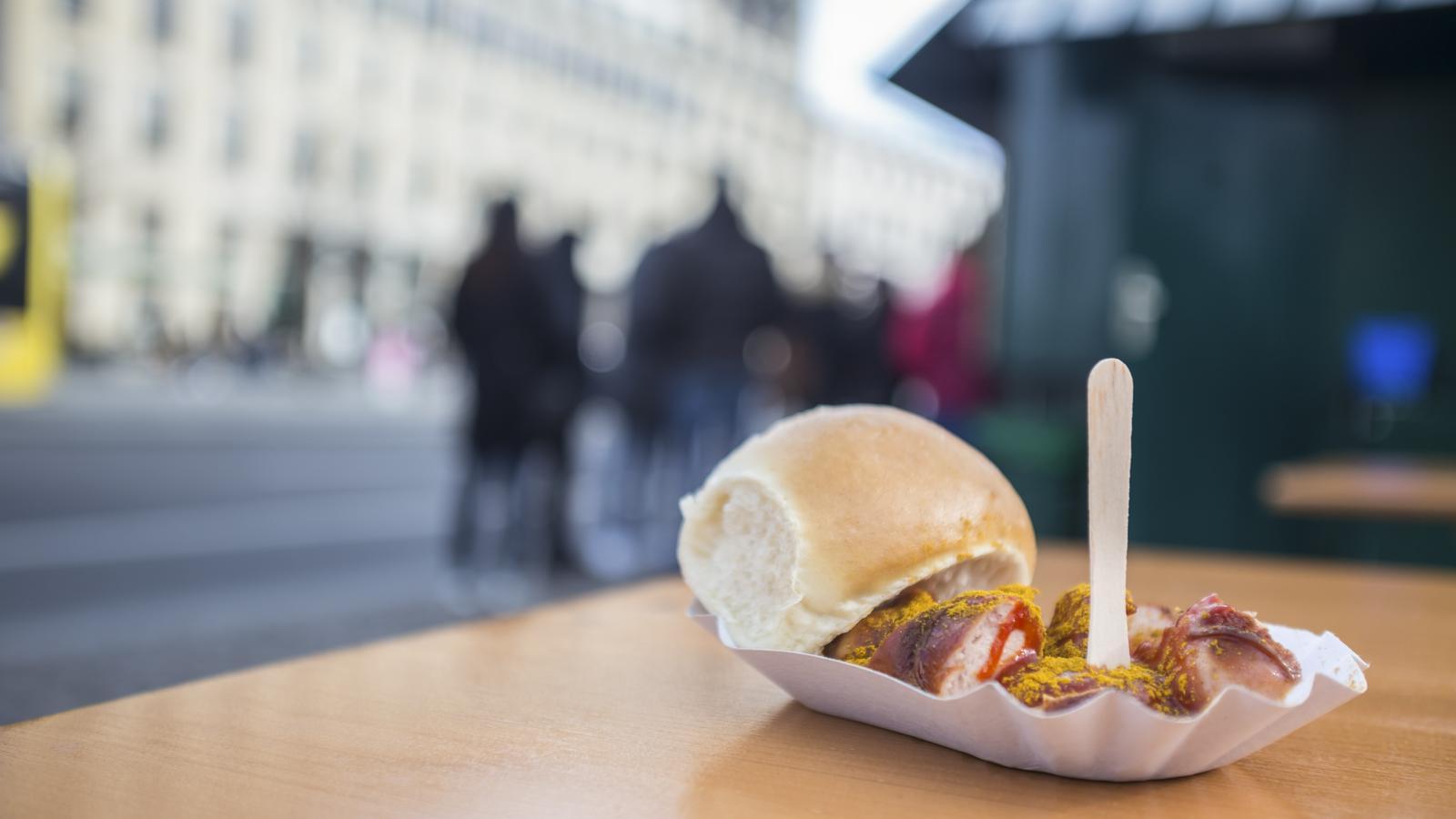
Let's start with the currywurst. It's a sausage that will be served to you cut into small pieces. They will ask you if you want it with or without skin. I don't know why someone would want to give up the crispy part of the skin. On top, quite roughly, a tomato sauce and curry powder are put on it. We visited Curry Baude, at the exit of the Gesundbrunnen metro station. I'm with Julia Leitner, head chef at Coda and originally from Austria. She says that the origin of this very Berlin dish is explained by the war. In Germany they had sausages, American soldiers brought ketchup and the British brought the curry they know from the colonies. A relevant point: if you are going to eat an unhealthy but very succulent currywurst you should know that in most places they will only accept cash. You also need to know the term Pfand. When you buy a drink with a glass bottle, there's a small amount of the price that they'll give you back if you recycle it. If you order a beer, for example, on the price list you'll see the amount the Pfand represents. Return it empty and you'll be reimbursed. Julia explains to me that often people leave empty bottles next to trash cans, so that people without resources can pick them up and get a few cents from them.
We continue with places to eat the classic sausage. I ask an institution of the city, Duc Ngo, to tell me more. He suggests two more: Curry 61 and Curry 36. Each has its own places. And many point out that the difference in many cases comes from the tomato sauce and whether it's more homemade or industrial.

King of Kantstrasse
I meet Duc Ngo in one of his restaurants. He is a restaurateur and chef who has a lot of restaurants in the German capital. In fact, he is called the King of Kantstrasse. The reason? He has a lot of establishments on this street. But not only here. He wears many hats. He was born in Vietnam and arrived as a refugee in Germany when he was five years old. Son of a Vietnamese mother and a Chinese father, a minority that experienced strong discrimination in Vietnam. For this reason, they left and ended up in a Berlin that welcomed him with open arms. He remembers a lot of people who took them in and integrated them. Those were different times. When they arrived, they were surprised to see cars and a walkman. Now he is a celebrity who appears on television, people ask him for photographs, and he has a knack for creating successful restaurants. I visit two. One dedicated to Japanese cuisine, called 893, and it is a restaurant with an entrance specifically designed so you cannot see what is inside. Dark windows painted with graffiti, and only a neon light to inform you that you have arrived. It is a place that young Berlin couples really like. But his most recent opening has nothing Asian about it. He has opened a brasserie called Manon. Well-executed French orthodoxy in an affluent neighborhood. As we said, he has a knack for projects.
The kebab, a matter of state
We return to popular food, and it's time to eat kebab. I visit Hasir with René Frank. They have several locations in the city and have been making authentic Turkish cuisine since 1970. We order a very exuberant döner kebab. They make the bread themselves and the meat looks excellent. We accompany it with ayran, a vegetarian version in which they replace the meat with a kind of cereal and vegetable burger.
vöner, a vegetarian version in which they replace the meat with a kind of cereal and vegetable burger.

There is always a corner for something sweet
If you are tired of savory and want sweet, there is a whole network of bakeries and cafes. I visit Sofi Bakery. It is a pleasant bakery-cafe, Scandinavian style, located inside a courtyard. You can have breakfast and snacks, buy quality bread, and acquire gourmet products made in Berlin, such as kombucha or miso from the artisan brand Mimi. Another option in the same style is Albatross Bakery. They also make savory sandwiches that you can take away and will sort you out on a day of tourism when you don't have much time to make stops. Finally, if you are a fan of the French sweet éclair, the place where you have to go is Canal. They really make works of goldsmithery, and they also offer other cakes and ice creams. Their Instagram is mouth-watering. They have more than one location, one of which is inside one of those delightful arcades that appear out of nowhere and are full of charming shops.
The coffee to finish the job
If you are picky about coffee, your place is Bonanza. Roasters who have made an industrial brick space very cozy. It is a space that allows you to taste the diverse coffees they have. In fact, they have the option of "tasting" directly on the menu. If not, you have a coffee and a pastry and it's a good place to take a break. Now, if what you want is quality coffee, but also to have a good bite to eat, in this case your place is l'Stromcafe. Cafeteria, restaurant, and a place to have a drink at night. It covers all bases and is a pleasant place to drop by.
If what you want is to have a drink
The cocktail bar you definitely have to go to is Velvet. They create many seasonal cocktails based on plants and flowers that they feature depending on the time of year we are in. Some are totally original. A place worth discovering and letting yourself be surprised. The service is excellent, moreover. Here they combine some of the creations of Friemeister Killectiv. If you're into distillation, Friemeister Killectiv's workshop is a must-visit that you have to do in Berlin. They have an incredible project with which they have collaborated all over the world. They have tried to move away from the most iconic drinks and try more outlandish ones. Some with overwhelming success. If you are interested in the magic that happens inside the alembic and you want to go, they will always assist you. However, I would contact them beforehand to ensure they have time to show you the project.
Coda, the queen of the crown
I wouldn't have known all these places if it weren't for the Coda team helping me with all their knowledge. If budget is not an issue, Coda also deserves a visit because it's a genuine place. It is in the upper echelons of dining, what is called fine dining, in other words, it's not for nothing that it has two Michelin stars. In fact, René Frank has received a lot of accolades. The restaurant is tiny but very well organized. The lighting is wonderful. The menu they offer is fun and indulgent. And indeed, as the chef says, it fits perfectly with the city where we are. Diversity, the willingness not to be pigeonholed, and a touch of humor. Like the idea of serving champagne in an airplane-style cooler or the creation of a utensil for serving wine. In the food, we find dishes that have been very successful, such as a childhood ice cream in a savory version with caviar or a waffle turned into a more refined dish without giving up the enjoyment of eating with your hands. For a long time, it was said of Coda that it served a menu made up of "desserts". Frank is, in fact, a pastry chef by training. However, this is no longer entirely the case. He likes to serve dishes that are neither sweet nor savory. "Non-binary" dishes, he says. In his kitchen, by the way, there is not a gram of refined sugar.
Other restaurants
If we want traditional German restaurants, you can visit the Alt-Berliner Wirtshaus Henne, where they practically only serve half a chicken, the house specialty, and beer. Or Clärchens Ballhaus, a traditional German cuisine place that has been here since 1913. As they say, they have survived two world wars, five changes of regime, and six different currencies. Here you will find sausages, an original steak tartare in the shape of a hedgehog, fried pickles, schnitzel or queen of the woods jelly (a plant known by other names such as sweet woodruff or hedge nettle) with vanilla sauce.
If you are looking for refined cuisine, but in an informal setting, some more suggestions from Berlin chefs: Barra, seasonal produce, good food, and good wines; Ita, bistro-style, with good grilling; Otto, for lovers of fermentation, where they produce their own koji or garum, and, finally, Merold, the restaurant of a former Coda employee who has risked having his more informal personal project. Enjoy Berlin.
