Cod: the protein of the people that changed the world and that is now at risk
Each time there are fewer specimens of this iconic fish of Catalan cuisine, which is the reason why it goes up in price
-
CAT -
CAST
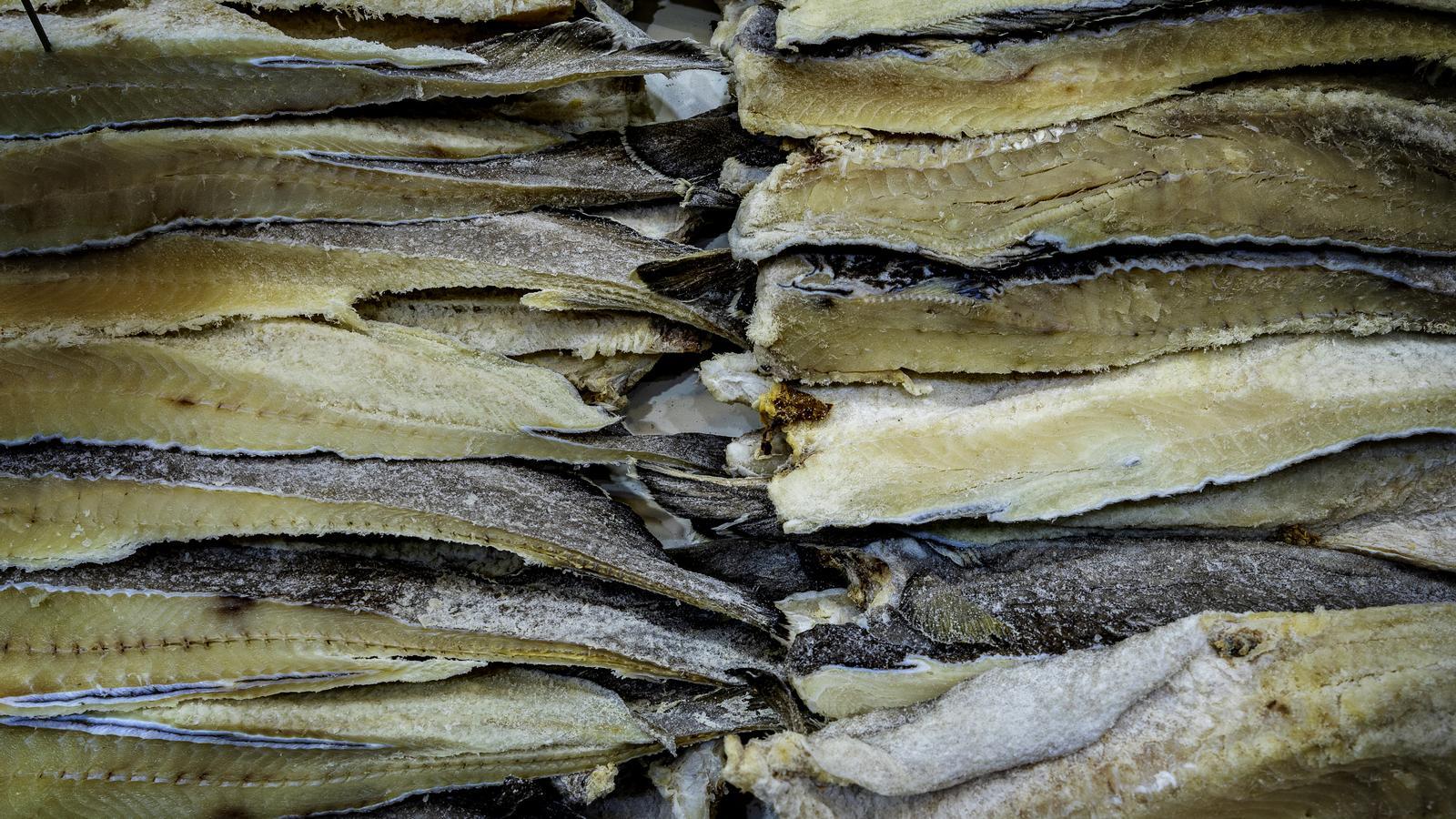
Saint SebastianIf you ask a Basque person, they will tell you that cod is a key ingredient in their gastronomy. A Catalan person can tell you the same. What would become of us without 'esqueixada'? It is such an important fish that it has its own shops. Not to mention the Portuguese, who boast of having a recipe for it for every day of the year. But the most curious thing of all is that in our waters there is not a single cod. This fish is the only one that is habitually consumed on all five continents. And its trade, experts claim, changed humanity. But now this healthy protein aimed at the working classes is in danger.
The first to start fishing it were the Vikings, who dried it, but it was not until the sturdy Basque sailors conquered the Canadian waters of Newfoundland and Labrador that this fish was popularized. It was the most important fish route in the Atlantic for centuries. They went looking for whales, but cod became increasingly dominant. They found a way to dry it right there and salt it to preserve it, and they established settlements. And from there, the lucrative business of distributing it everywhere. It is so important in popular customs that we can also speak of the 'Ruta del Bakalao', with a k. The name of this route in Valencia referred to the fact that when new international music records arrived, they would call the DJs and tell them that cod had arrived. It is no wonder, since for several centuries when a ship loaded with cod arrived, it was a reason for celebration. But something has broken.
Geopolitics has played a relevant role in the fishing of this fish. It was a prosperous business until the Treaty of Utrecht, in 1713, prohibited the exploitation of the waters where Canada is now located in favor of the British fleets. This, which may seem distant, is not so much in the collective imagination of the people. Mark Kurlansky, author of the book Cod: A Biography of the Fish that Changed the World (Ediciones El Gallo de Oro), an absolute bestseller that has been translated into more than 35 languages, explains to ARA that a few years ago, one day while eating fish and chips in Dover, the woman who was preparing it told him that when the Spaniards came they would take the meaty pieces of the cod. It all came about following a controversy after four Spanish ships were allowed to fish in Cornish waters. “There is a great relationship between cod and Brexit. All the fishermen voted in favor of Brexit, because the European Union allowed Spanish ships to fish for it,” states the writer and journalist. Let's continue with geopolitics. The greatest recovery of cod specimens occurred during the Second World War. Fishing stopped because there was the great threat of submarines. This led to the thought that if one day fishing stopped, this fish would recover quickly. But that has not been the case.
More than two centuries after the Treaty of Utrecht, Basque ships were able to return to exploit the fish banks of North America. But technology had advanced so much that fishing was much more effective. Especially between 1950 and 1960, the Basque and Galician fleets lived the golden age of cod. The Gipuzkoan port of Pasaia was the place in the world where the most specimens were moved. A mine that seemed inexhaustible. “Cod built the economy of many regions of the world. It was a commodity that had a massive business behind it,” states Kurlansky. When the Venetian Giovanni Caboto (John Cabot to the English) arrived in the northern waters in 1497, he believed he had found the largest fish bank ever seen. He claimed that there were so many that there was no need to fish for them, it was enough to catch them with a basin. But the mine has been exhausted.

Kurlansky explains it in the following way. Iceland, after the Second World War, achieved its independence and wanted to control the cod. They entered into conflict with the British. The Icelanders managed to get control of a 200-mile maritime exclusion zone. Many countries thought it was a very good idea, and they all created these 200 miles. But the original idea, which was for the government to be able to monitor overfishing, was diverted. The exact opposite happened and together they have brought the cod close to extinction.
In Canada, they implemented a 10-year moratorium so that the cod could recover. It was not to be. An entire industry in Newfoundland gone to hell. They have implemented a moratorium of up to 30 years, and it has only recovered slightly. The reason? According to Kurlansky, climate change, which has warmed those waters. The Norwegian cook Christopher Haatuft, chef at the Lysverket restaurant in Bergen, agrees, explaining that in his country they had established sustainable and well-organized co-management with Russia. But now the relationship with Russia has soured and these “friendly fishing practices have broken down”. Once again, geopolitics. And he adds that in the case of the Lofoten Islands, after 12 centuries of exploitation, the cod have stopped following their usual routes. “There are changes, and not for the better,” he asserts. Catches have been reduced in that area by 20%.
The pig of the sea
“My grandmother always bought cod from the less noble parts. It was cheaper. When she served good cod, it was on vigil Fridays. And I used to ask her how long the vigil would last,” says chef Javier Díaz, from the Alhambra restaurant in Pamplona, and he recalls that the skin, dehydrated and fried with olive oil, is a delight. One of the characteristics of cod is that you can make use of every last crumb. “It is the pig of the sea,” states the director of the San Sebastián Gastronomika congress, which has dedicated an entire day to talking about this fish that brings us together.
Eduard Gascons and Marc Gascons, father and son from Els Tinars, in Llagostera, appear on stage. Eduard recalls how his father, as early as 1950, served 'peixopalo' (dried, unsalted cod) with crushed potatoes at his restaurant. “It was a rather sad dish,” claims Gascons, who explains that it practically took an axe to cut it. It had to be left in water for between 72 and 96 hours to rehydrate. Peixopalo was also the star of a brotherhood dish to which everyone contributed something: 'es niu'. This dish, born in Palafrugell, contained cod, potato, 'picada' (a pounded mixture of ingredients), and whatever the hunters could contribute, such as pigeon, thrush, sausage... It was made into a stew with whatever was available. Cod is so important to Els Tinars that for 50 years they have had their own basins to desalt it, explains Marc Gascons. But what will we do with the recipes if it starts to become too expensive a fish? “The case of Catalonia is curious. How a foreign product has become an icon of its own culture,” says Kurlansky for his part.

But the latest available data from this year placed cod at 14.4 euros. The price in 2007 was 4.56. “When I was young it was an affordable dish. Now I see it in places with very expensive menus. This was unimaginable. And people value it more because it is expensive. It is interesting to see how the social status of food works. Especially with seafood. By the way, you should know that they sell you a lot of Canadian lobster because the Mediterranean one is incredibly expensive. I grew up eating lobster. And I lived in Paris for many years, and it amused me to compare them. Until I saw that they were the same ones”, explains Kurlansky, who raises an important doubt: “It is strange to see it in the case of cod. I am divided on this issue. On one hand, I would like food to be expensive so that fishermen could live without having to overfish. On the other, what are people with few resources supposed to eat? I do not have the solution. There are people who say it is aquaculture, I do not know. It is complex”, he states.
And what will we do with our recipes?
“Population growth has been exponential. Cod lived in very rich waters with many nutrients and where there were few people. A great school of fish was formed, but we have overstepped. Now we have to implement closed seasons, without guarantees, and the fishermen are starving. We will have to find a way to make aquaculture fish sustainable,” says Toni Massanés, general director of Fundació Alícia. Massanés places the value of cod in our culture: “If we didn't have cod, why is the best cod cuisine made here? Because we have many ingredients to combine it with. It was the protein of the Catalan people. And the resource for Lent,” he explains. Cod with samfaina, empedrat, cod fritters... “Cod was so hegemonic that we directly called it fish,” asserts Massanés, who as author of the Corpus of Catalan Cuisine recalls that “traditional cuisine adapts”: “It adapts. It evolves. Making something heritage is fantastic, but it only makes sense if it is alive and adapted to every moment.” And in case cod runs out one day? “We will have to see what we put in its place. In the Valencian Country, esqueixades are made with bacallanet, which is indeed Mediterranean. Let's look at what we have here and make the most of what is good. It could be an opportunity for our fishermen,” concludes Massanés.
