How the Barilla family lost (and recovered) the pasta empire
In 2025 the Italian group invoiced 4,837 million euros and sold two million tons of products

-
CAT -
CAST
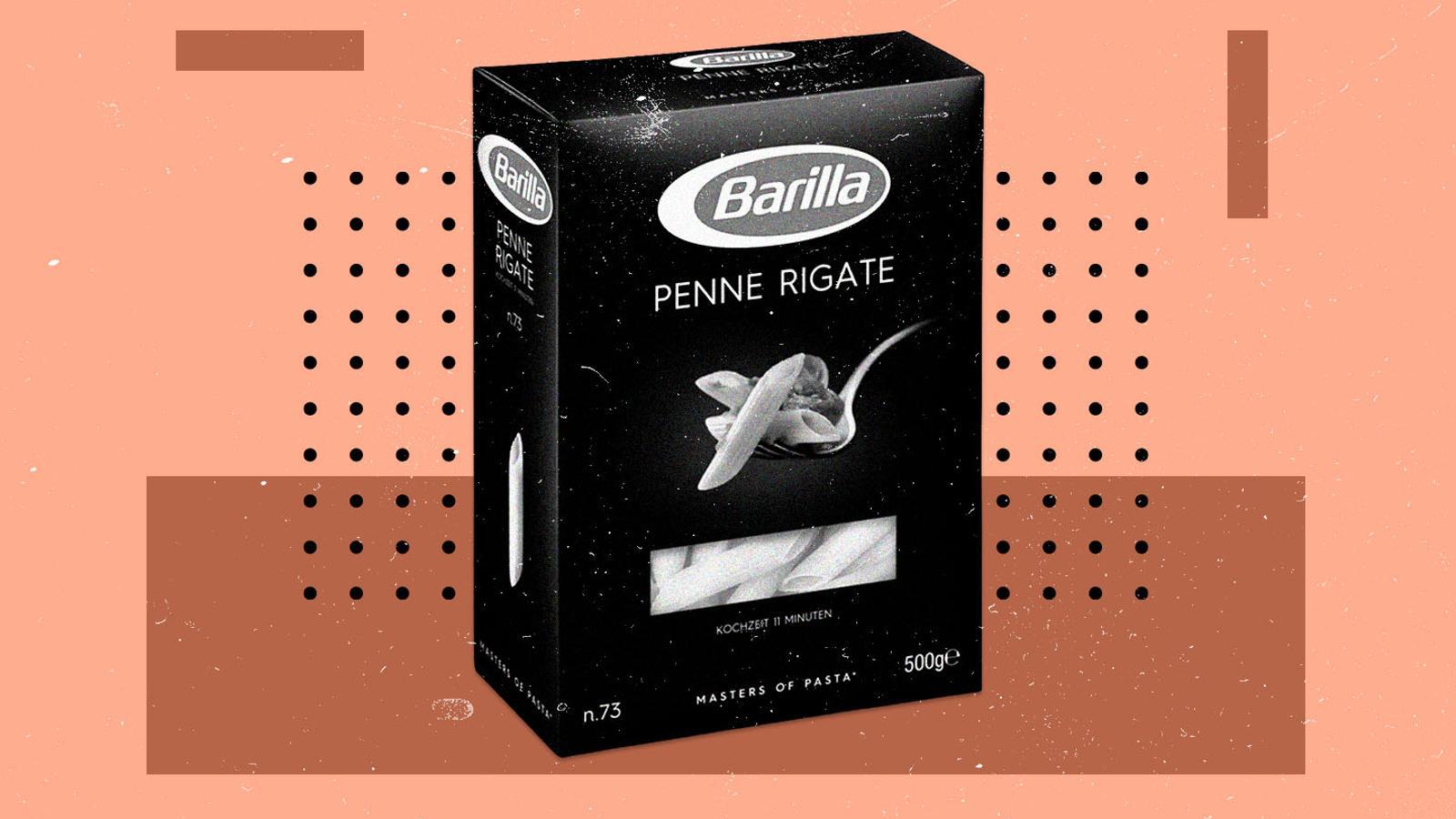
If you go into a supermarket and head to the pasta section, you will see that most brands sell it in plastic packaging. Spaghetti, macaroni, spirals, noodles... However, there is one company that breaks this pattern: on the shelf there are dark blue cardboard boxes, with a red and white logo in the center. They are those of Barilla, one of the best-known pasta brands in the world. In 2025, the Italian group had a turnover of 4.837 billion euros, sold two million tons of products and had 30 production centers spread around the world. In Spain, where it markets both pasta and sauces, its subsidiary has a turnover of around 23 million euros annually.
What few people know, however, is that behind this empire is an Italian family that has been making pasta for almost 150 years. It all started in a small bread and pasta shop in Parma, in northern Italy, and the business has been passed down from generation to generation until today. However, the history of the Barillas also has a surprising episode: for eight years, the family lost control of the company and had to watch as their business remained in the hands of a North American multinational. How did they manage to get it back?
A small shop
To find the origins of Barilla, one must travel back to 1877 in Parma. That year, a young man named Pietro Barilla opened a shop where he sold bread and artisanal pasta. The business was modest and, at the beginning, produced about 50 kilos of pasta a day. However, as the years passed, Pietro introduced machinery to increase production: by 1905, he was already producing two and a half tons of pasta every day.
In 1910, under the impetus of Riccardo and Gualtiero Barilla, the founder's sons, the company inaugurated its first factory. It was no longer a small artisanal shop: about eighty people worked there, and every day eight tons of pasta and two of bread were produced. The company had begun to industrialize and, over the following decades, continued to expand its facilities and production capacity. In 1939, in fact, it already had 800 employees and was manufacturing 70 tons of pasta daily.
But the great change had not yet arrived. In 1947, after the death of Riccardo Barilla, the business passed into the hands of his sons Pietro and Gianni, the third generation of the family. Pietro had a clear idea: to continue growing, Barilla could not limit itself to making more pasta. It also had to ensure that consumers recognized it and chose it among all other brands.
The cardboard packaging
In the fifties, after traveling to the United States to study the commercial techniques of large companies, Pietro decided to change the way of selling pasta. Until then, it was common to sell it in bulk, but Barilla opted to package it in cardboard boxes and give it its own identity. With the help of designer Erberto Carboni, he promoted a new brand image and advertising campaigns that made it popular throughout Italy. In 1952, the company also stopped making bread to focus on pasta.
The blue boxes eventually became one of the main symbols of the brand. Today Barilla still keeps them, but for reasons that go beyond image: they ensure that they protect the pasta, facilitate the placement of products in supermarkets and allow them to be stored more comfortably at home.
An unexpected turn
In 1971, the strategic discrepancies between Pietro and his brother Gianni, added to the economic difficulties of the sector, ended with the sale of Barilla to the American group W. R. Grace. Pietro did not have enough money to buy half of the company that his brother controlled, but he also did not resign himself to losing the family business. For eight years he tried to recover it.
In 1978, he failed in a first attempt at a buyout and, the following year, he asked for advice from Enrico Cuccia, one of the most influential bankers in Italy and the head of Mediobanca. After examining the accounts, Cuccia advised him against the operation because he considered it was not profitable. Pietro, however, did not listen to him: in 1979, at 66 years old, he invested all his resources to recover Barilla. Today, his children Guido, Luca and Paolo continue at the head of the pasta empire.
