Hegseth announces a new military cooperation agreement between the USA and Venezuela
The interim government of Caracas reestablishes the bilateral relationship with Washington 21 years after Hugo Chavez put an end to it

-
CAT -
CAST
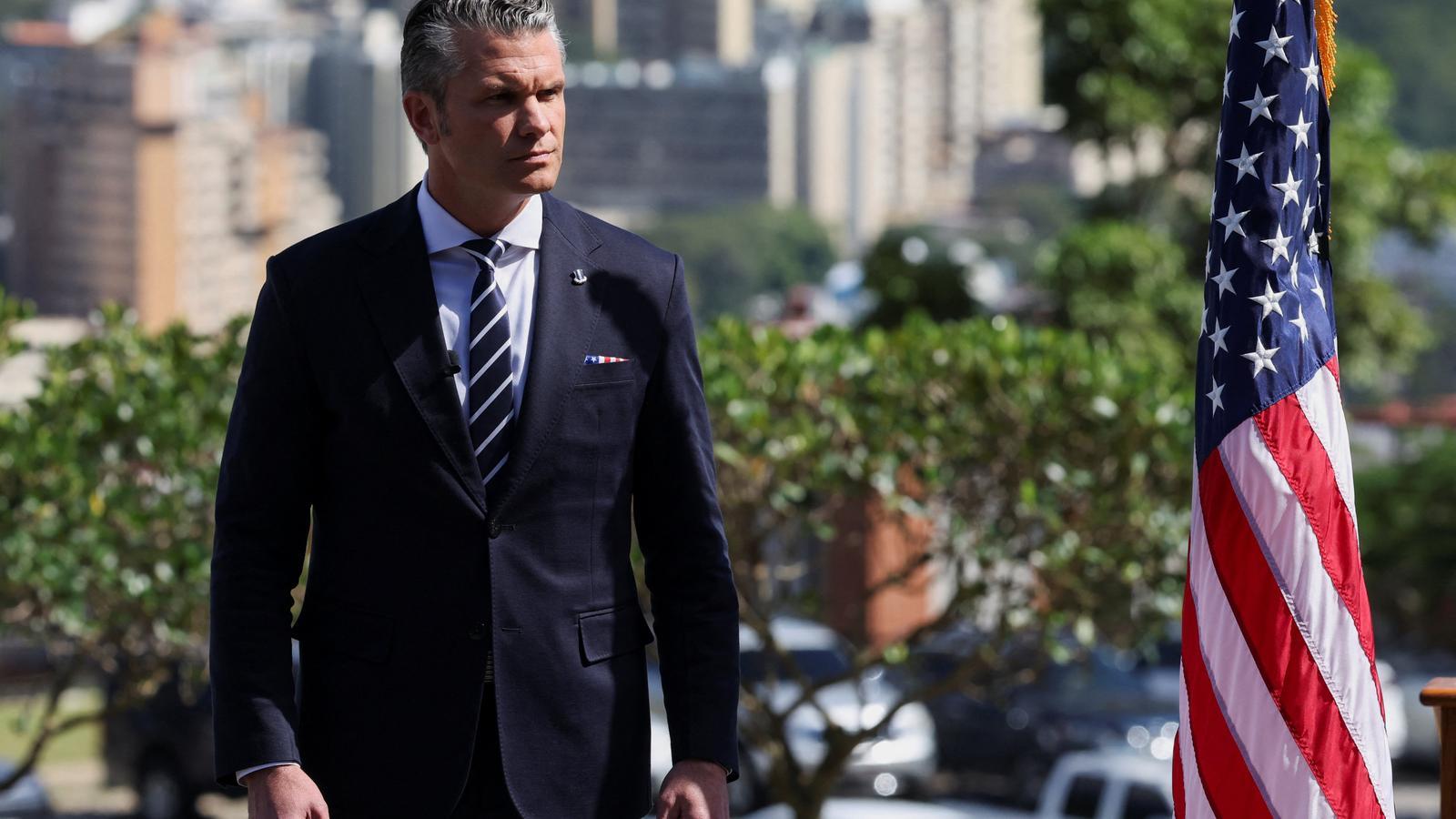
WashingtonSecretary of Defense, Pete Hegseth, announced this Wednesday from Caracas the re-establishment of military collaboration between the United States and Venezuela. The agreement has been signed with the interim government led by Delcy Rodríguez, after the US army intervened militarily in the country in January to depose Nicolás Maduro, who remains in a Brooklyn prison awaiting trial. Since 2005, the bilateral relationship between the two countries had been suspended after then-leader Hugo Chávez ordered the permanent departure of all US military instructors.
Hegseth has stated that, since Maduro was kidnapped by Washington, the country “has gone from being a regional threat to a secure collaborator” and has praised the “close cooperation” with Rodríguez, which has allowed for “stabilizing Venezuela and getting rid of narcoterrorism once and for all.” The Secretary of Defense seems to consider the entire network of drug trafficking gangs and the relationships that some of these groups had with the Chavista government to be finished, despite the fact that a good part of the executive's main names remain at the head of the country. Before Maduro was deposed, Rodríguez was his vice president and one of the regime's most important figures, as she held the portfolios of Economy and Hydrocarbons.
Meanwhile, Venezuelans continue to wait for the country to hold democratic elections, as promised by Donald Trump after intervening militarily in the country. Many citizens, who had initially been glad about Maduro's kidnapping, are beginning to feel uncomfortable seeing how the White House advances its strategic interests and keeps the promise of a democratic transition in suspense.
Hegseth is the latest cabinet member to have traveled to Venezuela since it became a de facto US protectorate; his visit follows those of the secretaries of Interior and Energy, tasked with advancing oil agreements with Washington. Apart from Hegseth, the meeting was also attended by the head of military operations for Southern Command (Southcom), Francis Donovan.
Trump's strategy in Latin America
The Pentagon has not yet issued an official statement offering more details on the new cooperation agreement. The military exchange program that Chávez ended 21 years ago focused primarily on sharing technology, cooperating in anti-drug operations, and conducting joint defensive exercises. The rupture by Chávez meant that Venezuela moved closer to Russia, Iran, and China as its main suppliers of military equipment.
The cooperation agreement between Caracas and Washington is also part of the Trump administration's strategy to secure its control over Latin America and what it considers its area of influence. Since the Republican returned to the White House, he has taken it upon himself to support like-minded far-right candidates in order to have favorable governments with which to do business throughout the region. To the already established list of partners, which includes Nayib Bukele in El Salvador and Javier Milei in Argentina, the new Chilean president José Antonio Kast and the Honduran leader, Tito Asfura, have been added, among others.
In Brazil, the move did not go as well: Lula managed to defeat Jair Bolsonaro's son, Flávio Bolsonaro, who has fled from Brazilian justice and taken refuge in Miami. The US government is providing coverage to him and his family, having issued visas for all of them, while Bolsonaro claims to be the legitimate leader of Brazil. Currently, Brazilian authorities are also investigating whether a donation network co-founded by Vice President J.D. Vance intervened illegally in the elections.
The resumption of military ties with Venezuela also comes shortly after the controversial oil agreement by which the United States has appropriated 65 billion barrels of reserves. A pact that, as several analysts have pointed out, also compromises the country's sovereignty and reinforces its status as a protectorate. The oil partnership provides for the Pentagon, through its Office of Strategic Assets, to hold 35% ownership of the parent company of NABEP, the firm in charge of extracting these 65 billion barrels.
