The Cadaqués corks are a registered trademark, and only the Cabrisas family can make them
The holders of the recipe ensure that no confectioner can make them with this name, because they are the inventors and owners of them

-
CAT -
CAST
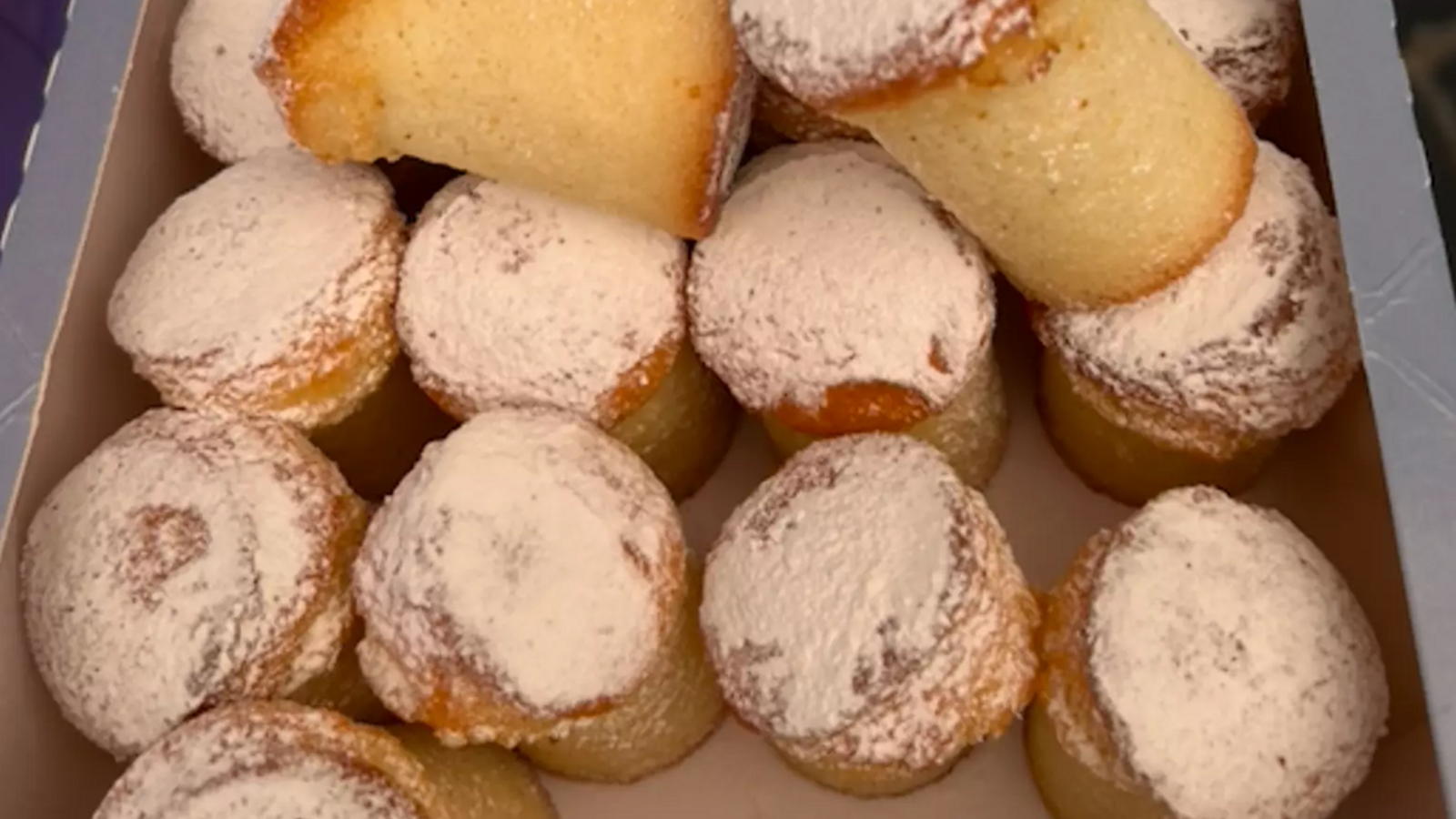
CadaquésThe Cabrisas family from Cadaqués claims that the 'taps' from Cadaqués cannot be reproduced by anyone because the brand and the recipe are registered by themselves, as they are the sole owners. For this reason, it is not possible for any bakery to want to put them on sale under that name. Regarding the claim that pastry chef Oriol Balaguer wanted to make them, the family responds that it is not possible, because it would clash with the copyright of the name and the recipe, but furthermore, they assert that he has not contacted them to explain his intention.
The Can Cabrisas bakery in Cadaqués closed last October 31st, on a day when residents of the town in the Alt Empordà, from the region, and other visitors said goodbye amidst tears, hugs, and smiles. After one hundred years, Can Cabrisas had become a benchmark for 'taps,' the sweet invented by the family, but also for many other preparations, such as croissants. In fact, on the last day they were open, residents had specially ordered 'taps' and croissants with the goal of freezing them and being able to eat them some time later to remember the bakery.
The history of the origins of the 'taps'
The Can Cabrisas 'tap' is a small sponge cake that might remind someone of the French rum baba, which at the Stohrer pastry shop in Paris (51 Rue Montorgueil) they claim to have invented themselves in the 18th century, a few years after the establishment opened in 1730. In Cadaqués, Mercè Cabrisas comments that they resemble each other in shape but have nothing to do with each other in taste, because the Cadaqués 'tap' is not soaked in any liquor. To learn about the origins of the 'tap', one must go back to Mercè's great-grandfather, Sebastià Cabrisas, whom everyone knew as Nenton, who made the sponge cake in the shape of a plug. “Some told us that the sweet had the shape of the stone that had been at the door and was used to tie up the boats,” says Mercè, who had old photos hanging on the walls of the pastry shop where one could see what the establishment was like. Just in one of the photos, you can see the stone that reminds one of the 'tap'. The stone is no longer in front of Can Cabrisas, although there are still some left in Cadaqués, such as in front of the Meliton bar (plaça del Passeig, s/n). “But no, my grandfather was not inspired by the boat mooring stone, but rather he made sponge cake tests and saw that it turned out in the shape of a plug, and he called it that way,” notes Mercè.
Since Can Cabrisas closed last October 31st, the family stated that they hold the unique recipe, and that in the future it is possible that the new Cabrisas generations will return to making the 'taps'. However, they will be the only ones who will be able to do so, and furthermore, in the same town of Cadaqués.

