A group of isolated indigenous people contact the outside world to ask for food
Unpublished images come to light that could alert about the threats to indigenous groups in the Amazon of Brazil
-
CAT -
CAST
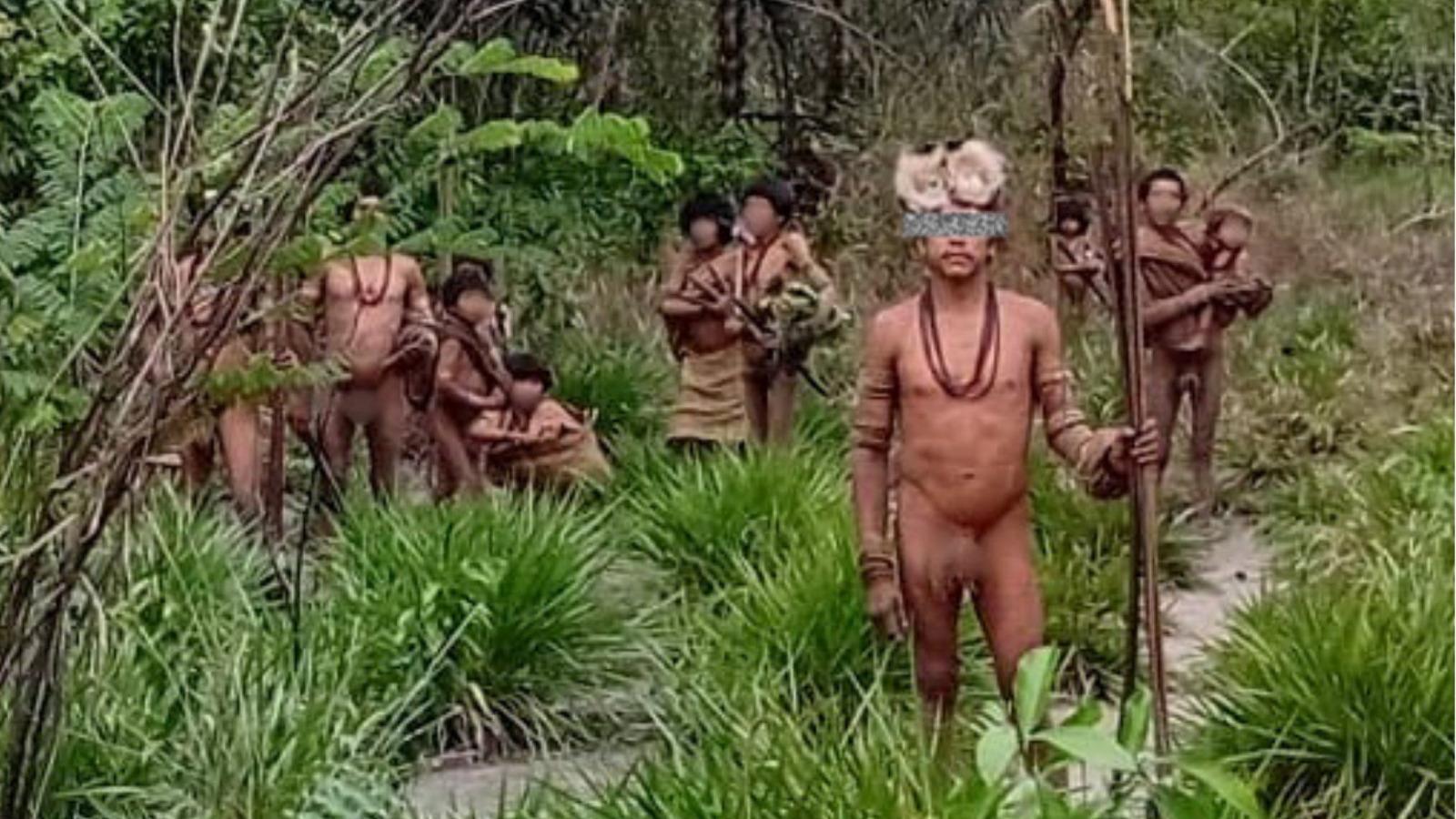
BarcelonaAbout twenty indigenous people living in voluntary isolation have emerged from a remote area of the Brazilian Amazon rainforest to ask for food from a neighboring Guajajara community in the Maranhão region of the Brazilian Amazon. This is the first time in the last three decades that Brazil has documented contact by the population with a group of isolated indigenous people, according to reports from the Brazilian government and indigenous associations this Tuesday. The events have highlighted the threats that indigenous people could be facing due to the degradation of their habitat caused by economic exploitation.
The group from the Awá-Guajá ethnic group, which is in voluntary isolation and consists of men, women, and children, approached this Monday to ask for food from the inhabitants of the Guajajara village of Tawari, in the Araribóia indigenous territory. The recorded images show the Awá-Guajá men carrying bows and arrows, and others with cloths to carry infants. During the encounter, members of the community offered food and some objects to the group of indigenous people, who shortly after returned to the jungle. According to information from the Coordination of the Organizations and Articulations of the Indigenous Peoples of Maranhão (Coapima), the group had already been sighted last Sunday.
The inhabitants of the Guajajara locality have expressed concern about the physical appearance of the isolated indigenous people due to the marked thinness of several of the members, especially some of the adults and children, as witnesses explained to Coapima. Even so, it has not been confirmed that they are suffering from malnutrition, nor does it explain whether they came out to look for food due to the scarcity of natural resources they might have in their communities because of the degradation of their habitat. For this reason, they emphasized that specialized teams will investigate the matter “without compromising the autonomy of the Awás”.

The situation has triggered the mobilization of teams from the National Foundation for Indigenous Peoples (Funai) and indigenous health professionals, given the health risk posed by the unplanned contact of isolated groups with the population. Indigenous organizations in the region have warned that these unusual movements highlight the growing threats to the survival of native communities. However, experts warn that this approach should not be interpreted as a decision by the Awá-Guajá indigenous group to abandon their voluntary isolation.
“These peoples have the right to decide autonomously how and when to establish relationships with other indigenous groups or with the society that surrounds them. For this reason, possible approaches or sporadic interactions do not necessarily mean the abandonment of their state of isolation or the beginning of a permanent process of contact,” the government of Brazil explained in a statement. This is not the first contact of this ethnic group with other indigenous peoples. In fact, according to records compiled by the Socio-environmental Institute (ISA), there are precedents of contacts with Awá-Guajá families in this region up to the 1990s.
