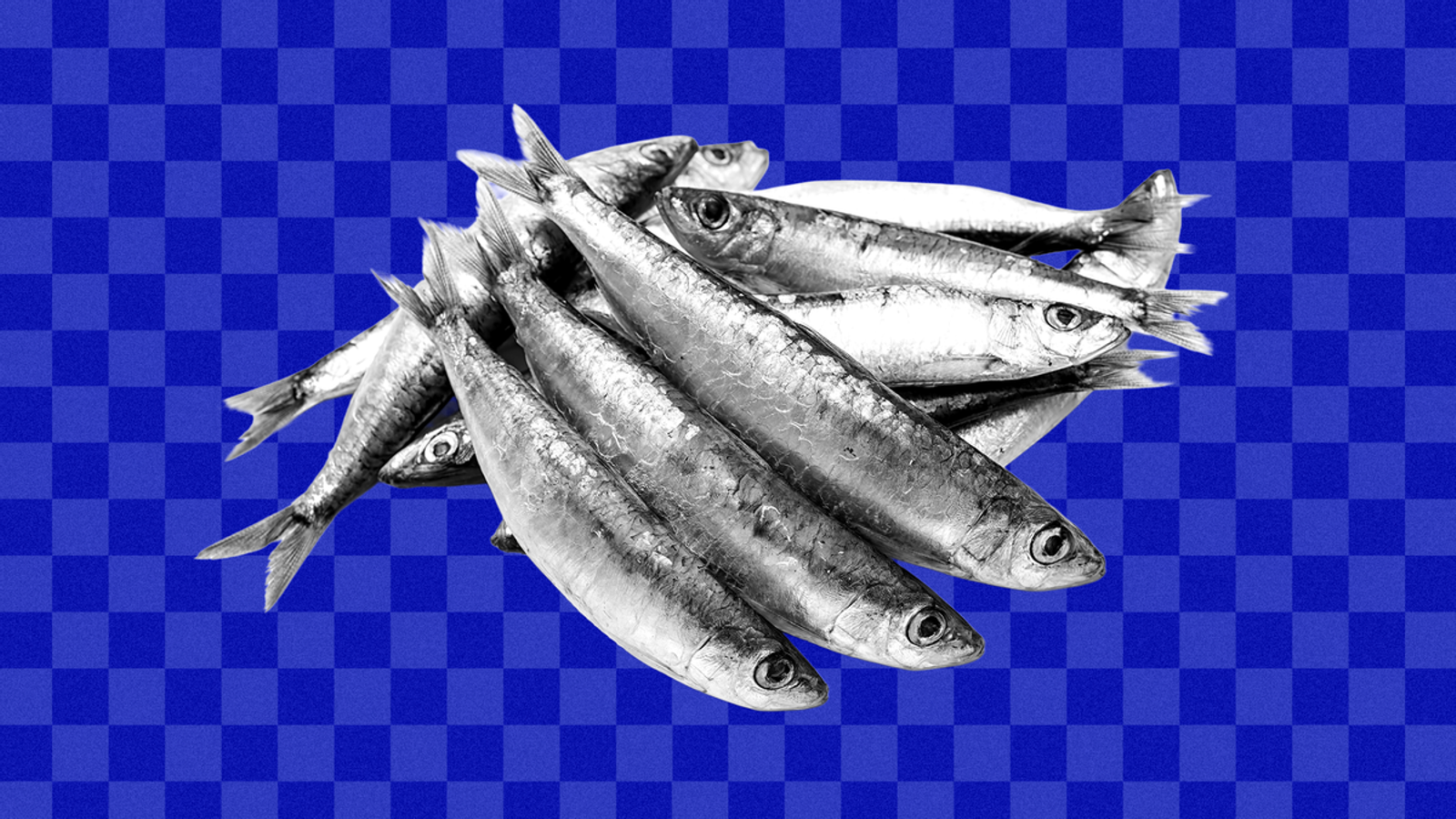
Do you eat sardines? They are smaller than ever due to microplastics
There is more than one reason that could explain it, such as the sea temperature, and the certainty is that in the Atlantic they are bigger

-
CAT -
CAST
There is a popular street conversation about the fact that sardines are smaller than ever. Summer is the peak season for these fish, because that's when they eat a lot to accumulate fat for autumn; then they can lay eggs and reproduce. For this reason, it has always been said that sardines should be eaten in the months that do not have an 'R': June, July, and August, because that's when they have more fat and are tastier.In the city of Porto, sardines are the typical dish in many restaurants. Both in street food and in Michelin-starred cuisine. At the hotel The One Monumental Palace, located in the heart of the city, the chef Julien Montbabut has a menu that travels through Portugal dish by dish. It is a journey through traditional cuisine, filtered through his French lens after years living in Portugal, which earned him a Michelin star last year. Sardines, of course, cannot be missing. He cooks them to perfection, with bread and oil, and they are a meaty and flavorful bite. Meanwhile, in street restaurants, near the river, you will find grilled sardines. Also meaty. And that is because in the Atlantic, sardines are big, very big.In the Atlantic, bigger“In the Mediterranean, in general, many marine species are smaller than in the Atlantic,” says scientist Anna Bozzano, who assures that it is due to the environmental characteristics of the sea; the Mediterranean has a higher temperature and less nutrient availability than the Atlantic. When the sea temperature is lower, fish have a slower metabolism and, therefore, can grow more, says Bozzano. In the Mediterranean, there are many other factors that could explain why sardines are small. All together, they could lead us to understand it. To begin with, there is plankton, which has lost quality and quantity due to the warming of the water. If the sardine's food is less nutritious, it will not favor its growth.To continue, there are microplastics that sardines ingest. “They feel like they have eaten, that they are full, and then they do not eat their food. Microplastics worsen the metabolic condition of sardines, which end up being smaller and thinner,” says scientist Anna Bozzano, who points to rising sea temperatures as a factor that stresses sardines. “They can end up laying smaller eggs than usual because environmental stress can accelerate sexual development,” she says. Therefore, multifactorial reasons explain why our sardines have nothing to do with those from the Atlantic.To conclude, let's look at the data to check that we have fewer sardines than ever (beyond whether they are small). According to data from the Catalan Institute for Research for Maritime Governance, in 2025, 3,935.7 tons of sardines were caught, counting all Catalan fish markets. This figure represented a reduction of 33.3% compared to the average catch between the years 2022 and 2024. So we eat smaller sardines than ever, and fewer than ever. Probably, overfishing also explains this decrease. All this makes us envy the city of Porto, with those large, plump sardines. Ours are meager. And all this doesn't seem to have a solution.

