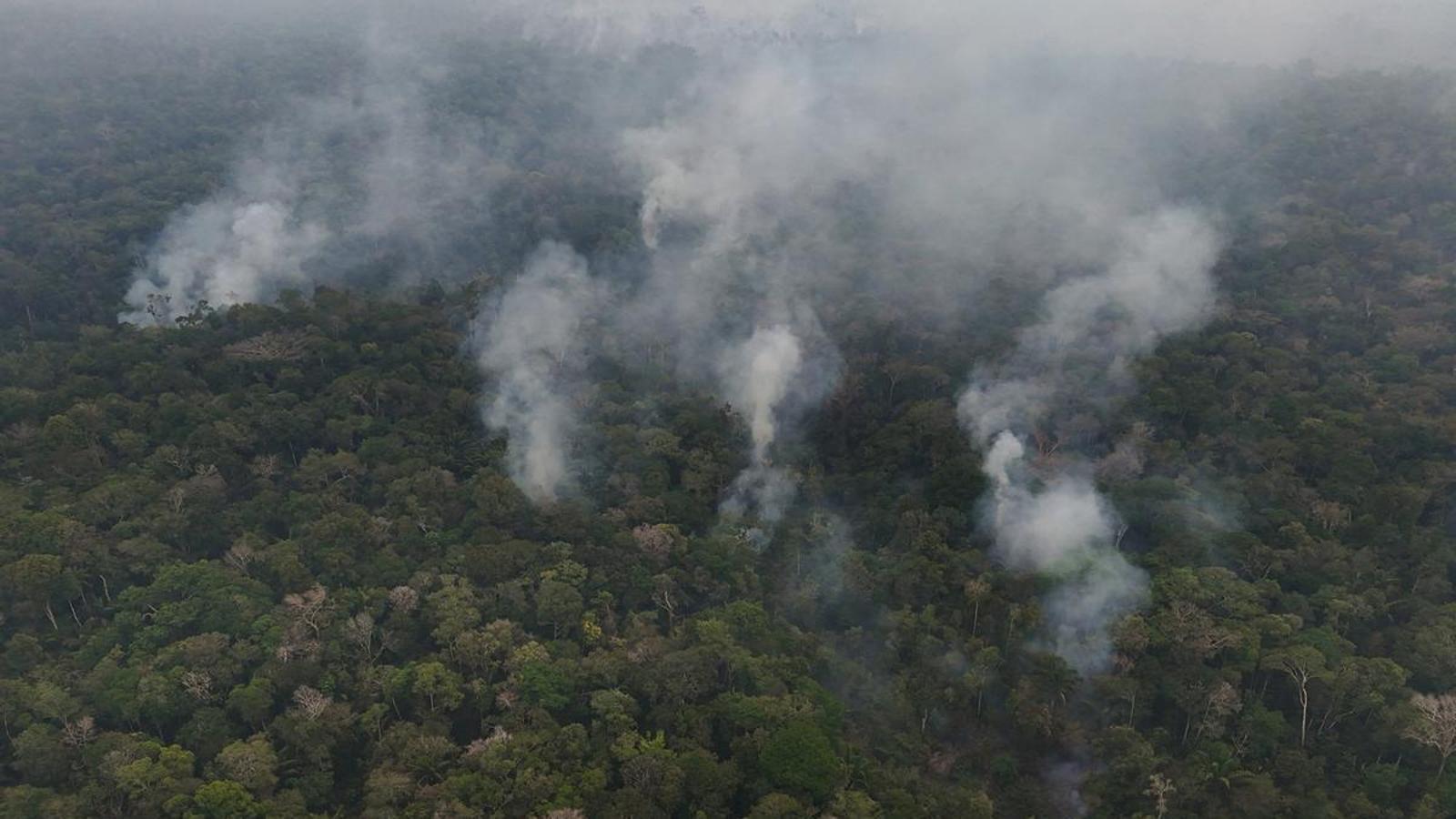
For every dollar destined to protect nature, 33 are destined to destroy it
COP17 has announced new financing commitments, but curbing the economic incentives that contribute to the destruction of ecosystems remains a pending issue
-
CAT -
CAST
Yerevan, ArmeniaFor every dollar invested in solutions to protect nature, 33 are allocated to activities that contribute to its degradation. This is the contradiction that has loomed over the United Nations Biodiversity Conference (COP17) held in Yerevan, Armenia. After two weeks of tug-of-war and a final round of negotiations lasting nearly 12 hours, the COP17 presidency declared the summit closed on a triumphant note, announcing nearly $2 billion in new funding commitments for nature conservation—a figure still far from the goal of mobilizing $200 billion annually by 2030, agreed upon in 2022 in the Kunming-Montreal Global Biodiversity Framework.
But the problem goes beyond a lack of resources. The 1-to-33 ratio refers to data from the United Nations Environment Programme (UNEP): in 2023, $7.3 trillion was spent on activities harmful to nature in sectors such as energy, industry, and raw material extraction. In contrast, only $220 billion was invested in the management, protection, and restoration of ecosystems.
Despite the progress celebrated by negotiators, civil society organizations denounced that key issues were being ignored. "The questions one must ask are much bigger," explains Nele Marien, Biodiversity and Forests coordinator at Friends of the Earth International, to ARA. These are the so-called "elephants in the room": structural problems that everyone sees but that no one puts on the table.
Incentives that perpetuate destruction
One of these is harmful subsidies, a term that has gained resonance for the first time at the summit. Despite acknowledging that activities such as mining, intensive agriculture, and the extraction of fossil fuels contribute to the loss of diversity, many governments continue to favor them through subsidies, tax advantages, and the weakening of environmental regulations – especially in recent years, as a response to the energy crisis caused by geopolitical instability –. "These policies make operations cheaper and more profitable, facilitating private investment," explains Audrey Irvine-Broque, a researcher at the University of British Columbia.
A case in point is Canada, where various tax benefit programs have favored the oil and gas industry in British Columbia. "More than half of the wells located in habitats of threatened caribou populations have received these incentives! – explains Audrey –. All of this is in direct contradiction with the commitments to protect species at risk," she adds.
One of the 23 targets of the Kunming-Montreal Framework establishes reducing harmful incentives by at least 500 billion dollars annually before 2030. Four years later, however, it remains the most delayed goal: only 5% of the signatory countries have established specific measures to address it. Although in Yerevan the magnitude of the problem was recognized, the final agreement, influenced by pressures from India, Russia, and Saudi Arabia, only "urges" the signatories to accelerate the reform, without establishing a detailed roadmap or a concrete implementation calendar.
Difficulties and dependence in the Global South
The countries of the Global South, those that concentrate the most biodiversity, face an added difficulty: many depend economically on the same extractive activities they have committed to limiting. In fact, two-thirds of developing economies obtain at least 60% of their exports from raw materials such as soy, nickel, and oil.
"To attract foreign investment and access international currency, many governments end up giving in and adopting policies that favor the expansion of extractive industries," notes Irvine-Broque. These exports allow for paying off foreign debt and importing food, medicine, and technology, but they aggravate the degradation of their ecosystems. "It's a vicious circle," the researcher summarizes.
The contradiction becomes evident in international negotiations. "For them, it is not an option to say publicly that they will not fulfill the commitments to protect ecosystems," states Marien. But once back home, the need to maintain short-term economic stability makes it difficult to translate promises into practice.
Added to this dependence is the international funding deficit. The Kunming-Montreal Framework aims for developed countries to mobilize at least 30 billion dollars annually for developing countries by 2030, but the contributions, being voluntary, remain insufficient. And even when money is available, accessing it can become an obstacle course.
"Theprocess is too bureaucratic," explains Bonaventura Bono of Greenpeace Africa to ARA, in reference to the Global Environment Facility (GEF), one of the main funding mechanisms for biodiversity conservation in developing countries, to which Spain has announced a contribution of 50 million euros. According to Bono, "the criteria to access it are difficult to meet in many countries of the Global South" due to a lack of administrative capacity. "We must facilitate access to this money," he stresses.
Furthermore, the GEF does not cover the full costs of large- and medium-scale projects, which forces countries to mobilize additional resources. Although there is no mandatory minimum ratio per project, the fund aims to mobilize seven additional dollars for every dollar it provides. "For governments with limited resources, having to contribute their own money is an obstacle," considers Irvine-Broque. Although the GEF's limitations have been recognized among the international community, COP17 has postponed the creation of a new, more effective mechanism until 2028.
The price of protecting nature
Even when a government chooses to limit extractive activities, it can face multi-million dollar claims from foreign investors. This is the case in Pakistan, where the rejection of a license to operate a copper and gold mine in Reko Diq, in the province of Balochistan, triggered international arbitration. In 2019, a tribunal ordered the government to pay nearly 6 billion dollars. Faced with the inability to cover the cost of the lawsuit, the government took a step back and gave the green light to the mining project.
"This creates a chilling effect," explains Marien. Faced with the risk of facing high compensation payments, some governments may be more reluctant to establish environmental regulations, expand protected areas, and withdraw extractive concessions.
"The population is tired of seeing how their governments continue to support the same industries that threaten their health and their livelihoods," warns Irvine-Broque. As fires, floods, droughts, and pollution increase, and natural wealth decreases, COP17 has reminded us that the future of ecosystems depends not only on closing the financing gap, but on the fact that money goes in the right direction.
