The legendary Dolly Parton dies at 80 years old
The American singer and songwriter has been one of the great stars of country

-
CAT -
CAST
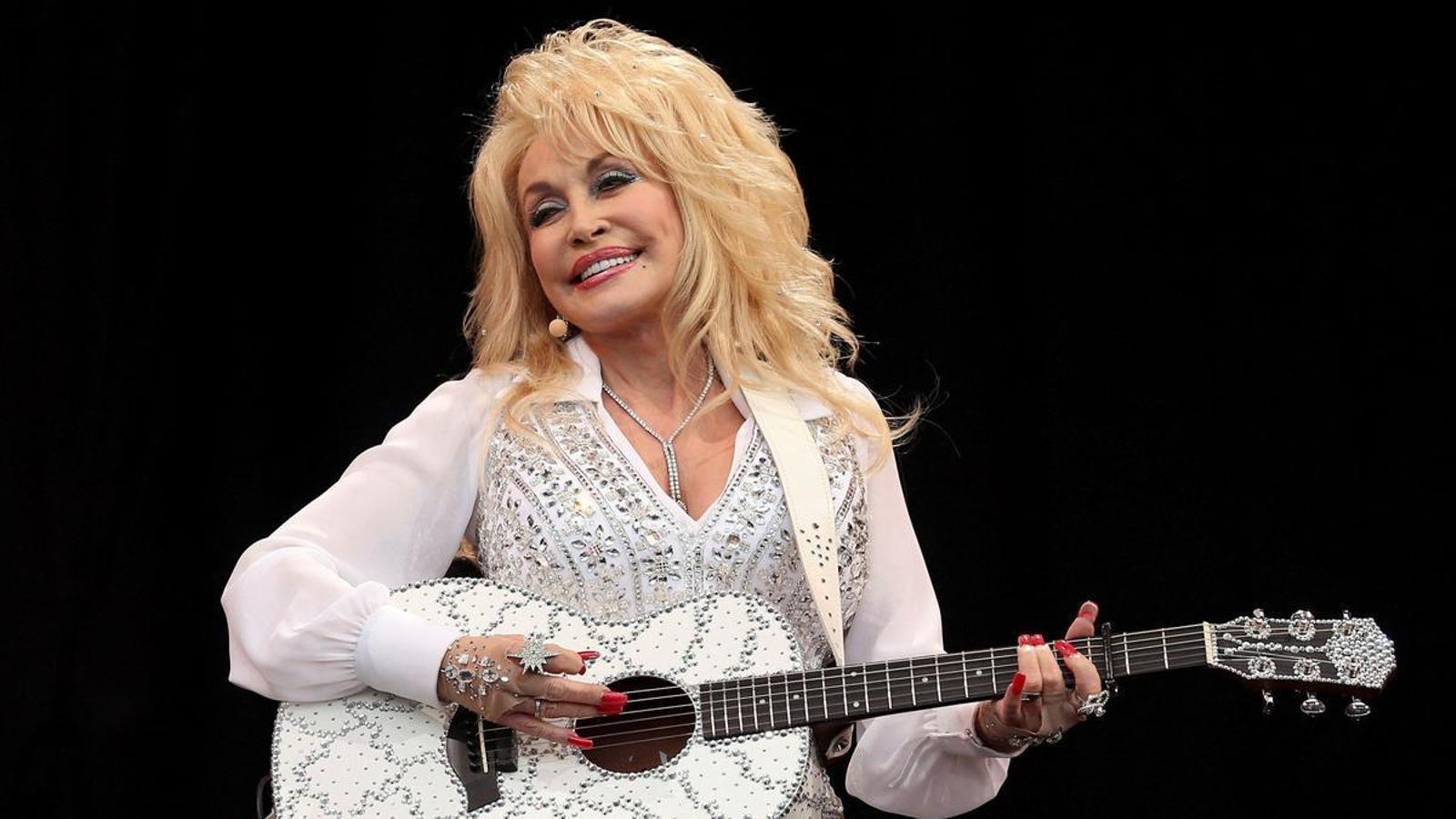
BarcelonaSinger-songwriter Dolly Parton died this Tuesday at the age of 80. This was announced by her family in a video shared on social media. A country music legend and one of the most iconic artists of her generation, Parton leaves behind a legacy that includes songs like Jolene and I will always love you. A few days ago, the singer herself explained to People magazine that she had to cancel some concerts due to health problems she had neglected while caring for her husband, Carl Thomas Dean, who died in March 2025 at the age of 82. Unfortunately, she didn't make it.
Dolly Parton's artistic magnitude is immense, especially in the United States, where she has been one of the most important figures in country music, a genre whose stylistic coordinates she knew how to adapt to her artistic and political concerns, and always from a woman's perspective. Furthermore, she has become a benchmark for both traditional and unorthodox country music. Naturally empathetic, she always stood by the most vulnerable. She promoted literacy programs in depressed areas, created university scholarships, funded NGOs, and during the COVID-19 pandemic, she provided financial support for vaccine development. Despite being one of the few artists of consensus between the two Americas, she maintained a direct confrontation with Donald Trump, a president who represents the antithesis of the empathetic values that Parton defended. But the respect the artist generates is so great that this Tuesday Trump himself announced that flags would fly at half-mast in honor of Dolly Parton: "There has never been anyone like her, and there never will be," said the US president on Truth Social.
Born in Sevierville (Tennessee) on January 19, 1946, she grew up in a rather tough environment, in the Appalachians, a geographical context prone to "goddamn sad songs" (sad ass songs), as she herself said. Undisputed queen of country, she had a deep knowledge of tradition and at the same time a great pop intuition. The combination was a winning one, although success was not immediate. Dolly Parton was trained by Porter Wagoner, who in 1967 hired her to sing on his television show. Before that, she had already made incursions into Nashville, and had begun to compose with the collaboration of her uncle, Bill Owen, and under the influence of country icons like Hank Williams, as she showed on the album Hello, i'm Dolly (1967). The alliance with Wagoner, which lasted until 1974, brought her notoriety and regular television presence. Albums like Just because I'm woman (1968), In the good old days (when times were bad) (1969) and the magnificent Joshua (1971) are part of this first stage of more classic country, but which already offers many details of Dolly Parton's vocal and compositional personality, a great storyteller in three minutes.
In the seventies, as country music absorbed rock and at the same time pursued more commercial formulas to confront rock and pop precisely, Dolly Parton relied on her own point of view: to be herself without renouncing the possibility of reaching everyone. To her advantage, she had a special sensitivity, as she demonstrated in Jolene (1973), a song composed and sung from the perspective of a woman imploring her husband's lover to leave him. "I can't compete with you, Jolene [...] / Please don't take him just because you can [...] / You can have anything you want", she sang on the same album that included the ballad Lonely comin' down and I will always love you, another of the American singer's superhits. Two decades later, Whitney Houston covered I will always love you in the film The Bodyguard (1992). It is just a small testament to Dolly Parton's talent as a songwriter.
In the second half of the seventies, the success of the songs transcended country. She herself knew how to read the moment, and accentuated the pop side. Thus came Here you come again (1977), a commercial bullseye, like Old flames can't hold a candle to you, a version of a conveniently sugared country classic that placed at the top of the charts in 1980, in the midst of the disco era. That same year she starred in the film Com eliminar el seu cap (Nine to five), alongside Jane Fonda and Lily Tomlin, and the song 9 to 5 became number 1; it was surely the song that contributed most to Dolly Parton's popularity outside the United States.
In the eighties, her discography includes notable interpretive exercises such as the album The great pretender (1984), in which she lent her voice to songs by Johnny Cash, Pete Seeger, The Platters, and Jerry Butler, among others. Listening to these songs also reveals the talent of a singer capable of moving without losing her focus. The same applies to The grass is blue (1999) and Little sparrow (2001), bluegrass albums with which she once again asserted herself as a great voice rooted in rural traditions, and with Halos & horns (2002), with a more folk feel. It was a way of challenging the malicious stereotype that sought to reduce her to a "Mountain Barbie."
Emerging from the heart of country music, Dolly Parton leaves with almost unanimous recognition from different generations and musical sensibilities.

