Boots Riley, the communist filmmaker who has brought the revolution to Sitges
The director and musician presents at the festival the anti-capitalist satire 'I love boosters'

-
CAT -
CAST
SitgesIn a Hollywood where socialism is a taboo word and even Paul Thomas Anderson resists talking about politics after having made a film as political as There Will Be Blood, directors like Boots Riley (Chicago, 1971) are a rare exception. "In case it isn't obvious from watching my film, I am a communist and I believe that the people should democratically control the wealth that labor generates. And to change things, obviously it is necessary to fight. We need general strikes," he stated this Wednesday at the Sitges Festival after presenting the fantasy comedy I'm a Virgo.
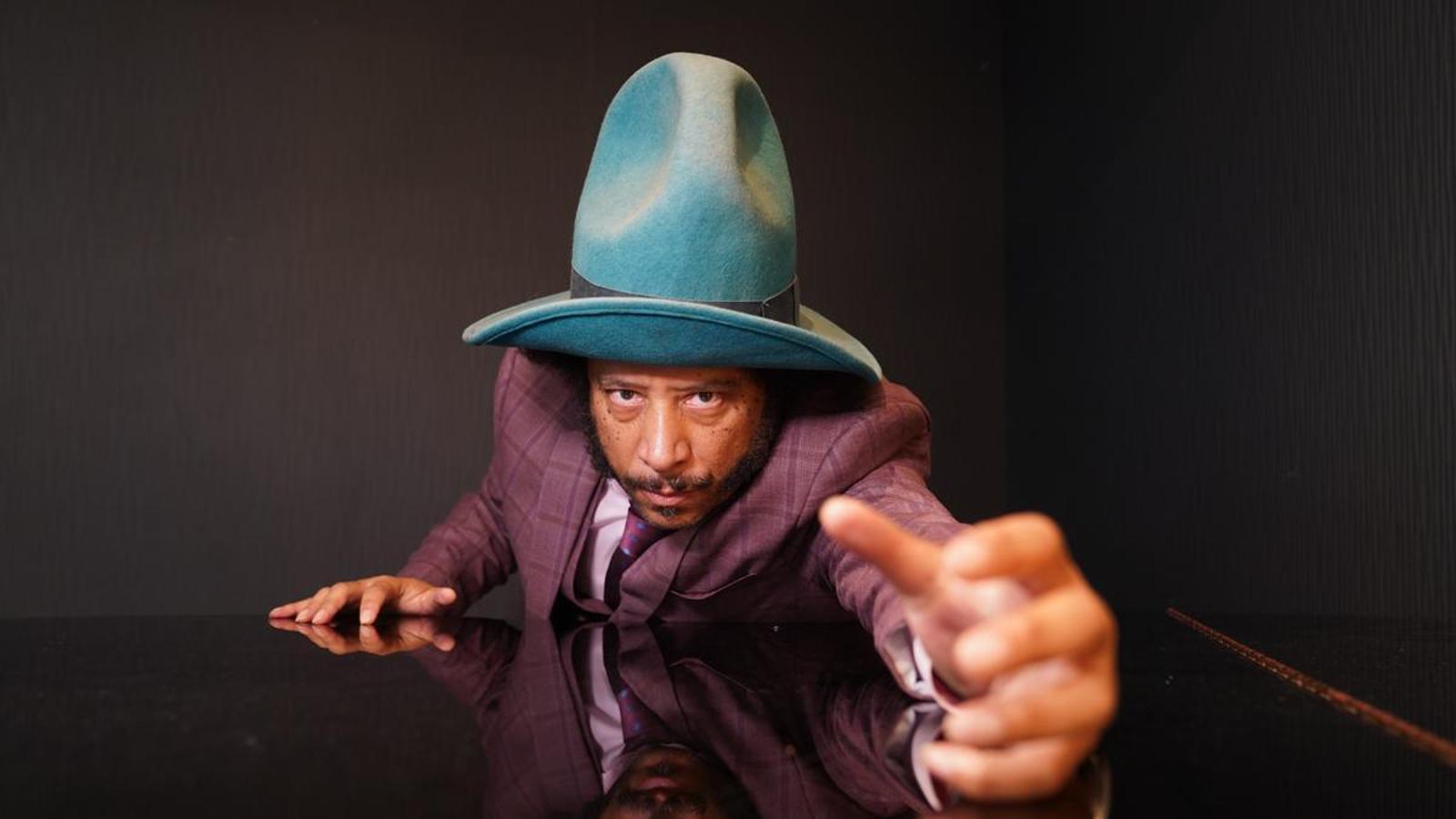
In a festival where the aesthetic consensus of fans and filmmakers is situated in the color black, Riley stands out for a colorful and daring sense of fashion that reveals his past as a hip-hop musician and leader of the band The Coup, a project that has remained in the background following the success of his first film as a director, Sorry to bother you (2018). Riley's cinema, in fact, is just as singular as he is: an exuberant combination of surrealist comedy, black music, science fiction, and Marxist analysis. Like I'm a Virgo, an anti-capitalist and African American Ocean’s eleven in which three women who shoplift clothes from luxury stores plan a big heist against the company of a powerful designer.
“In the United States, there is a process of demonization of what we call boosters, who are people who make a living by stealing from clothing stores and reselling it cheaper –explains Riley–. Police unions paid for advertising campaigns and leaked false stories to the media to paint them as the scum of society. I wanted to put people on their side, and hence the idea of making a heist movie, because they are exciting and the audience always wants to see the thieves who defy the system triumph”.
The film introduces without complexes arguments about class struggle and dialectical materialism in a delirious cinematic patchwork with leaning skyscrapers, demons that absorb the soul through cunnilingus, fantastic devices that “accelerate the contradiction,” and a fashion show that culminates in a general strike. “I am not one of those artists who doesn't care if people like what they do. No, I do want to reach people –he admits–. Art is communication, I want to share the ideas that I am passionate about. I make music or cinema to transmit those ideas, and if I can't, then I won't make art. I don't want to make cinema just to be a filmmaker”.
Riley is the son of a couple of social activists, and from the age of 15 to 20 he was a militant in a communist organization, the Progressive Labor Party, and while in high school he organized a protest against educational cuts that mobilized thousands of students. “That took me to the party's central committee, where I met people over 60 or 70 years old who had been communists since the 20s or 30s, even a Russian woman who as a child had lived through the Russian Revolution –he recalls–. That experience shaped my aesthetic: if I later made music, it was thanks to communism. And I have nothing to do with the American left that since the 60s has forgotten about the class struggle and has become disconnected from the working class”.
Riley claims to be aware of the contradiction involved in making communist cinema and calling for revolution in a film produced by a Hollywood studio. “But it is also contradictory to defend a very leftist idea, be very satisfied with your speech and do nothing to bring it to reality,” he snaps. The director recalls that Lenin's famous pamphlet What Is to Be Done? was inspired by a novel of the same name by the Russian utopian philosopher Nikolai Chernyshevsky. “Art cannot change anything by itself, it must be connected to campaigns and organizations. But we can show how things can be changed. Art can be instructive”.

At the end of I'm a Virgo, a strike by the workers of a fashion company inspires a general strike all over the world that puts capitalism against the ropes. “You don't just reach the revolution by picking up arms. Before 1917 there were a lot of strikes in Russia, and everyone talks about Che and Fidel, but before the Cuban Revolution there was a great general strike,” says Riley, who stresses that “art that limits itself to saying that the world is screwed is useless”. “Maybe my film is not very subtle –he insists–, but no one will be able to say that it is boring”.
Robert Eggers and the medieval werewolf
Eleven years after visiting the festival to present his debut, director Robert Eggers has returned to Sitges to receive the Time Machine award. "I was here with The Witch, the film that changed my life", recalled Eggers, one of the great current horror filmmakers, who likes nothing more than being at a genre film festival, "especially if it is Sitges, where the audience loves genre cinema and appreciates its beauty with enthusiasm".
Eggers rewarded the Sitges audience with a taste of his next film, Nosferatu, a story about lycanthropy set in rural 11th-century England. "You are the first in Europe to see these images", he said about a scene starring Aaron Taylor-Johnson and Willem Dafoe spoken entirely in Old English. "I like the past as much as horror, perhaps even more –he confessed during a subsequent discussion with the festival director, Ángel Sala–. In any case, classic monsters work best in the era when people believed in their existence".
