An offering to the Valencian people opens the Mediterranean Fair
Sandra Monfort premieres the show 'Terra de guapes' there

-
CAT -
CAST
BarcelonaIt was difficult to contain the rage after so many deaths and so much political irresponsibility on October 29, 2024. It had only been two weeks since the DANA that mainly affected the Valencian Horta Sud, and the Valencian singer Sandra Monfort (Pedreguer, 1992) found the right words to express the unrest and celebrate solidarity. "And we will sing for you and we will clamor for justice! Today, while the starlings migrate and radishes grow in the field, the people rise up clutching shovels and street brooms," said the 'Som València' manifesto written by Monfort.
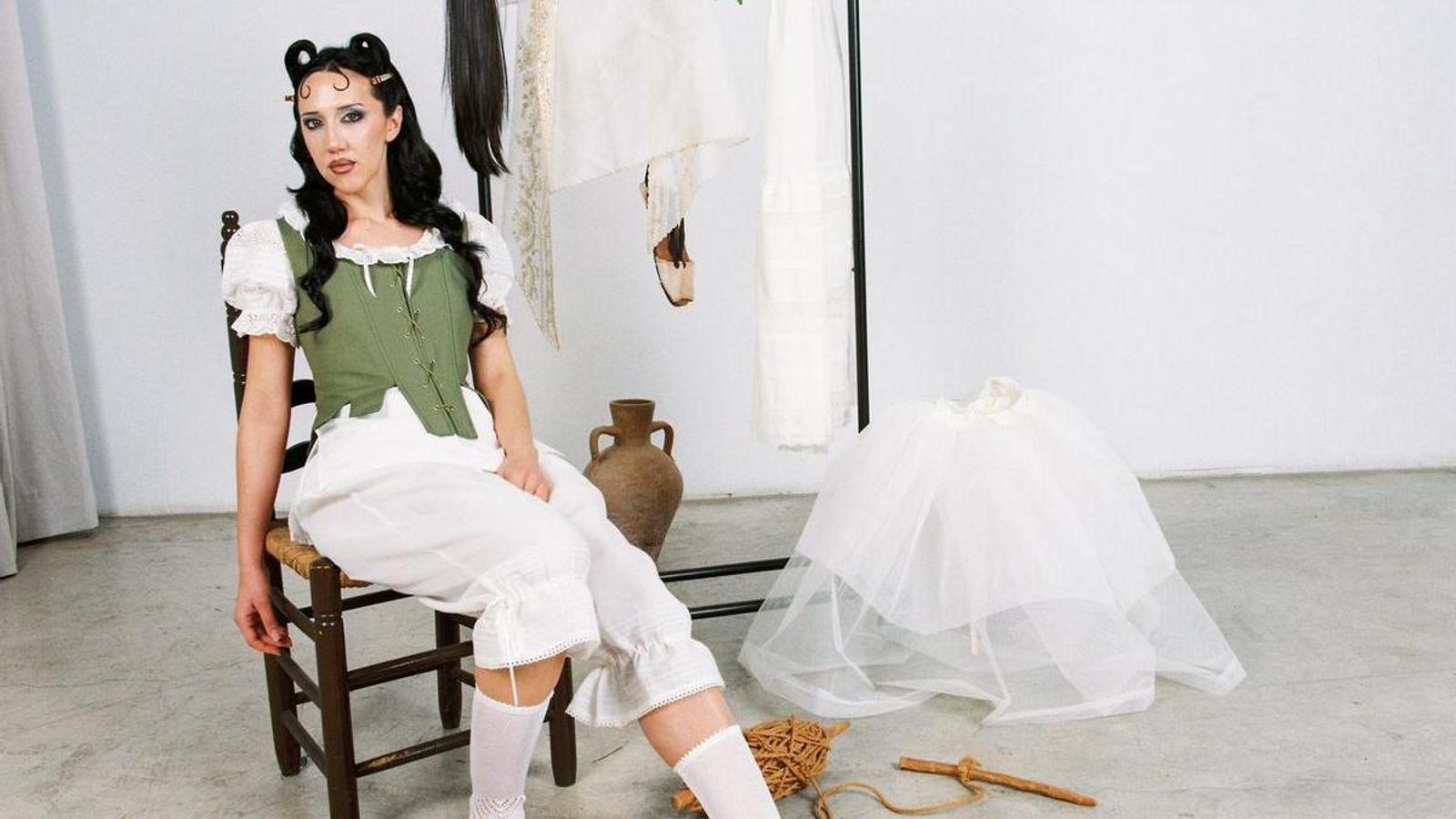
From that brutal wound comes Terra de guapes, which was first a song published in 2025 and which now titles the show that Sandra Monfort is presenting this Thursday on the opening day of the 29th edition of the Fira Mediterrània in Manresa. The Kursaal Theatre, at 9:30 PM, will host this "offering to the Valencian people." The former member of the trio Marala unfolds this tribute with music, dance, and performance, combining roots and contemporaneity as she already did in the previous project and on albums like La mona (2023). Monfort invokes different Valencian popular manifestations, such as the 'cants de batre' (threshing songs), the 'muixeranga' of Algemesí, the Mystery Play of Elx, the wake dance, the sounds of 'dolçaina' and 'tabal', and the 'albaes'. On stage, she will be accompanied by Efrén López (hurdy-gurdy, bandurria, guitarro, and archlute), Andrés Belmonte (flute and ney), Amanda Monfort (violin, backing vocals, and synthesizers), and Jordi Ortolà (percussion), and the choreographic direction is by Júlia Cambra and Carlos Fustel.
Terra de guapes is another example of the collaboration policy fostered by the management of the Fira Mediterrània de Manresa, this time with the Institut Valencià de Cultura, the Diputació de València and the Fira Valenciana de Música Trova'm. The closing of the fair also responds to a collaboration. The Orquestra de Músiques d'Arrel de Catalunya (OMAC) inaugurated the 2021 edition with Trencadís, and will now star in the closing concert on Sunday at the Plaça Major (8 pm) with Decostumari, a show shared with the dancers of Esbord and produced by the Institut de Cultura de Barcelona and the Department of Culture of the Generalitat. The purpose is to reclaim the musicians and dancers who have kept the transmission of tradition alive. The OMAC will also present in Manresa, on Friday at the Kursaal (9.30 pm), the show Pau. With music by Dani López Pradas, text by Sergi Pompermayer and stage direction by Martí Torres, the proposal pulls the thread of the humanist legacy of Pau Casals.
85 shows in four days
The Fira Mediterrània de Manresa, "a strategic market for roots arts", as its director, Jordi Fosas, recalls, programs over four days, from October 15th to 18th, 85 shows by artists who use "tradition, popular culture, and intangible heritage to create today". Fosas distributes them into four permeable itineraries: dance, memory and legacy, Catalan music, and Mediterranean and world music (which includes a focus on Flanders); in addition to family proposals and others involving participatory dance and singing. As in previous editions, the trend of young artists reconnecting with popular legacies and roots to stand out in a context of globalization that, paradoxically, has standardized many artistic discourses, is consolidated.

As Fosas says, there is "a reconnection with the land, also linked to sustainability, and with a transmission that we had surely cut off with our grandparents". In this sense, it is worth highlighting projects such as that of Ariadna Rulló, better known as Joana Dark, who presents Revolta on Thursday at Els Carlins (7.30 pm), a proposal that arrives two years after the album Lo secà which she also premiered in Manresa. A defender of the values of oral transmission and the collision of folklore and electronics, this time she delves into popular song "as a space of collective resistance and coexistence between Mediterranean cultures". Oral transmission and the preservation of sung heritage is the purpose of the Càntut archive, the cornucopia that fuels Judit Neddermann's adventure with the Trio Fortuny, on Saturday at the Kursaal (9.30 pm). Another tradition, that of the habanera, is the thread that guides Sirènia, the new show that Arnau Tordera will present at the Teatre del Conservatori on Saturday (8 pm). Both Neddermann's and Tordera's proposals emerge from the fair's Obrador d'Arrel, where ArrelAlada, by violinist Coloma Bertran (Thursday at Sala Plana de l'Om, at 6.30 pm), and Muntanya avall, the Pyrenean research by Sorguen (Saturday at Plaça de Sant Domènec at 11.30 am), have also been gestated.
As usual, dance and performing arts proposals have an important space at the Fira Mediterrània, with shows such as the premiere of Catalanwashing, by Pere Sera and l'Esbord; BŌ, by Brodas Bros and the Bastoners de Sant Cugat; Cantar de gesta, by Mucha Muchacha, who participated in the folk rave by Los Voluble at the inauguration of the 2024 edition; Dolores, Remedios y Consuelo, by the Valencian Marta Sofía Gallego; Alén, by the Galician Colectivo Glovo and BenQuerer, Fran Sieira báilalle a Caamaño & Ameixeiras, by the Galician choreographer Fran Sieira.
