Would you do it better with rain alerts on mobile phones? ES-Alert Simulator invites you to try it
The creator of the game is Xavier Garcia, programmer and amateur in meteorology

-
CAT -
CAST
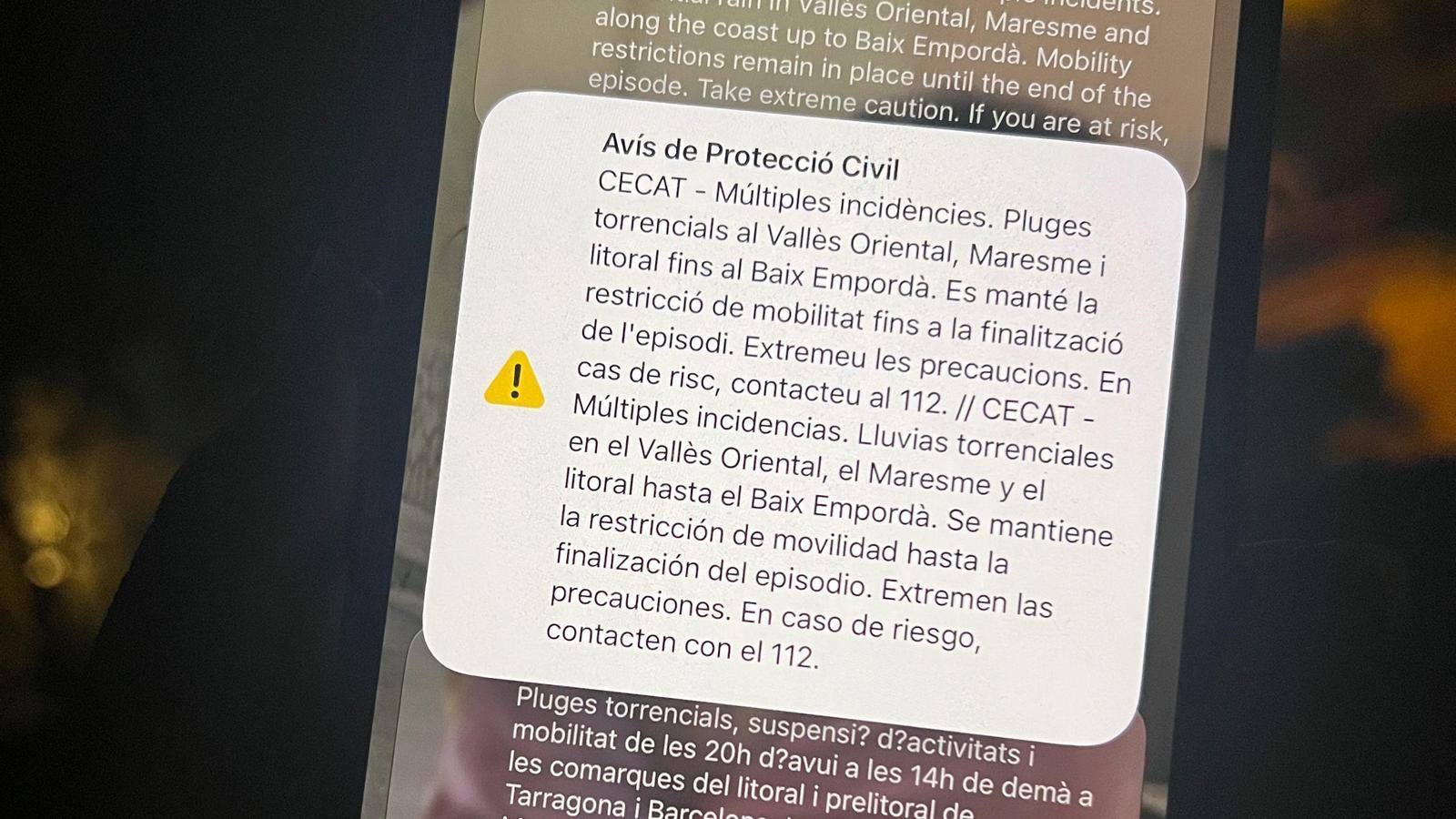
When mobile phones ring with the shrill tone of ES-Alert alarms it is impossible not to hear them, and these past few days we have heard them often. But when they ring often there are also criticisms from citizens who believe they arrive late or, conversely, that they are sent in places where they are not needed. Now an online game devised by the programmer and meteorology enthusiast Xavier Garcia invites you to try it yourself, if you think you would do it better. It is called ES-Alert Simulator and, when you play it, you will put yourself in the shoes of a Civil Protection duty officer in Catalonia during a rain episode.
At first it seems easy, deciding when to send an alarm to hundreds of thousands or millions of mobile phones, but it is not so much and it can become a real dilemma for those in charge. To put the player in the situation, ES-Alert Simulator offers some clues like the rain warnings from Aemet and Meteocat, from mild warnings to major alerts for severe weather. However, just as happens in real life, the messages from Aemet and Meteocat do not always coincide and, some, can also be false alarms.
Furthermore, the game also does not reveal what type of rain episode you will get in each game: it can be anything from a night storm on the coast that does not cause major damage to a DANA that puts a large part of the Catalan population in danger. But the decision to send the alert or not is in the hands of each player and, just as happens in real life, making a mistake has consequences.
For example, if in the face of a severe storm the alert is not sent or is sent too late, people will continue to be on the street, in their cars, or in basements when the rain arrives and will be more exposed to the dangers posed by a downpour or torrential rain. But if the population is warned and it does not rain, the player will not only be exposed to criticism from the population, but the public service will lose credibility. The decisions made throughout the game will dictate the outcome for each player, who, in the worst-case scenario, will end up being responsible for numerous victims and high economic costs and will be forced to resign as head of the Civil Protection corps.
"It's just a game"
Behind the creation of the game is Xavier Garcia, an online store developer and weather enthusiast. As he explains to ARA, the programmer devised the simulation following the latest storm that has shaken Catalonia. "With so much fuss over the storms, every time I went on Twitter (X) I saw that everyone was complaining about the alerts -explains Garcia-. If an alert was sent early in the morning, people said the warning had woken them up; if it was sent late, someone else would insist that the alert had woken up their baby", the creator quips.
With these messages filling the networks, Garcia began to reflect on the topic. "And what if it were us sending the alerts, what would happen?", he asked himself. Thus, with the help of his knowledge of meteorology and programming, together with artificial intelligence, he developed what he considers a fun pastime. "It's just a game", emphasizes the creator, who ensures that this simulation does not intend to dismiss the alerts nor fall into political discourse. "It's entertainment: obviously it's difficult to send out the alerts, and if you are in a town where one has been sent and it doesn't rain, you have every right to complain. But the game is not aligned with one side or the other", he concludes.
