Mediterraneally

“Orestes knows where he is going, while Hamlet wanders lost among doubts”. In the collection of oral conversations transcribed by his disciples, this phrase is attributed to Antoni Gaudí. The reflection came to him from another more global phrase: he said that we Mediterranean people are concrete, while people from the north have more mists and fantasies. Hamlet would be the indecisive prince of Denmark, trapped in intellectual speculation and the lack of concrete action, while Orestes gets down to business. If the former leaves the vengeance for his father's death in suspense in an eternal “to be or not to be”, Orestes has a path traced by the gods and by his own moral responsibility (also to avenge his father's death), and that is why he executes it without hesitation. Gaudí advises, in short, to solve structural problems with security, realism, and precision. Mediterraneally, according to his own definition.
This does not place idealism in a ridiculous or infertile position, but only when it is in excess. Francesc Pujols set forth a theory quite similar to Gaudí's. For him, geography and history place Catalonia at a point of intellectual equilibrium that avoids extremes: the north would be too idealistic and abstract, far from tangible reality, while the south would sin due to an excess of passion, extreme mysticism, and overflowing imagination. Don Quixote, to understand us, or the Civil War. But also Macià and Prats de Molló, to whom Pujols attributed the values of passion and unfailing faith, which is an indispensable engine but one that needs to be tempered by common sense so as not to crash against reality. The key to success would reside, therefore, in a certain division of tasks: while Prat de la Riba, for example, was ideal for working on the “inward Catalonia”, Cambó was good at going to Madrid to gather as many things as possible (the self-government of Catalonia does not begin to materialize, lamentably, until there are deputies in Madrid).
What is happening to us now, in the year 2026, is that we do not know which reality our realism should cling to today. In fact, according to Vicens Vives or Josep Pla, we are a more Hamletian people than we would like: too often we remain stuck without knowing which way to turn. For example: being realistic, it is a scientific truth that with Spain the pacts are broken and there does not seem to be any more wax to burn or beans to count. The famous phrase attributed to Prat de la Riba, which said that “Theoretically, we are all separatists, but practically, there is none,” has shattered into a thousand pieces once we have traveled the path of the Procés. It turns out that, in practice, we were separatists too. We only needed to review the lyrics of our anthem to see that we did know how to cut chains: what happens is that we only do it “when it is convenient”.
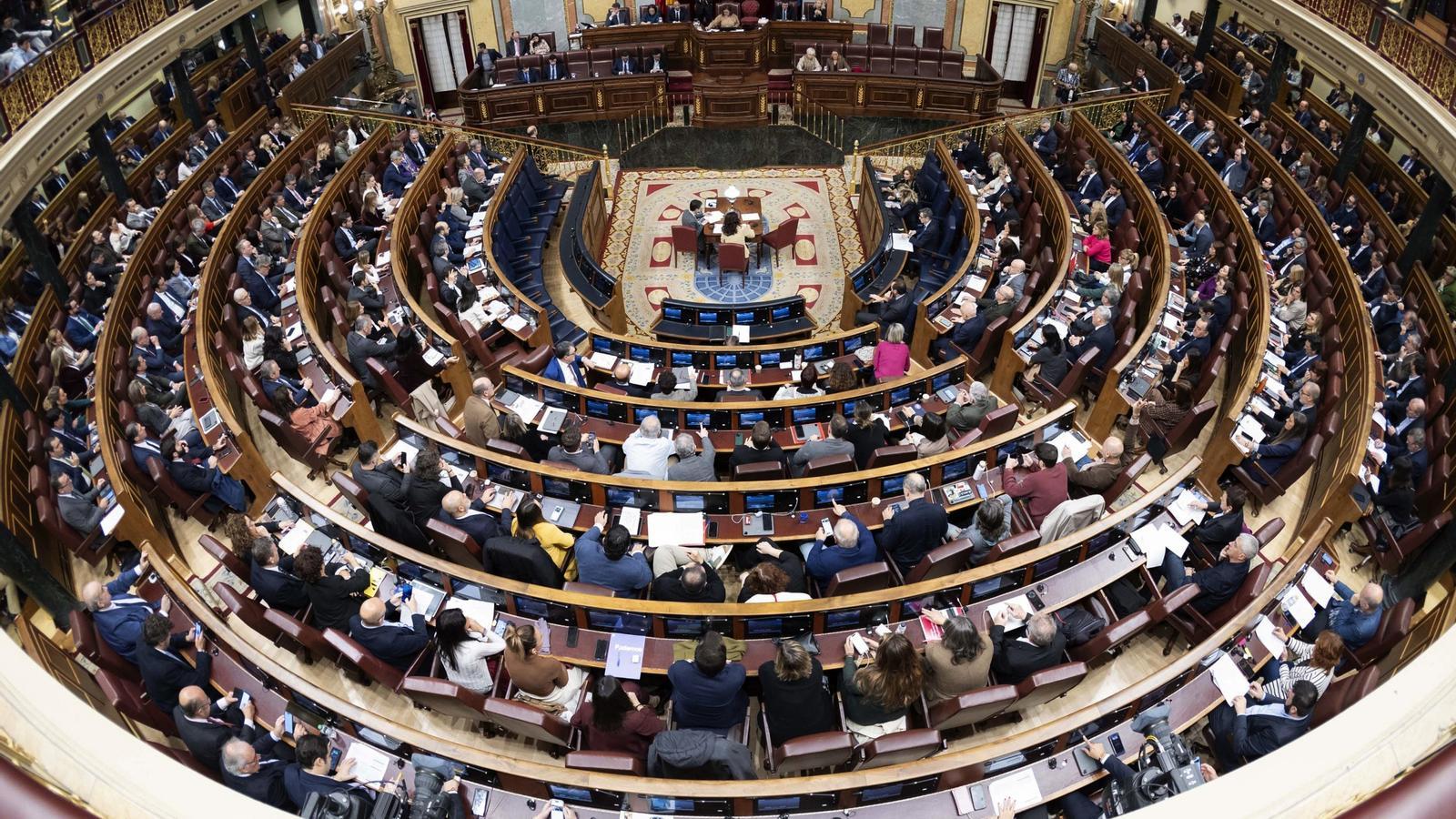
Calculation of forces, division of labor, one hot and one cold. In Catalonia, the winner will always be the one who knows how to demonstrate that they have a more realistic proposal, but if we want to be honest, we must add that the most realistic thing during the 'Procés' was (or seemed to be) to bet on the unilateral path towards independence. If it were not so, people simply would not have joined in (what can we do, if we were born in the Mediterranean). Therefore, now, after the immense disappointment of the post-'Procés' agreements and the PSOE's failures to fulfill promises, the big question is what practical sense there can be in intervening in Spanish politics after the elections. We will be told by a science as utterly tangible as arithmetic, but we will also have to decide quickly what the new alternative is if this path becomes (for the umpteenth time) impracticable.
There is another option, and that is that we all end up agreeing that what is not practical is our own existence. That now it is only worth debating about left and right, and that that conflict, that issue, hinders our life so much that it is better (for the sake of practicality) to park it definitively. I do not know who the Nobel laureate is that advises the Catalan parties towards this path, but they should not forget that here in the Mediterranean people have a very refined sense of practicality: those who show clear signs of not being useful, of giving up too soon, or of not obtaining enough results, are quickly cast aside. Macià dreamed too many dreams in Prats de Molló, indeed, but then he wiped out Cambó in just one year. Look at both moments, then, and do yourselves a favor: be practical.
