Super-Kid: how can we prepare ourselves for what is coming?
Scientists ask to reinforce essential services, adapt the territory and prepare the population for a future of frequent emergencies
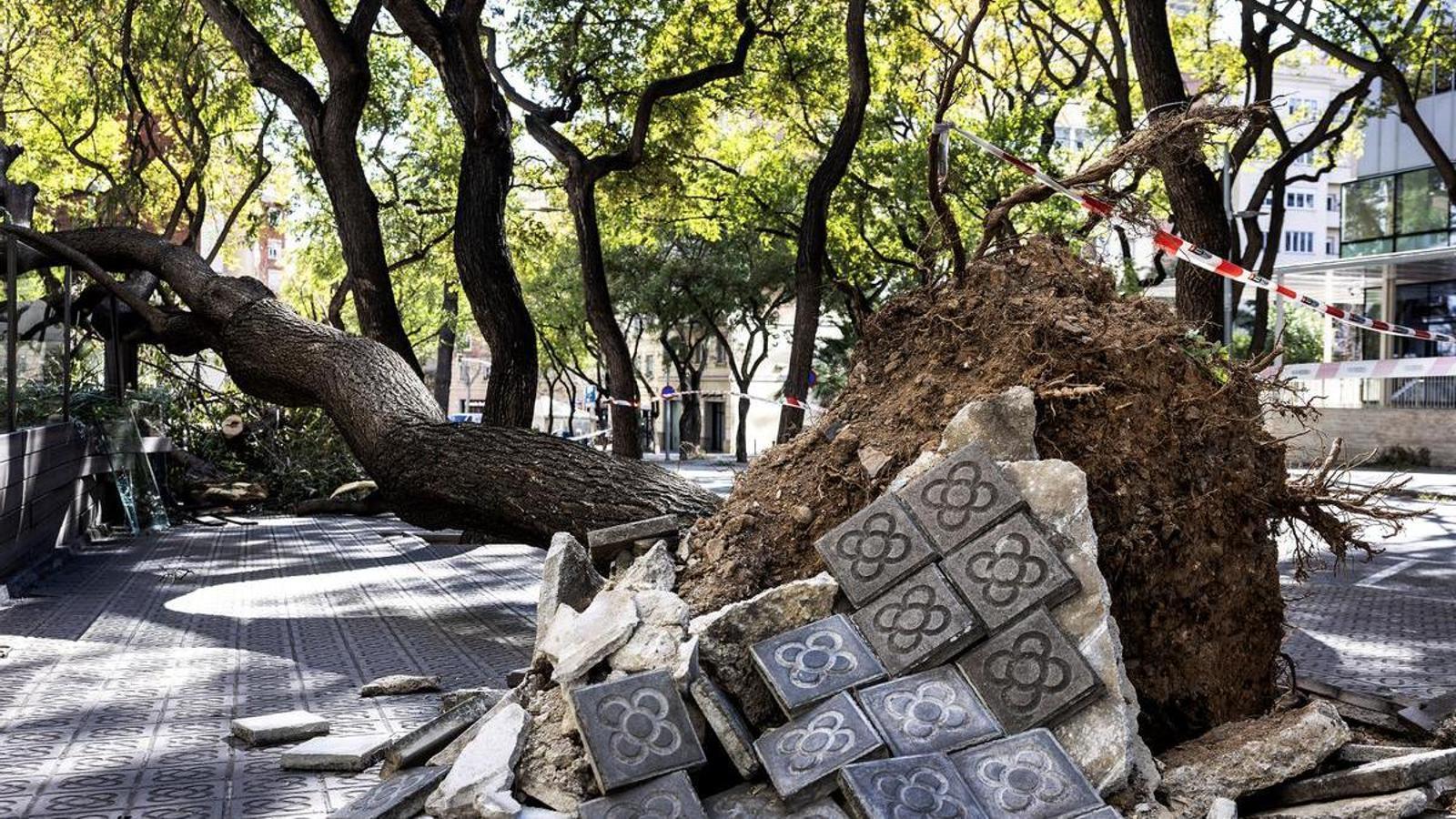
BarcelonaUnusual flowering in the Chilean Atacama desert, virulent fires in Indonesia, and floods in Guatemala. These are some of the episodes associated with the super-Niño, a particularly intense meteorological phenomenon capable of altering climate patterns on the other side of the planet in a few weeks or months. This year's is already one of the most intense, and it could have direct and indirect effects for Catalonia. In fact, a month ago, some 600 scientists, science communicators, and citizens requested by letter to the Generalitat more preparation and prevention measures.
Torrential rains, droughts, heat waves, and fires have long been testing Catalonia. This year there have been a dozen exceptional storms, concentrated between the months of August and October. And although the scientific community calls for caution when anticipating the impact of the super-Niño, they also urge for better adaptation of homes, essential services, economic activities, and infrastructure, especially in a context of hybrid warfare, where power outages, cyberattacks, or supply stoppages are already a reality.
The question is inevitable: are we prepared for what is coming? “Things have been done, but we are late,” admits Javier Martín-Vide, professor of physical geography at the University of Barcelona. “Right now there is no country that has a comprehensive preparation strategy. Everyone is patching holes because the climate crisis does not fit into electoral calendars: politicians want immediate results and mitigation and adaptation require 20-year strategies,” states Antoni Luna, researcher at Pompeu Fabra University and coordinator of the Metropolitan Futures chair.

Historically, El Niño has had little impact on the Mediterranean area and Martín-Vide makes it clear that “there are also no clear cause-effect relationships of the super-El Niño”. However, experts warn that one can no longer turn to past events to interpret what the future will be like. “We are heading towards increasingly dangerous scenarios, and we must act now to adapt to them. Our health and our lives are at stake,” warns Jordi Solé, head of the Physical Oceanography department at the ICM-CSIC and one of the signatories of the open letter to the Government. “With current warming, every tenth of a degree counts,” warns Antonio Turiel, doctor of theoretical physics and mathematician at the CSIC.
What can we as citizens do?
The scientists consulted are categorical: it is not a matter of alarming people, but of preparing the population. In the first place, and in the short term, they call for more awareness at all levels, and this means informing them of the risks of the area where they live – such as knowing if their house is in a flood-prone area or one at high risk of fire – and educating and training the public in emergency protocols.
Instructions and alerts play a key role here. According to the deputy director of planning for Civil Protection of the Generalitat, Sergio Delgado, the indication of preventive measures such as lockdowns or mobility restrictions is being streamlined, and support for town councils is being reinforced so that they can apply preventive mechanisms in their territory.
Faced with the uncertainty and growing danger in these new climate scenarios, experts demand that health, emergency, and civil protection services must be strengthened and resized, because they will increasingly have to respond to more episodes. Recently, the Government has doubled the Civil Protection staff – there are now a hundred workers and the goal is to reach 400 – and has increased the directorate's budget. “It is a process that takes time, but progress is being made,” says Delgado.
It is also necessary to prepare on an individual, family, and community scale. Experts recommend a kit (see graphic), as well as strengthening neighborhood networks, associations, and neighborhood emergency plans, with information systems on what to do in each situation and support networks for people who live alone or have difficulty moving around. One can even consider community pantries. Extreme episodes will be chained together and will affect health, the economy, mobility, and daily life. "The prices of chocolate, coffee, probably rice, and insurance premiums will go up," says Martín-Vide. "Either we all save ourselves or no one is saved," summarizes Solé.

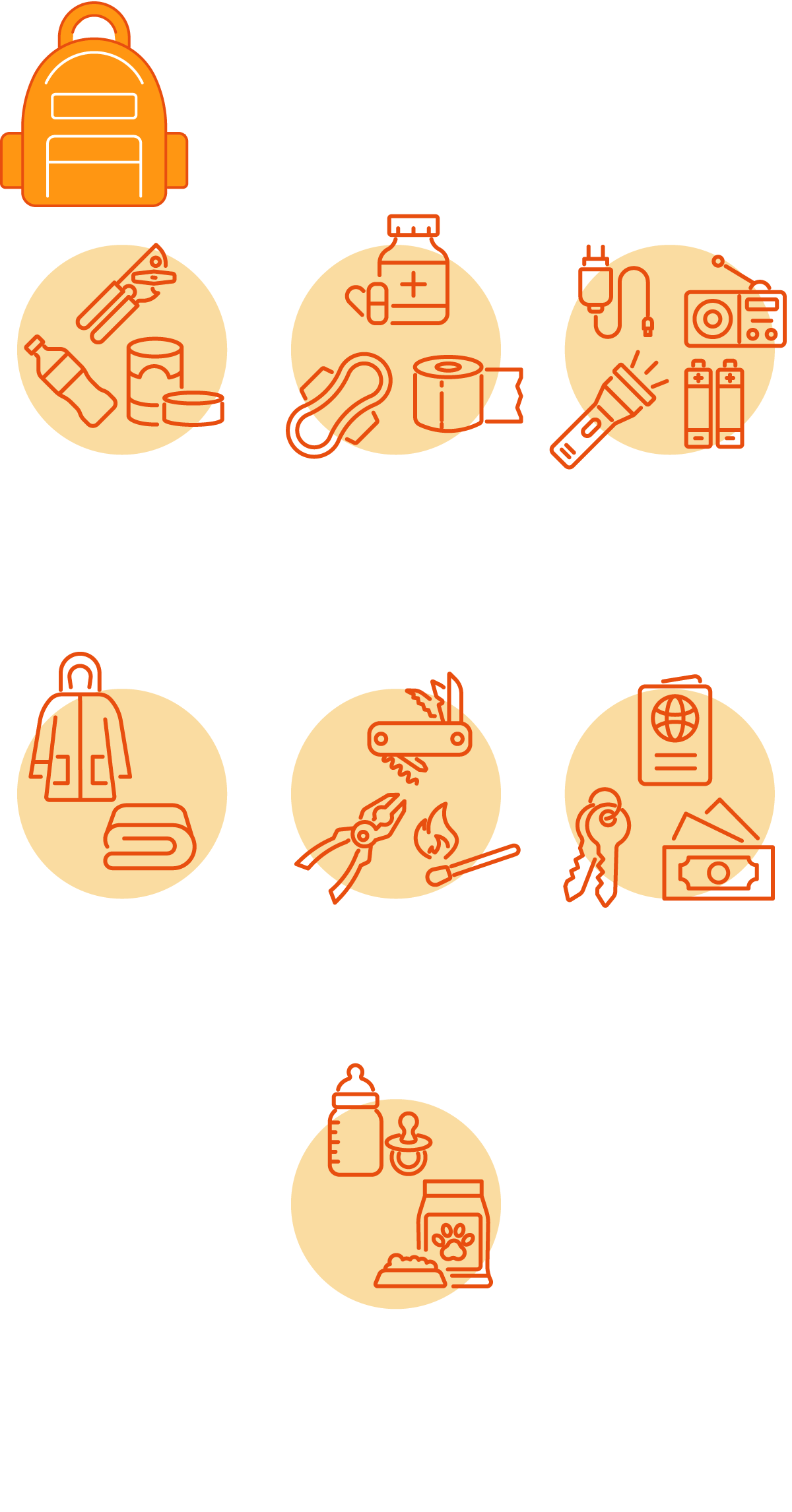
The European Union recommends that households have a basic kit to cope with the first 72 hours of an emergency without outside help, whether due to a natural disaster, a power outage, a cyberattack, or another crisis situation. It is advisable to have it prepared in an accessible backpack and to adapt its contents to the needs of each family.
- Drinking water (at least 1.5 litres per person per day)
-Non-perishable food preferably that does not require cooking
-First aid kit and medication taken regularly or for chronic illnesses
-Personal hygiene products
-Battery-operated or hand-crank radio.
-Flashlight and spare batteries.
-Power bank to charge your phone
-Mobile phone and charger
-Multi-tool knife
-Tools
-Lighter
-Matches
-Personal documentation and medical prescriptions, protected in a waterproof bag
-Cash and bank card
-Keys to the house and vehicle
-Warm, waterproof clothing
-Emergency thermal blanket
-Spare footwear
-Specific items needed by children, the elderly, people with disabilities, and pets

The European Union recommends that households have a basic kit to cope with the first 72 hours of an emergency without outside help, whether due to a natural disaster, a power outage, a cyberattack, or another crisis situation.
It is advisable to have it prepared in an accessible backpack and to adapt its contents to the needs of each family.
-Drinking water (at least 1.5 litres per person per day)
-Non-perishable food preferably that does not require cooking
-First aid kit and medication taken regularly or for chronic illnesses
Personal hygiene products
-Battery-operated or hand-crank radio.
-Flashlight and spare batteries.
-Power bank to charge your phone
-Mobile phone and charger
-Warm, waterproof clothing
-Emergency thermal blanket
Spare footwear
-Multi-tool knife
-Tools
-Lighter
-Matches
-Personal documentation and medical prescriptions, protected in a waterproof bag
-Cash and bank card
-Keys to the house and vehicle
-Specific items needed by children, the elderly, people with disabilities, and pets

The European Union recommends that households have a basic kit to cope with the first 72 hours of an emergency without outside help, whether due to a natural disaster, a power outage, a cyberattack, or another crisis situation.
It is advisable to have it prepared in an accessible backpack and to adapt its contents to the needs of each family.
-Drinking water (at least 1.5 litres per person per day)
-Non-perishable food preferably that does not require cooking
-First aid kit and medication taken regularly or for chronic illnesses
Personal hygiene products
-Battery-operated or hand-crank radio.
-Flashlight and spare batteries.
-Power bank to charge your phone
-Mobile phone and charger
-Warm, waterproof clothing
-Emergency thermal blanket
Spare footwear
-Multi-tool knife
-Tools
-Lighter
-Matches
-Personal documentation and medical prescriptions, protected in a waterproof bag
-Cash and bank card
-Keys to the house and vehicle
-Specific items needed by children, the elderly, people with disabilities, and pets
Protection of basic services
Adaptation requires rethinking how we occupy the territory and how we manage trains, maritime connections, electrical networks, desalination plants, roads, and logistics chains, which can be simultaneously affected during a serious emergency. “We currently have it very poorly managed, and this is no surprise,” says Turiel. For example, on the coast, which is especially vulnerable to rising sea levels and storms, it is necessary to review the location and protection of essential infrastructure, such as the Rodalies line.
Forest management is equally fundamental. Abandoned forests and the expansion of the interface between urban and forest areas increase their vulnerability. Luna points out that mountain ranges like Collserola or the Coastal Range, which once marked the limits of cities, are now surrounded by metropolitan zones and must be managed with a comprehensive vision. Also, notes Luna, it is necessary to recover the role of the rural world: maintaining agricultural activity and the presence of population in the territory not only guarantees local food but also contributes to conserving ecosystems, managing forests, and preventing risks. “The countryside is not just the place where food is produced, but what makes the city's existence possible,” defends Luna.
Turiel agrees, arguing that aid must be granted to agriculture, a sector that is “extremely stressed” by geopolitical tensions. Cereal harvests are dwindling and the incessant rise in diesel prices is forcing many farms to halt activity, which worsens food dependency. “[We demand] That local agricultural and livestock production be reinforced and the primary sector protected, not just as an economic activity,” the experts state.
One of the areas where there is still more progress to be made is the response to a general blackout. The European Union asked member states to guarantee 72 hours of electrical autonomy for essential services, such as hospitals, nursing homes, fire stations, and police stations. Following the 2025 blackout, the Generalitat promoted measures to strengthen the resilience of the electrical system. “We have not yet reached this goal; there are settings with 24 or 48 hours of autonomy, but communications with the healthcare network and social services are being improved, as well as the availability of generators and the electrical autonomy of different sectors,” defends Delgado.
And what about planning and urbanism?
Experts believe that administrations must have updated maps of the territory for the different risks and cross-reference them with the distribution of the vulnerable population, infrastructure, and communication routes. Afterwards, they must incorporate this information into planning and coordinate it with local plans. "It is necessary to know which neighborhoods would be left isolated if a river were to overflow, or which metro stations or roads would become unusable, or which population centers could be left isolated without electricity or basic services," warns Luna.
"We know that there are 500,000 people in Catalonia living in high-risk flood zones and that we also have very vulnerable activities there, such as schools, nursing homes, or campsites," explains Delgado. Thus, from the Generalitat, they assure that they have begun to review the safety conditions of the activities and facilities and that the next step must be to change urban planning to avoid new developments in risk zones.
The rise in temperatures is another urgent front. Experts are urging administrations to expand climate shelters, especially in neighborhoods with housing that has insufficient insulation and populations without access to heat mitigation measures. For Natalia Shartova, a researcher at the Barcelona Institute for Global Health (ISGlobal), it is necessary to adapt homes so they maintain an adequate temperature, especially at night, without relying exclusively on air conditioning. “We must reduce heat islands in cities by removing asphalt, reducing vehicles, and adding more urban greenery and shade,” she indicates. Building rehabilitation is essential so that people can also be comfortable in their own homes. “We are promoting aid that takes into account both energy efficiency and thermal comfort. We are also climate-controlling educational centers,” details the director of the Barcelona City Council’s Office of Climate Change, Irma Ventayol.
Martín-Vide calls for more parks, more gardens, more green walls, more green roofs, more green axes, more superblocks, and more urban vegetable gardens. “It has begun to be understood that naturalizing the ground allows irrigation water or rainwater to evaporate and, thus, cool the city and make it less dense,” he says. And he highlights climate shelters. In Barcelona, for example, there is a network of more than 400 public facilities and businesses and a plan that assists vulnerable people, with home monitoring and emergency devices, emphasizes Ventayol.
Solé, a member of the Committee of Experts on Climate Change of the Parliament of Catalonia, proposes that the Catalan fiscal policy be modified to take into account the ecological footprint of each citizen and apply tax measures based on this. On the other hand, Shartova also mentions the need to review the schedules for outdoor work and socio-cultural events held on the street. In all of this, simulations can be useful. In the Catalan capital, “Barcelona, 50 degrees” is currently being developed, a plan to identify which structural transformations are urgent and to check if emergency protocols work.
