A few hours after the name of Navanethem Pillay was announced as the winner of the award, the United States has imposed sanctions against the International Criminal Court. "We will prohibit transactions with this rogue court, cutting off its resources and paralyzing its operational capacity," the State Department asserts in a statement. The move represents another step in Washington's persecution of the body guaranteeing international law, of which Pillay was a member. A total of 125 countries make up the ICC, but that is not the case for the United States. The White House has widely criticized the arrest warrants issued by this court against Benjamin Netanyahu for the offensive in Gaza, and the Trump administration intends to dismantle the organization. The court considers that Friday's sanctions represent "an attack on the rule of law" that seeks to "disrupt" its functioning and "intimidate" everyone who works there.
Nobel Peace Prize to the jurist who certified the genocide in Gaza
The South African jurist Navanethem Pillay presided over the UN commission that determined it and also was part of the International Criminal Court
-
CAT -
CAST
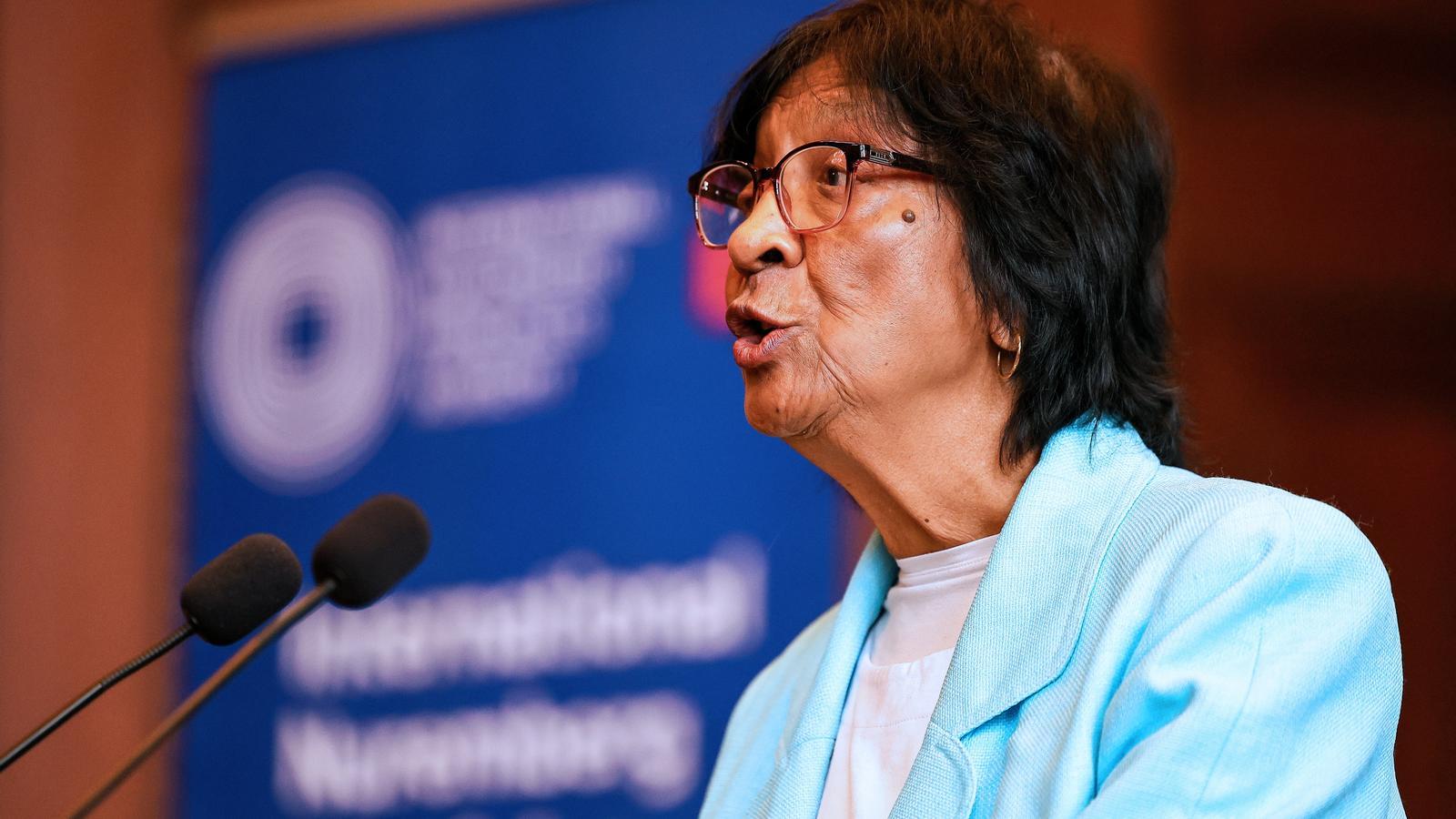
BarcelonaNavanethem Pillay (Durban, 1941), a renowned South African jurist, has been awarded this Friday the 2026 Nobel Peace Prize for her efforts to promote peace and international law. The Norwegian Nobel Committee awarded her the prize for her "courage and integrity" in the defense of international justice, a commitment that it considered "gives hope and is an inspiration to those who want a world at peace." Specialized in human rights, Pillay is one of the most prominent figures in the defense of international justice: she was the United Nations High Commissioner for Human Rights between 2008 and 2014 and a judge at the International Criminal Court.
The Norwegian Nobel Committee highlights that Pillay's work as a judge in international proceedings demonstrates that "legal measures can help prevent acts of war and violence," and ensure the criminal prosecution of war crimes, crimes against humanity, and genocides.
The South African jurist was a magistrate at the international tribunal that investigated the 1994 genocide in Rwanda, and last year she led a United Nations commission that determined that Israel had committed genocide against Palestinians in Gaza, a conclusion that the Israeli government rejects. "Israel must immediately end and reverse its confiscation and use of Palestinian lands in Gaza, including the creation and expansion of the buffer zone and corridors," Pillay demanded as president of the commission. The report, blunt against Israeli attacks in Gaza, concluded that the Israeli executive has "a clear intention" to establish permanent control over Gaza and ensure a Jewish majority in the West Bank. With a long history of evaluating international conflicts, the South African jurist stated that the conflict in Gaza is "the most chilling" she has analyzed.
Once it was known that she is the winner, Israeli Prime Minister Benjamin Netanyahu stated on X that the Nobel Prize committee "has lost its moral compass," and described Pillay as "a bigot" who "invented and propagated blood libels against the only Jewish state." Furthermore, the Israeli Foreign Ministry even recalled one of Adolf Hitler's closest collaborators: "Joseph Goebbels is applauding from hell," it wrote on X.
Pillay's commitment to justice goes back a long way, and began in her native South Africa with the fight against discrimination and segregation. The daughter of a family originally from Sri Lanka, she was the first black woman to open a law firm in her home province, from where she defended numerous political prisoners detained without trial, many of them activists against the apartheid system that was applied in South Africa between 1948 and 1994. Years later, she was also one of the first non-black women appointed as a judge of the High Court of South Africa.
"There is a common thread from her initial work in defense of Nelson Mandela and others who opposed apartheid to her service as a judge in some of the most important international legal cases of our time," highlights the Norwegian Nobel Committee.
First conviction for genocide
Pillay specializes in human rights and international law, and between 1995 and 2003 she was a judge at the International Criminal Tribunal for Rwanda, where she presided over the first conviction for genocide. The ruling was also decisive in ensuring justice for victims of sexual violence in conflicts: it established that rape can be considered an act of genocide.
In 1999, she was unanimously elected president of the International Criminal Tribunal, a position she held until 2003, when she became a judge at the same court in The Hague. Five years later, she moved to the United Nations as High Commissioner for Human Rights, the highest responsibility in this field within the international organization's system. As High Commissioner, she denounced human rights violations in conflicts such as those in Syria, Gaza, and Sri Lanka, and promoted the prosecution of war crimes and the defense of the rights of women and minorities.
After leaving the UN, Pillay has remained active in the defense of human rights, for example as an ad hoc judge in proceedings at the International Court of Justice and as president of the International Commission against the Death Penalty.
After last year's prize was marked by pressure from Trump to have it awarded to her – it ultimately went to Venezuelan opposition leader María Corina Machado – this year's award is also a recognition of international justice and the bodies dedicated to guaranteeing it at a time when multilateralism is being questioned by leaders like Donald Trump and there are open investigations into conflicts such as the one in Gaza and the war in Ukraine for possible war crimes. "At a time when the international legal order and the rule of law face many challenges, this recognition has a very important meaning," said the president of the International Criminal Court, Tomoko Akane.
