Theatre in its pure state with Josep Maria Flotats
'The promise of dawn', at the Romea Theatre, is a magnificent proposal for genuine theatre fans
-
CAT -
CAST
- Translator: Salvador Oliva
- Version, interpretation and direction: Josep Maria Flotats
- Teatre Romea. Until December 13th
An actor walking on a stage and someone watching him. That is theatre, nothing else is needed. The great Peter Brook said so. Something that is very clear in the new production by the great Josep Maria Flotats, Promise at Dawn, based on the works of the French writer and diplomat Romain Gary (Vilnius, 1914 - Paris, 1980), winner of two Goncourt prizes, the Nobel of French literature. Flotats' new show is a stripped-back proposal that, curiously, approaches the philosophy that Àlex Rigola has imprinted on the Heartbreak Hotel theatre. Flotats entrusts everything to the word and to the performance with a monologue without any props that circulates through the actor's body.
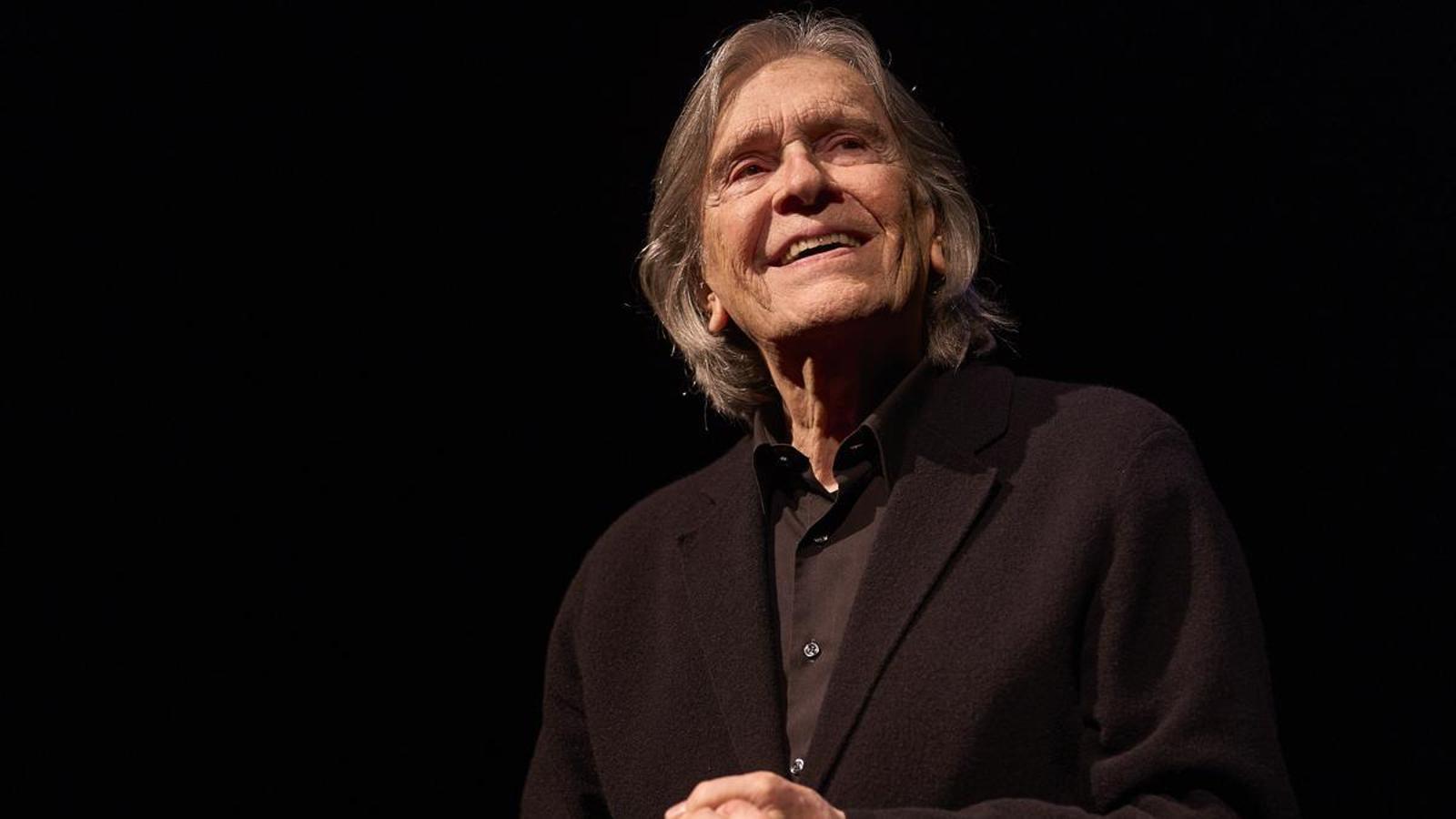
When the curtain rises (how we love to see the curtain run!) there is nothing more than the black box in semi-darkness. And, as if by magic, the actor materializes with very dark clothing. We can only distinguish his face and his hands. What hands! Actors who often do not know what to do with their hands should go see him. Flotats offers a whole treatise under the warm light of Kiko Planas, with a clear voice and a word that arrives with complete clarity. He has a great command of inflections, as if the text were not learned but walked through memory and emotions.
The performer stands for 80 minutes on his feet (and in January he will be 88 years old) with the unknown presence of two high stools to approach the biography of a unique writer, author of thirty novels, several of which were brought to the cinema by great masters such as John Huston (The Roots of Heaven, 1958), Costa-Gavras (Clair de femme, 1979), Samuel Fuller (White Dog, 1982) or Éric Barbier (Promise at Dawn, 2017).
The show follows the life of a war hero, a diplomat in different capitals –although he did not reach the rank of ambassador that his mother desired–, husband of Jean Seberg and, even, a film director. Gary is a profile of admiration and Francophone education imbued by his mother, quite similar to that of Flotats himself as he well indicates in the program. The play speaks, therefore, of the mother, of the self-sacrifice of a woman who dreamed of her son's destiny in the best country in the world: France. The mother had an idea and a feeling as powerful as it was dangerous towards her son, to the extent that it conditioned for better and perhaps for worse the identity of the recipient. Flotats offers a magnificent proposal for genuine theatre fans. It must be seen.
