Births rise in Catalonia for the first time in 17 years
In 2025, 54,249 babies have been born, 0.8% more than the previous year

-
CAT -
CAST
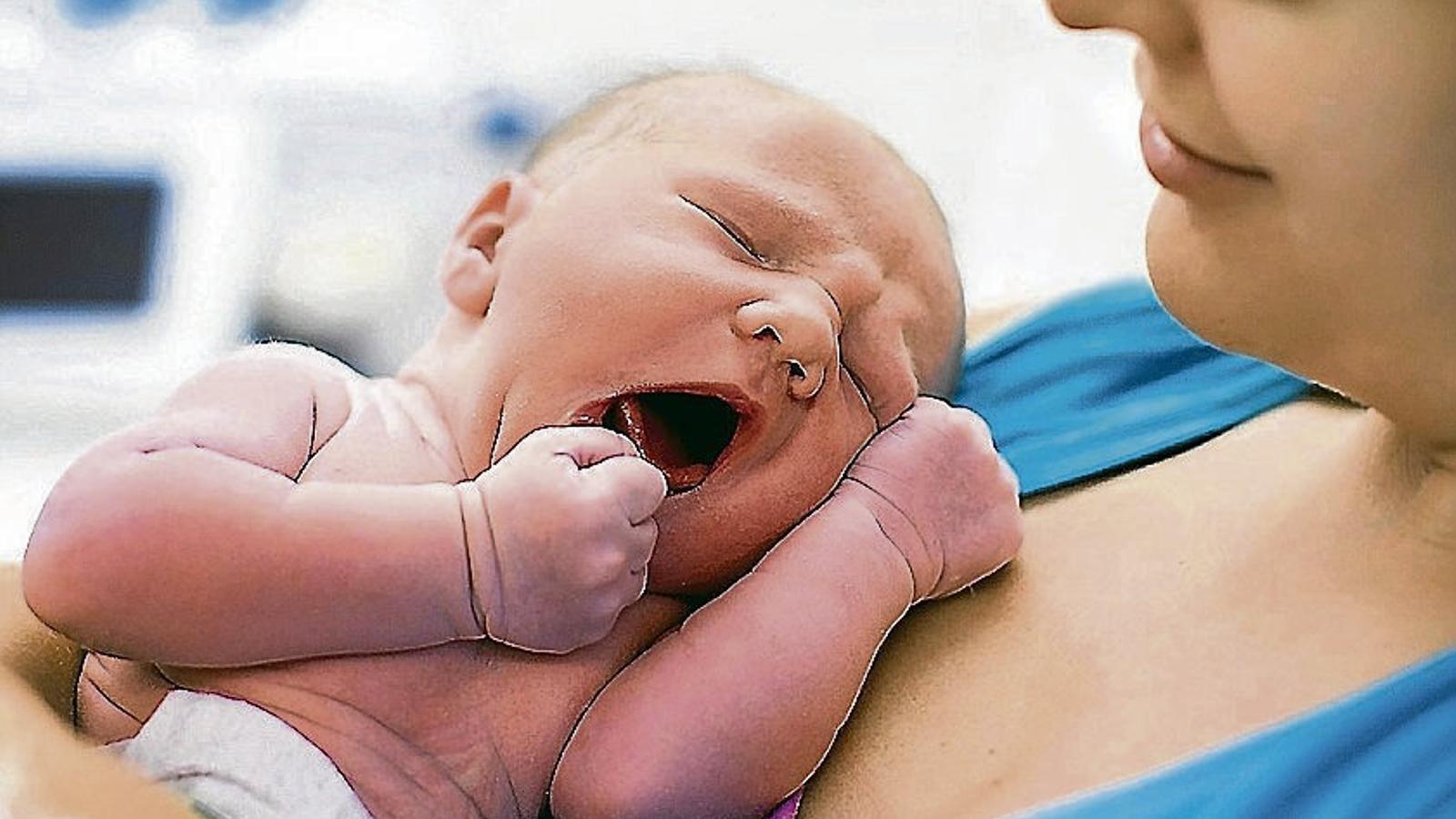
BarcelonaBirths in Catalonia rose slightly last year after 17 years of decline. In 2025, 28,019 boys and 26,230 girls were born, a total of 54,249 infants, representing an increase of 0.8% compared to 2024, according to provisional data released this morning by the Institute of Statistics of Catalonia, Idescat. This breaks a downward trend of almost two decades, although the increase is so slight that the crude birth rate remains at 6.7 births per 1,000 inhabitants, the same as in 2024.
Thus, the increase—of tenths—in the number of births is explained, in large part, by the fact that in 2025 there were also 0.5% more women of fertile age (15 to 49 years) registered than the previous year. Nevertheless, the figures in the green for the first time in almost two decades are still far from reversing the fertility indicator, which remains at 1.08 children per woman. To find the maximum recorded in the series, one would have to go back to 2008, when the indicator stood at 1.5 children per woman.
"That there is a rebound like this, however slight, is always encouraging, but we should not deceive ourselves, it does not change the situation: we are still at the bottom and with one of the lowest fertility rates in the world," explains the demographer and professor at the University of Barcelona (UB) Arlinda Garcia Coll, an expert in migratory and residential movements. "And we will see, when the mortality data comes out, that natural growth continues to be negative," she adds.
Socioeconomic reasons
The age at which maternity is reached, on average, is also continuing to be delayed, according to Idescat data: the general average is now 32.8 years, and the average age at the birth of the first child is 31.8 years. "Few children are had, late, and suddenly, at the end of a woman's fertile period. And if this is still happening, it is because there are real economic, social, and work-life balance difficulties that push us towards this trend," reasons the demographer.
In fact, Garcia Coll points out that the problem is common in many countries in Europe and the world. "The choice now is for small families, to have few children, and this has a lot to do with the role of women in society, their incorporation into the labor market, and the difficulties in reconciling family and work life," she explains.
This demographer points to the five key factors that currently most influence the vital decision to have children: the lack of policies and aid in favor of work-life balance and birth rates in Catalonia and Spain; the price of housing; the lack of job stability that young people have; the extensive working hours that make work-life balance difficult, and the fact that there are still notable differences regarding domestic co-responsibility between men and women. "Other countries in our environment have slightly better figures because they have more equality policies and facilities for work-life balance," emphasizes expert Garcia Coll.
The origin of the mothers
There is still another important balance that stands out in the analysis of these birth data. 48.5% of infants born in 2025 are children of women also born in Catalonia. They are fewer —percentage-wise— than the previous year, when the figure reached 49.3% of the total. In parallel, the proportion of mothers born abroad has gone from 45.4% to 46.3% in 2025, while 5.2% are children of women born elsewhere in Spain, practically the same proportion as the previous year. "Without mothers born abroad, Catalonia would have half the number of births. It is something to reflect deeply upon regarding the role of immigration and the socioeconomic reasons that lead mothers living in Catalonia not to have more children," values Garcia Coll.In fact, there are eight Catalan regions where children born to foreign mothers represent half or more of the total: La Segarra (61.1%), La Garrotxa (58.2%), Barcelonès (56.3%), l'Urgell (54.7%), l'Alt Empordà (53.6%), el Baix Empordà (51.9%), el Solsonès (51.6%), and les Garrigues (50.0%). Regarding municipalities with over 50,000 inhabitants, the highest percentages are in l'Hospitalet de Llobregat (69.5%), Santa Coloma de Gramenet (65.8%), and Manresa (60.3%).
Mothers of foreign nationality were mainly born in Africa (5,850), South America (4,817), and Asia and Oceania (3,161). In contrast, among mothers of Spanish nationality, 18.1% were also born abroad (6,395), mainly in South America (3,099), North and Central America (1,335), and Africa (1,230).
Busting myths
The fertility rate of foreign women residing in Catalonia is a few tenths higher than the rest, reaching 1.29 children per woman (compared to 1.08 for women born in Catalonia), far from what demographers consider the replacement rate, which stands at 2.1 children per woman.
"Many myths must be dispelled, such as the one that says that women born abroad have many children; this is not true, they are also affected by the price of housing and the cost of living, and they end up adapting: the data show us that the difference is only two tenths," argues Garcia Coll.
The average age also varies by place of birth: women of Spanish nationality are mothers, on average, at 33.3 years old, while foreign mothers bring forward motherhood to 30.9 years on average.
