Digital monsters and post-literary society
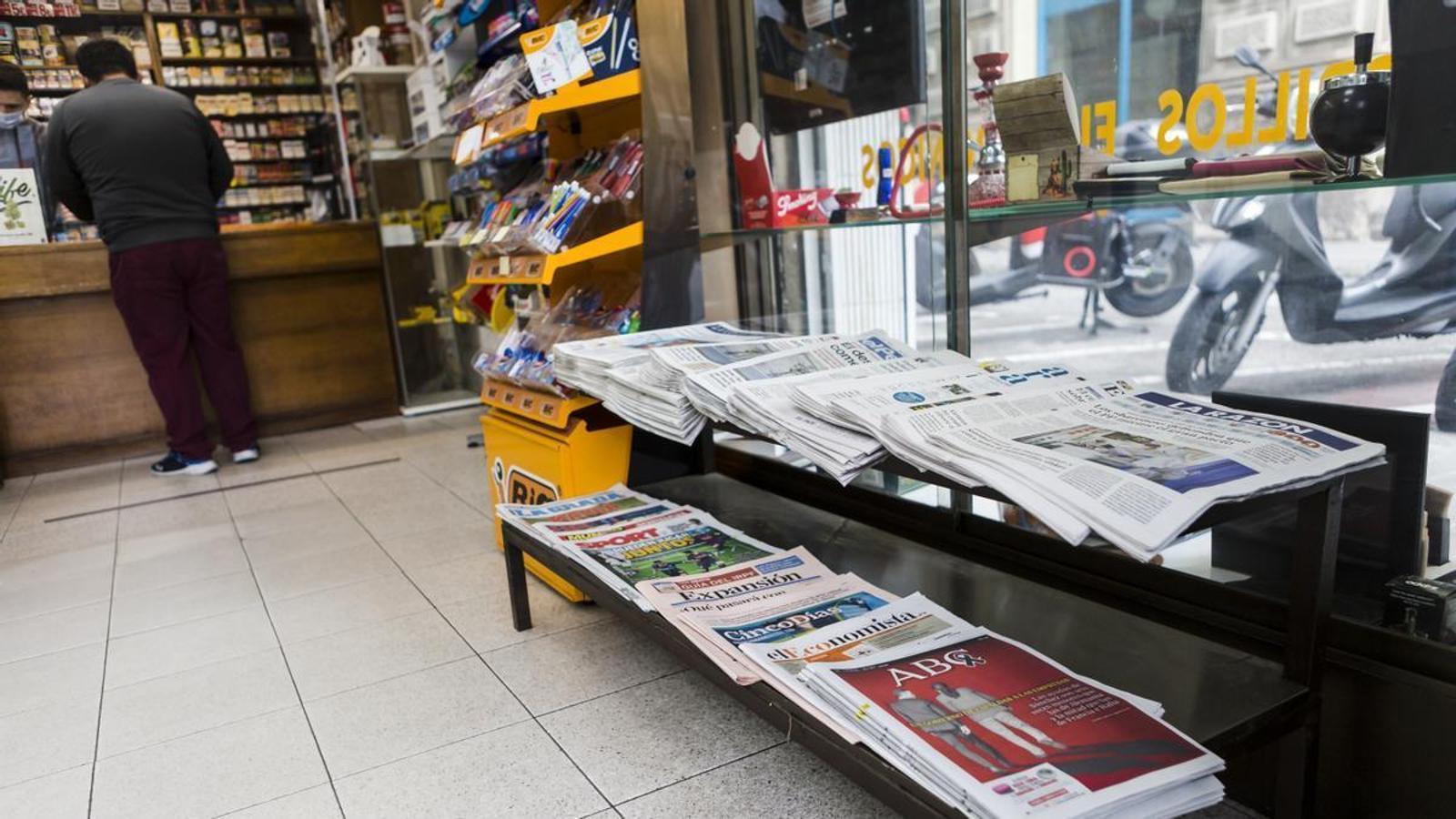

A year ago I wrote an article titled “Reading to avoid digital dementia”, in which I analyzed the polarization of a society that was on the path to becoming post-literary. On one hand, I said that we were clinging as best we could to reading (with all kinds of activities and more or less extraordinary measures) and, on the other, that we were seeing how the paradigm was inexorably changing. In this year or so, reflective reading on paper or digital ink has continued to lose strength. This is demonstrated by European reports on our children's reading comprehension and data on the decline of book and newspaper reading among adults (the post-literary society is precisely that). And perhaps it is just a coincidence, but all of this is happening just at the moment when democratic health is wobbling dangerously.
Over the last few centuries, access to the production of cultural discourse has allowed for the tempering of certain inequalities (that had lasted for millennia): from a quasi-monolithic cultural narrative, we moved to one that is significantly more plural. It was not easy; much ink was needed to crack a system of thought built, basically, from the perspective of men of certain castes. As the book industry and the process of civic literacy grew stronger, writing gradually became a very powerful tool that enabled a kind of informative activism with transformative capacity. To put it in the words of Víctor Català / Caterina Albert: “From that very moment, the Salic supremacy, with all its abusive prerogatives, was mortally wounded; it was the colossus with feet of clay.” Women contributed enormously to the consolidation of more plural, fairer, and more democratic societies, but now that they have achieved a good position in many branches of the book and journalism sector, these sectors are losing influence or are being forced to transform radically.
In spaces where long-form reflective videos proliferate, such as YouTube, there is a clear dominance of men and sexism. Indeed, studies show that 75% of the most influential content creators on the internet are men. The fact that audiovisual essayism and interviews are primarily in the hands of men implies, in the best-case scenario, a clear setback in the level of plurality we had achieved. In the worst-case scenario, the manosphere (the digital community that defends a certain idea of masculinity and is unequivocally misogynistic) becomes the ideal context for disseminating philo-fascist ideas on the internet. The reaction to the fourth feminist wave, alas, has been quite forceful. (It is worth mentioning that, amidst this strengthening of the patriarchy, there are also many women who help spread these ideas, but the numbers regarding internet dominance are what they are.)
On the other hand, the fact that fiction, which was also key to changing the roles and the type of narrative arguments that we embody in real life, is created mainly in audiovisual format is once again problematic. Women, and other minoritized groups, entered the book sector with force because with "a room of one's own" and a little social openness (or a pseudonym) they already managed to be heard. But when a complex structure is needed to disseminate a story, plurality decreases drastically: despite the excellent work of the Dones Visuals collective, it is still difficult for Catalan women to access direction and executive production departments, two roles of great power in the construction of cultural discourse. And furthermore: the country that dominates Western audiovisuals—and, therefore, a good part of the narrative—is also very far from parity. The latest annual study on diversity in Hollywood by UCLA confirms that, even though the most-watched content consists of stories that have women at the center, more than 80% of the creators of platform productions are white men.
In short, both in essay-writing and audiovisual reflection spaces as well as in the fiction distributed by platforms and cinema, the underrepresentation of women's perspectives is alarming. There is not much room for doubt: this new paradigm of information and fiction dissemination reinforces the patriarchal system of thought and invokes some of its most fearsome monsters. If we were already beginning to intuit the consequences, the electoral campaign will make them even more evident.
