
Survey conducted by YouGov among 1,221 adults aged 18 and over with the right to vote residing in Spain. Interviews were conducted online between October 26 and November 2, 2026. Sample designed to represent the electoral population according to sex, age, region, and recalled vote in the 2023 elections, with subsequent weighting of the results. For a simple random sample of 1,221 interviews, the maximum theoretical margin of error is ±2.8 percentage points with a confidence level of 95%.
Feijóo is the preferred one to be president and Rufián the best valued leader in Spain
Gabriel Rufián is the best-rated political leader, even though no candidate passes
15/11/2026 - 08:06 h

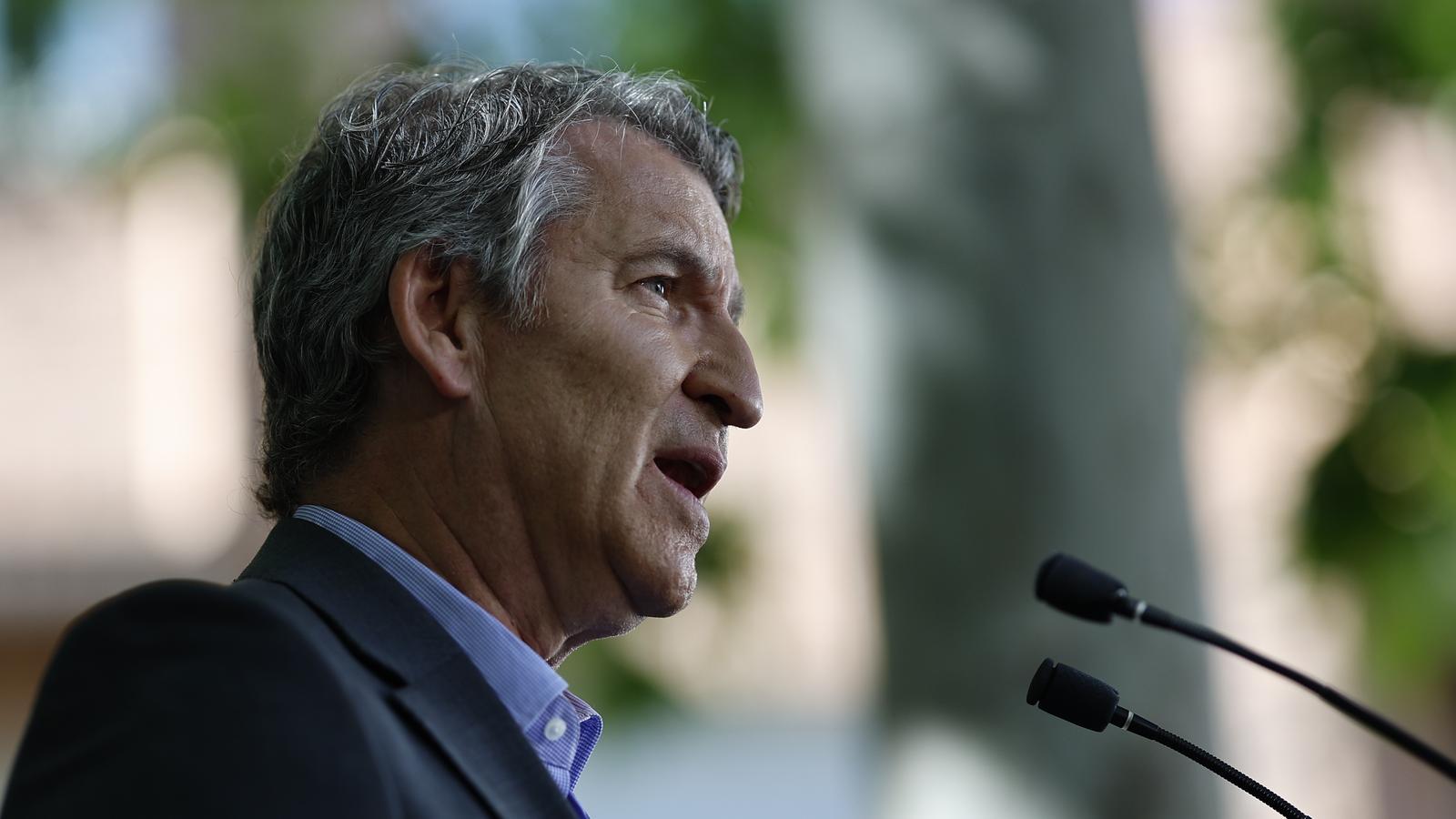
BarcelonaThe PP is the best-positioned party to win the November 29 elections, according to the ARA poll. And this projection is also reflected when choosing who should be the next president of Spain. The leader of the Popular Party, Alberto Núñez Feijóo, tops the ranking with 26% of public support. However, he is closely followed by the current Spanish president, Pedro Sánchez, whom 23% of those surveyed want to continue at the head of the state government. In other words, the struggle that the PP and PSOE are maintaining ahead of the November 29 elections is also personified in the fight for who should occupy the Moncloa Palace. However, neither of the two political leaders reaches a passing grade, nor are they the best-rated leaders in the entire State, as they are surpassed by the ERC candidate, Gabriel Rufián, driven by the opinion of left-wing voters.
Although the ARA poll, like the rest of the surveys that have been made public in recent weeks, reflects a rise of the far-right Vox, its leader, Santiago Abascal, is far from being the Spaniards' favorite to preside over the State: he is in third place with 15% support. Behind him follows Gabriel Rufián, whom 12% of those surveyed would see as head of the Spanish government. The Republican candidate, however, has repeatedly rejected wanting to reach the Moncloa, even though for months polls have placed him as one of the political leaders whom Spaniards would like to lead the left at the state level. In fact, in recent days he has assured that, after Oriol Junqueras, he would also like to be president of the Generalitat. Rufián is well ahead of Ada Colau, the Broad Front candidate, whom only 2% of those surveyed want to be president of the Spanish government. The same percentage as the Podemos candidate, Irene Montero.
Who are the respondents who prefer Feijóo to be president? The majority are voters who place themselves on the right (46.9%), although there is also 28.1% who consider themselves center who prefer him as president over Pedro Sánchez. However, among the right-wing electorate, there is 35.8% who do not want Feijóo, but rather Santiago Abascal, the leader of Vox. It is here that we see the battle taking place on the right to choose a leader. For the moment, Feijóo is winning the game, but closely followed by Abascal. In the case of Sánchez, the majority of respondents who prefer him as president are from the left (46.1%), although there is also 12.3% who consider themselves center who would like him to continue at the Moncloa. In the case of Gabriel Rufián, the majority (24.1%) are left-wing voters.
No leader approves
The ARA survey also reflects a distance between the citizenry and the current political leaders: none of the candidates reach a passing grade, not even a 4. Rufián is the leader who comes closest, with a 3.9. In fact, the ERC candidate has been leading most of the polls for months as the best-rated leader throughout the State and also in Catalonia. The republican leader has managed to penetrate among the younger electorate, especially due to his role on social media. It is these high popularity indices that have, in large part, boosted the republicans in the polls ahead of November 29th. Following Rufián is the PP leader, Alberto Núñez Feijóo, who receives a 3.4; Pedro Sánchez is positioned just behind with a 3.3, and Santiago Abascal, in fourth place, with a 3.1.
Below 3 are Ada Colau (2.5) and Irene Montero (2.2). Neither of the two candidates, who lead the Broad Front and Podemos candidacies respectively, manage to place themselves ahead of Rufián, nor do they dispute the leadership with Pedro Sánchez. In fact, Montero has signed a "collaboration" alliance with ERC for this 29-N to try to capitalize on the pull that Rufián has in the polls among the progressive electorate. Right now, however, the surveys do not reflect that Podemos can stand out in the provinces where it is running, not even in Madrid, where the ARA poll forecasts that it could even be left out of Congress. The Junts candidate, Miriam Nogueras, obtains a 2 and stands at the same level as Oriol Junqueras, leader of ERC. Carles Puigdemont, former president of the Generalitat and current leader of Junts, closes the ranking with a 1.
Which state political leader is most loved by their voters? The answer is Santiago Abascal. Polls tend to reflect that the far-right voter is among those who demonstrate the most loyalty to their leaders. In Abascal's case, his electors grant him a 7.9. A score slightly higher than the one Pedro Sánchez receives from socialist voters: a 7.5. In contrast, Alberto Núñez Feijóo, with a 6.9, and Ada Colau, with a 6.5, are the two leaders who have a less devoted electorate. And it is precisely this variable that could play against the PP leader ahead of November 29th.
Technical sheet
