What should happen for Sánchez to ask to extend voting hours like Lula and Netanyahu?
The LOREG allows specific or generalized extensions for a reason of force majeure

-
CAT -
CAST
GironaLast Sunday, Brazil extended the polls by two hours due to public transport problems reported by the campaign of Luiz Inácio Lula da Silva, who ended up winning the presidential election. In Israel, this Tuesday, Benjamin Netanyahu's Likud party also asked to extend polling hours on a day marked by rain, although the country's electoral committee rejected it (even though it assured that everyone who had arrived at the polling stations before 10 p.m. would be allowed to vote even if the deadline had already passed). Both Netanyahu and Lula were interested in the highest possible turnout, especially from the areas that traditionally support them most.
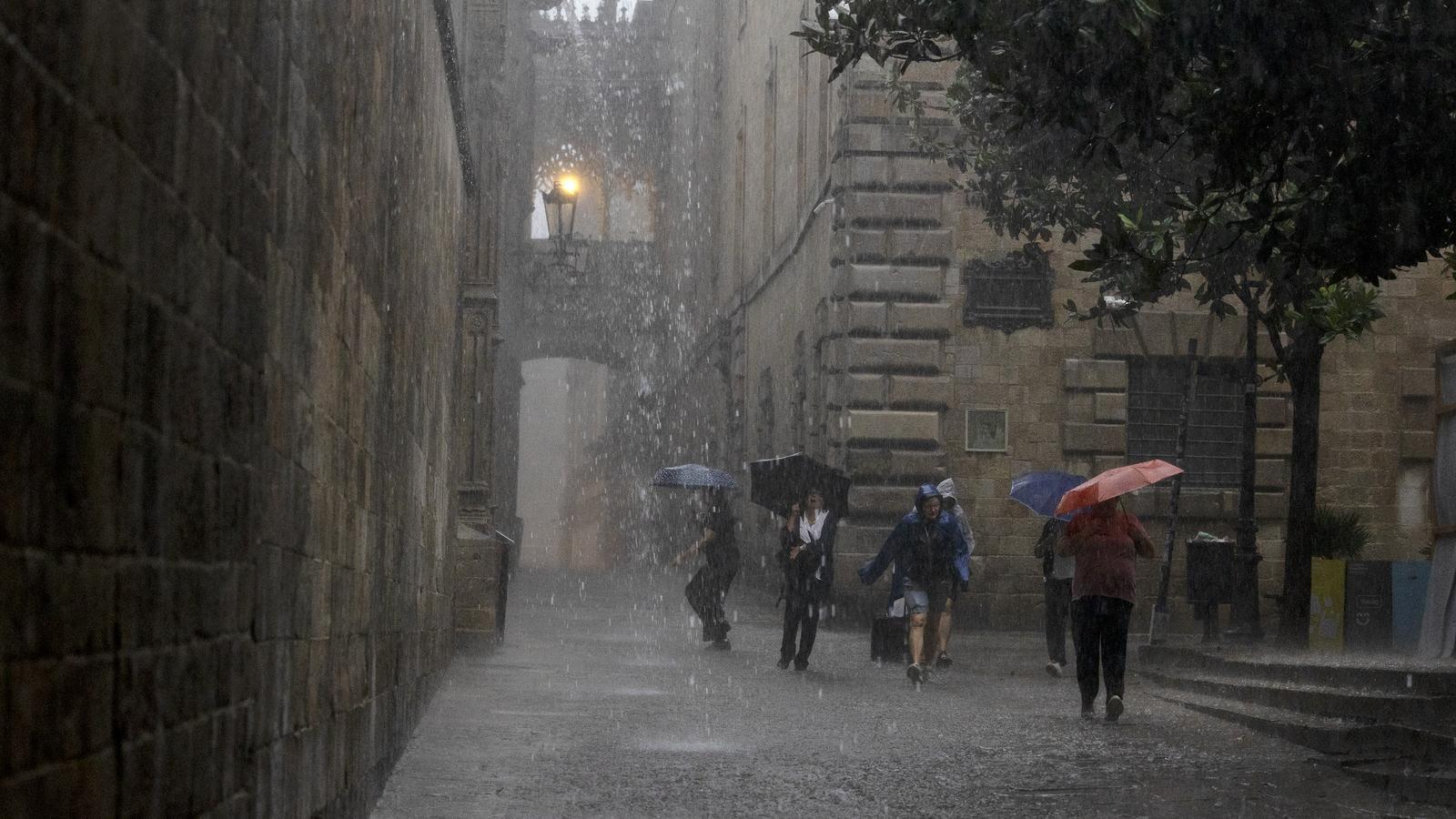
And in Spain, what would happen if a serious incident altered the voting process? If torrential rains fall on November 29 and mobile alerts go off, could the hours of the polling stations, open from nine in the morning to eight in the evening, be extended?
The Organic Law of the General Electoral Regime (LOREG), in article 84.2, establishes that the voting day may be suspended or not started as planned "due to force majeure". When the incident affects a specific polling station, the president can suspend the voting by justifying the decision in writing and communicating it to the provincial electoral board. If the problem is more widespread, the provincial electoral boards are directly responsible for assessing whether an extraordinary measure should be adopted. However, which incidents are justified as causes of "force majeure"?
Spanish regulations do not give examples of hypothetical situations. It only mentions two exceptions. The first, according to article 84.5, provides that if at any time of the day ballots for a candidate are missing and cannot be replaced immediately at a specific polling station, the voting is interrupted and extended for the same amount of time as the interruption, for a maximum of one hour, as happened, for example, in three polling stations during the Andalusian elections of May 2022. The other exception, included in article 88.1, establishes that once it is eight in the evening, if people who were inside the polling station before the deadline have not yet been able to vote, they have a window of time to do so.
The precedents of 2024 and 2021
Regarding other contingencies, such as inclement weather, disturbances, or chaos in transport, more or less common in various parts of the State in recent weeks, no references appear. However, there are some similar precedents. The most recent one, in Catalonia, was during the elections to the Parliament of Catalonia on May 12, 2024, when the theft of copper cable in the morning interrupted several Rodalies lines. ERC and Junts asked to extend the voting time and the Central Electoral Board (JEC) left the decision in the hands of the provincial electoral boards, which finally dismissed the request, alleging that they did not have data indicating that the lack of alternative transport could seriously affect the development of the vote.
The other precedent was in 2021, also in the Catalan elections, which were held during the pandemic. In this case, the JEC studied whether it was necessary to extend the hours of the polling stations that had been constituted an hour later than expected due to all the sanitary operation that the members of the polling station had to use. Like in 2024, however, the JEC dismissed it and all polling stations closed at 8.
