The pulse that Vox is winning in Catalonia (and that generates unease in the Catalan PP)
Feijóo has agreed with Abascal to withdraw from Girona and Tarragona in the Senate

-
CAT -
CAST
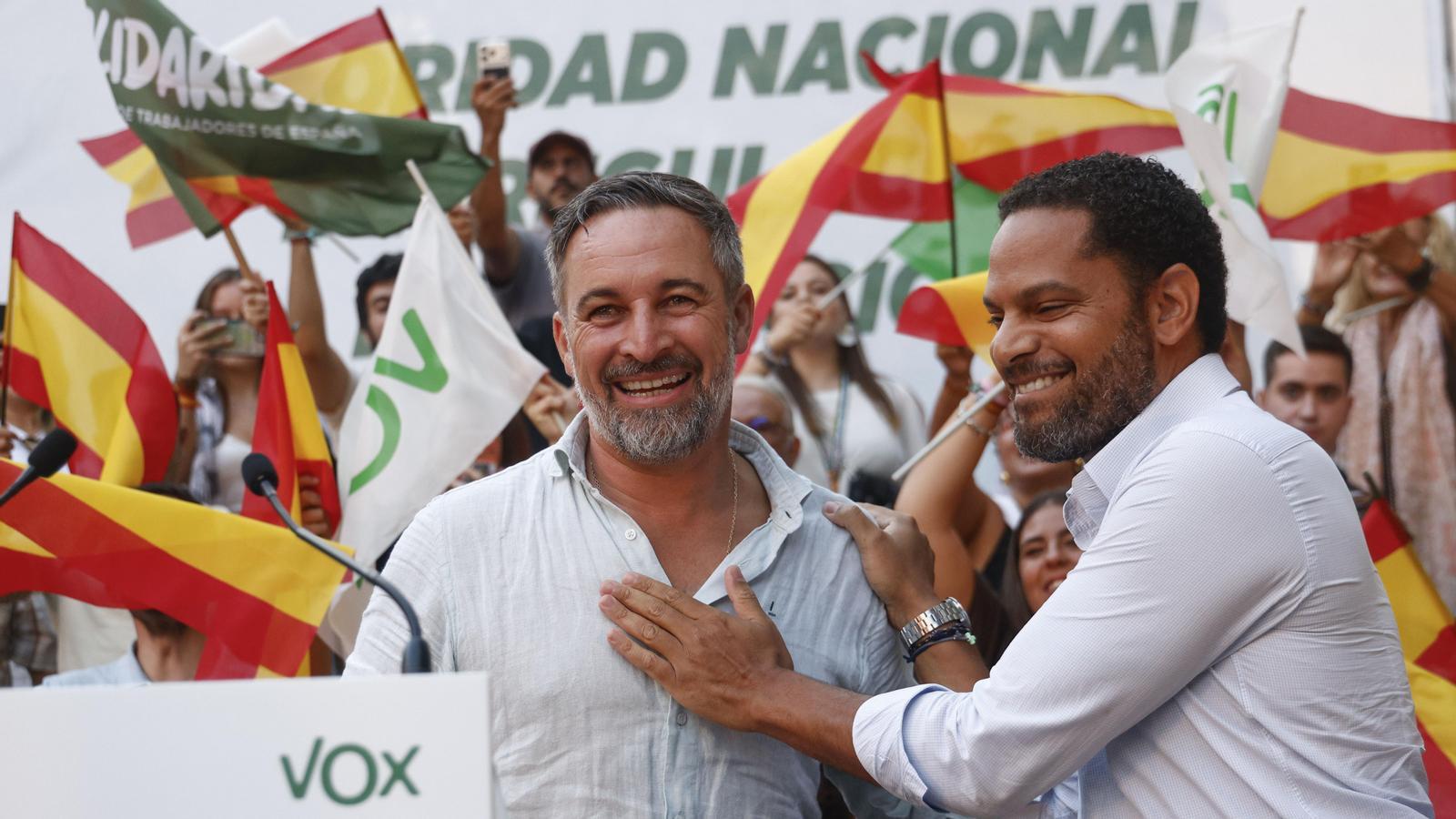
BarcelonaDespite their non-aggression pact, in these Spanish elections a particular battle is being waged between the PP and Vox to mark territory within the conservative bloc. The extreme right is the one rising in the polls, although it still remains far from the Popular Party. In Catalonia, however, it is Vox that is winning the battle, at least the symbolic one. In the right-wing agreement for the Senate, collaboration has been agreed upon in 23 provinces, which implies that Vox is withdrawing from six constituencies, the PP from three, and that Santiago Abascal's party is only presenting one Senate candidate (out of the three possible) in 14 more constituencies. However, Vox is the one establishing itself as the reference in Girona and Tarragona.
Sources familiar with the negotiations explain to ARA that "gestures" were important to unblock the agreement. And one of the main ones was the concession by the PP in these two Catalan provinces, where the extreme right is experiencing significant electoral growth. "People think of Vox before the PP," maintain sources from Abascal's party. The pact, however, has fallen like a bucket of cold water on the ranks of the Catalan Popular Party, as ARA has been able to verify. In fact, the Tarragona and Girona Populars found out after the fact: "They don't care about us at all," assert various party officials. From the headquarters on Génova Street in Madrid, they consider it was "the best of scenarios" because the PP did not aspire to obtain any senator in these two constituencies. What is more, they have never won a senator there.
All in all, the unrest within the Catalan PP is absolute. "It is already common in this party to find out about news through the press and to not count for anything," some sources assert. What worries most is the message behind the withdrawal pact: that "the useful vote is for Vox." Herein lies the internal fear that in Congress, too, a part of the right-wing electorate will lean towards Abascal's party. They regret that from Madrid they are being used as a "branch," changing the lists, forcing them to hold certain events despite not having enough resources... And now they have received another unpleasant surprise.
Capturing votes from Aliança
With the speech in favor of the "Catalan identity" and against immigration that it is making, Vox is trying to make an electoral dent in the supporters of Aliança Catalana –more than 20% according to the CEO could opt for Vox in the general elections– and the leader of the party herself, Sílvia Orriols, said that she does not see "any contradiction" in voting for Aliança in the Parliament and Vox in the Congress, since it is "free" for the citizen to decide what is most convenient in each contest. The Catalan identity discourse was fully inaugurated by Santiago Abascal right at the starting signal for the pre-electoral activity in Catalonia; it was repeated by the general secretary, Ignacio Garriga, and the parliamentary spokesperson, Joan Garriga, on Hispanic Day, with a high use of Catalan. And it is the tone of the party's acts, which has long been courting this electorate with slogans from Plataforma per Catalunya such as "Locals first".
Now, for Vox, an opportunity has opened up that it did not expect in Girona on the list for the Senate, where it aspires to expand its electorate with that of the PP and a part of that of Aliança. It is "unlikely" that they will take the senator, however, sources from the party leadership acknowledge. Be that as it may, Abascal's party is vying for the sorpasso (overtaking) of the populars in the Principality in the elections to Congress.
