Netanyahu wins the elections in Israel, but it will be very difficult for him to form a majority
Electoral participation is massive on a day marked by political uncertainty and accusations of irregularities

-
CAT -
CAST
JerusalemIsrael is heading towards a new stage of political uncertainty, as the count of Tuesday's elections progresses, with 85% of the vote scrutinized. Prime Minister Benjamin Netanyahu's party, Likud, has been the most voted, but it would not obtain enough seats to form a government with the current coalition partners: it would remain with 53 seats in a 120-seat parliament. The opposition bloc, led by former general Gadi Eisenkot, who is in second place, would remain with 48 seats. At this moment, Likud would obtain 26 seats and Yashar, Eisenkot's party, 21. Amidst these two blocs, the groups representing Palestinians with Israeli citizenship, who would total 17 deputies, could hold the key to governability.
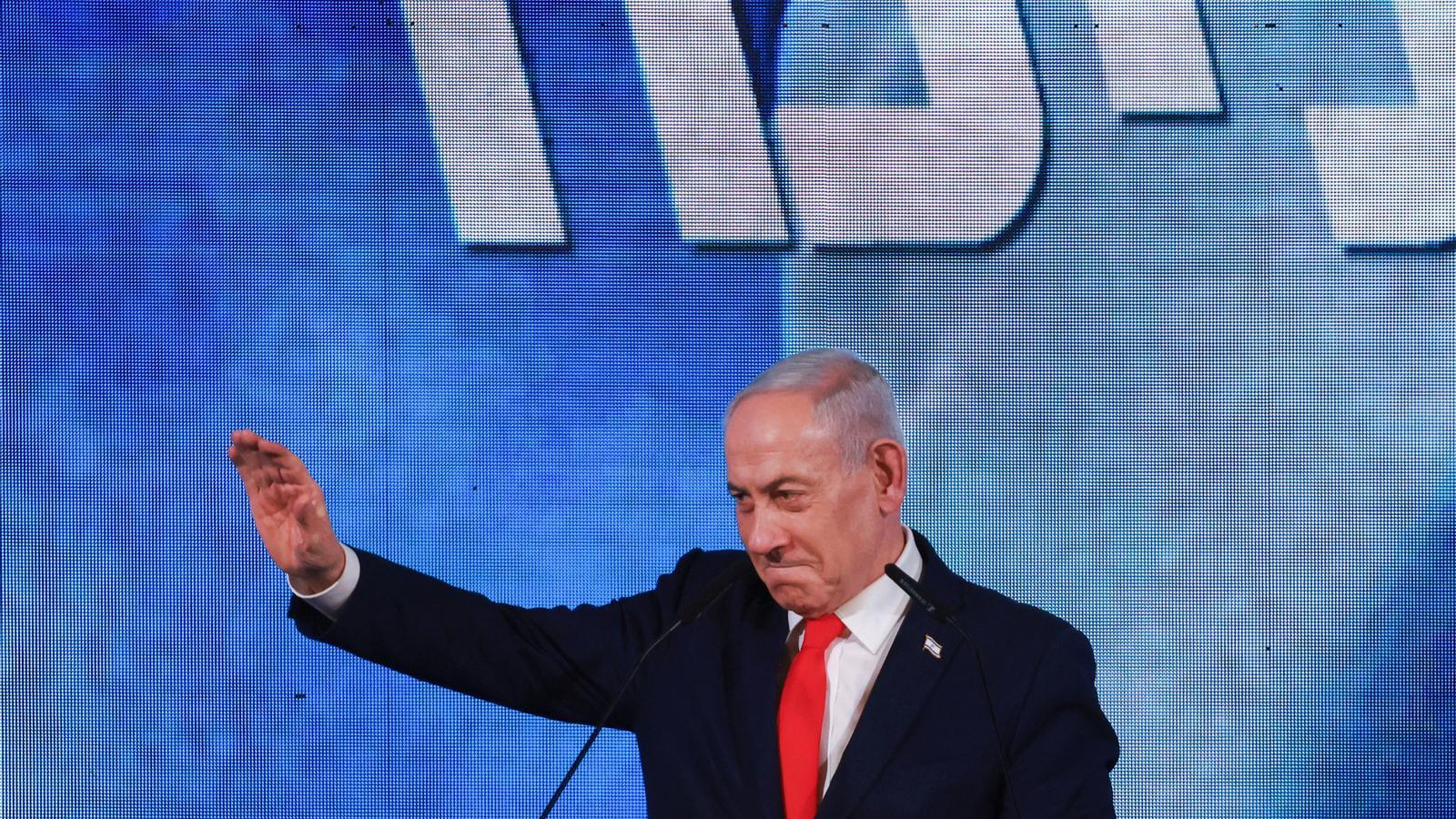
At 3:14 a.m., the prime minister delivered a speech lasting about ten minutes at the Likud election headquarters in Jerusalem, in which he proclaimed his party as the most voted and claimed Israel's military results in the wars following the attacks of October 7, 2023. "Iran is weaker than ever and Israel is stronger than ever," he stated. He also asserted that, together with Trump, Israel has a historic opportunity to definitively end the Iranian threat and criticized the parties willing to cooperate with Arab factions.
The security and the political future of Prime Minister Benjamin Netanyahu, have been the center of the debate. At the Rothschild school, in the western part of Jerusalem, conversations between voters yesterday portrayed a society that shares the same ballot boxes, but not necessarily the same future.
"I am voting for Yair Golan. He is the democratic one, I believe in peace and I think he is the party that will lead us to this promised land of peace," explained one voter. But his argument did not stay with the acronyms. "I lost a friend in the war. I need it to stop. Today we also vote in the name of the dead. He died in the battle of the Sufa kibbutz. Why? A few years later Hamas is still in Gaza." The question summarizes the weariness of a part of Israeli society after the attacks of October 7, 2023, and the various wars that followed them. Another voter extends his desire for peace beyond Israel's borders. "We need peace for all peoples, for Nablus, Ramallah and Hebron. We must end the suffering and fascism." A few meters away, however, another voice defends the continuity of Benjamin Netanyahu. "The wars will not end. That is why I trust Bibi. I always have."
Turnout has been one of the biggest figures of the day. At ten o'clock at night, 77.7% of the census had voted. In total, more than 5.6 million people cast their ballots, according to data from the Central Election Committee. It is the highest turnout recorded since 1999.
Facing elections that were expected to be fragmented and very tight, parties have tried to convince their voters that staying home could have consequences. In messages on social media, Netanyahu warned during the day of high turnout among Arab voters and left-wing sectors and asked his supporters to go to the polls. "They are trying to steal the election from us," he said in a video addressed to Likud voters. The prime minister linked these accusations to the arrest of three figures who, according to his version, were allegedly related to the United Arab List (Ra'am) party and who had been arrested with envelopes full of cash for alleged electoral bribery. He also presented a possible victory for the opposition parties, both Zionist and Arab, as a threat to the future of the Jewish state.
The opposition reacted forcefully. Yashar, the party led by Gadi Eisenkot, accused the prime minister of trying to undermine confidence in the electoral process and preparing the ground to question its results. "He is panicking and has started making up stories, claiming that the election is being stolen from him," the party said.
Reports of irregularities also accumulated during the day. Yashar, B’Yachad, Yisrael Beitenu, the United Arab List, and other parties reported missing or damaged ballots and other possible interference in the voting. The Central Elections Committee has stated, however, that there is no evidence of manipulation and that the incidents are being addressed. Defective ballots will not be automatically invalidated: they will be counted as long as the option chosen by the voter can be clearly identified.
