War as a corrosive force that penetrates all spaces of life
Tijan Sila constructs 'Radio Sarajevo' from the memories of his childhood during the siege of the current capital of Bosnia and Herzegovina

-
CAT -
CAST
- Tijan Sila
- Angle / Asteroide
- Translated by Maria Bosom
- 204 pages / 19.90 euros
Radio Sarajevo, by Tijan Sila (Sarajevo, 1981), achieves what the literature of memory often pursues and rarely attains: turning a particular experience into a human truth of universal reach. Drawing from the memories of his childhood during the siege of Sarajevo in the 90s, Sila constructs a narrative that does not seek to explain the war, but to make one feel its daily degradation and the invisible scars it leaves on those who go through it.
Sila writes from a retrospective lucidity, yet preserves the bewildered gaze of the child who observes how the world falls apart around him. This double perspective generates an extraordinary tension: the author knows what the child ignores, but resists imposing an adult interpretation on it. The result is a narrative of striking authenticity, where terror appears filtered through the obsessions, fears, and desires of a child who is still trying to play, listen to music on his red radio, and survive.
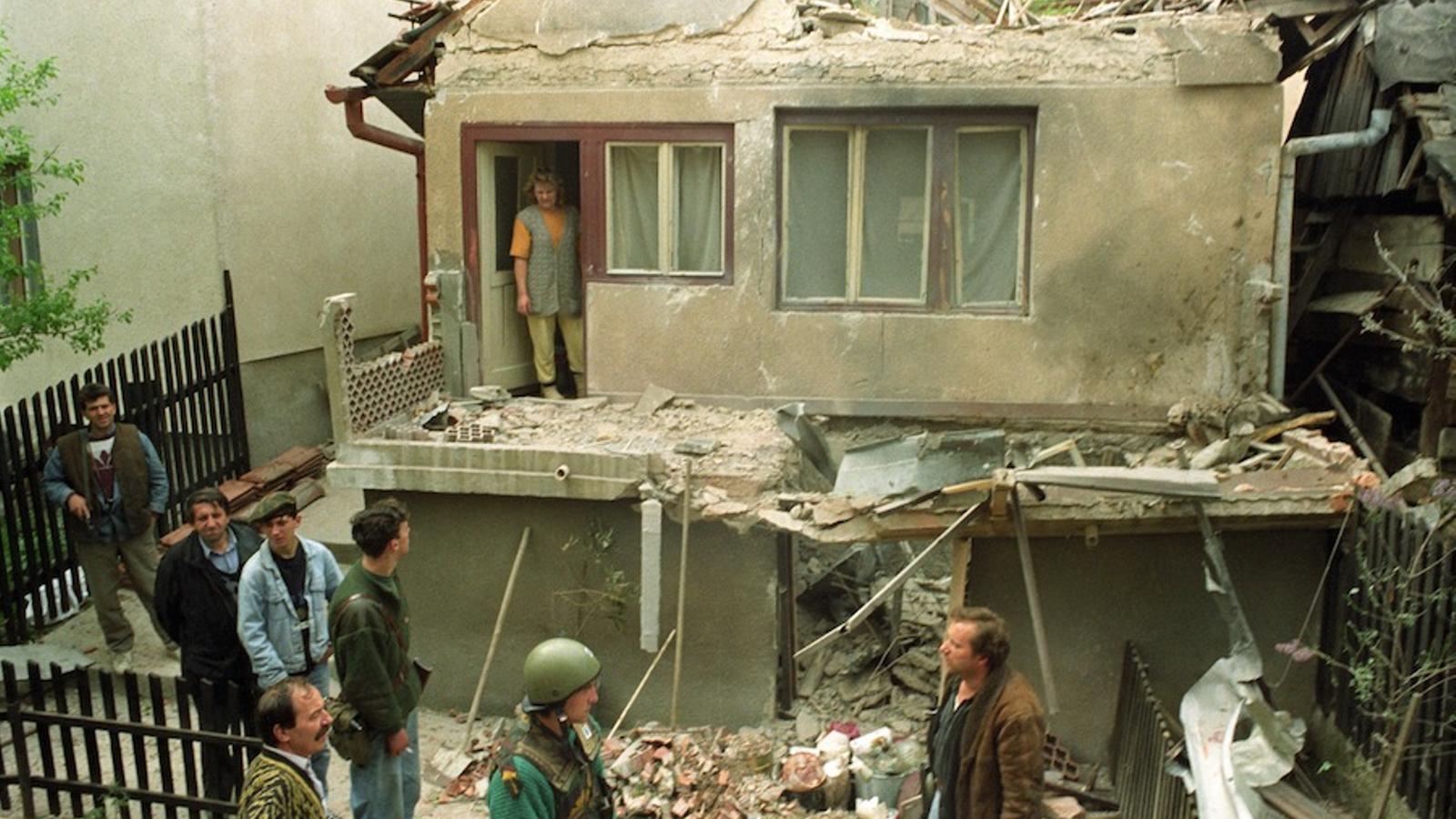
War, here, is not a heroic stage or a historical theme. It is a corrosive force that penetrates all spaces of life. Sila's merit consists of showing how violence ceases to be exceptional and becomes routine. The explosions, the snipers, the hunger, and the black market end up being integrated into a grotesque daily life, to the point that the horror becomes a landscape: people do not know that the war has an end, they are only clear that they must find food.
From a stylistic point of view, Radio Sarajevo stands out for its dry, nervous, and precise prose. Sila avoids sentimentality and contrasts tragedy with black humor, irony, and a kind of almost insolent vital energy. This contrast does not weaken the drama; on the contrary, it makes it more compelling. The reader is not pushed to pity the characters, but rather to share in their perplexity. Particularly brilliant is the symbolism of the radio that gives the work its title. The music, the broadcasts, and the voices that cross the airwaves become a form of intimate resistance. While the city is subjected to the siege, the radio maintains a connection to a world that still seems habitable and becomes a metaphor for the persistence of culture in the face of barbarism.
How violence transforms people
However, the novel is not free from limitations. The fragmentary structure, based on successive episodes and memories, often sacrifices the psychological depth of some secondary characters. This dispersion, however, can also be read as a coherent consequence of traumatic memory: war is not remembered as an orderly story, but as a succession of flashes, absences, and interruptions.
The deepest value of Radio Sarajevo lies in its refusal to turn war into a spectacle. Sila does not seek epic grandeur or rhetorical denunciation, but rather to explore how violence transforms people and contaminates even childhood memories. Overall, it is a work of great emotional density, capable of capturing the slow erosion of innocence as seen from a wounded adult. Tijan Sila writes with the forcefulness of someone who has lived what he narrates and with the literary intelligence of someone who knows that memory only becomes art when it finds the exact way to speak the unspeakable.
