The history of the book of poems that wins all the prizes
Sebastià Alzamora receives the Lletra d'Or award for 'Sala Augusta followed by Llengua materna'

-
CAT -
CAST
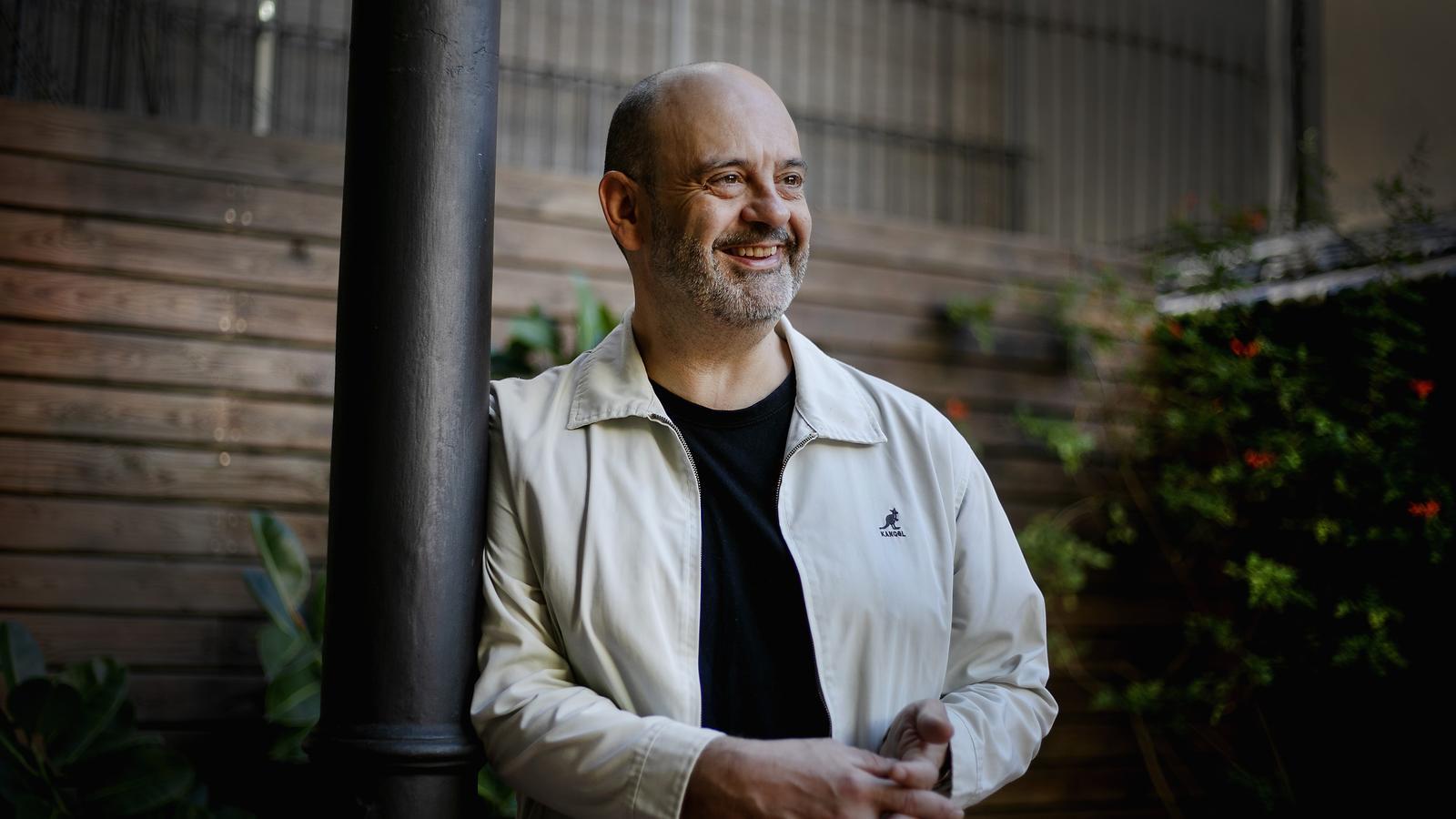
BarcelonaFor every award received Sala Augusta followed by Mother Tongue, the latest book by Sebastià Alzamora (Llucmajor, 1972), the Majorcan author has not stopped wondering about the reasons that had made it possible. "I think about it constantly, but I cannot quite explain it to myself," he admits with a smile, surrounded by the jury of the Lletra d'Or prize, one of the most veteran in the Catalan literary sector. It is the fifth recognition for a published work that Sala Augusta has received since Edicions Proa released it in May 2025. First came the Critics' Prize from the Spanish Association of Literary Critics. A few months later, it won the Josep Maria Llompart Prize, awarded by the Association of Catalan Language Writers of the Balearic Islands. It was followed by the Crítica Serra d'Or Prize for poetry and, weeks before the Lletra d'Or, was awarded the National Poetry Prize "for his ability to move, with identical brilliance, from the impassioned language of historical denunciation to the delicacy of the domestic space".
Founded in 1956, the Lletra d'Or is a private and independent distinction that recognizes the best book published in the Catalan language during the previous year. The poet and translator Xènia Dyakonova has read the jury's verdict, a sonnet that includes this quatrain: "Why do we still award Sala Augusta / if it already has so many awards, and even / (perhaps it's beside the point, but I don't give a damn) / the National Award has said «I like»? / Because it is a book that does not go with old-fashioned / petticoats, it goes with jeans. And, like Charlie Chaplin, / it makes you laugh and makes you cry. And with every word / it speaks of the dead in a fair way". Alzamora wanted to thank the jury, composed of Andreu Gomila, Llucia Ramis, Borja Bagunyà, Pau Sanchis, Xènia Dyakonova and Manel Capdevila –the jeweler who designs and delivers the gold letter Φ [phi] to the winner–, with a sonnet written expressly for the occasion that ends with these two tercets: "Bellows blowing, false organ does not end well, / warn March, but you, who are wise, / choose an apprentice blower / to grant him the high letter gold: / glasses up, kiss me with lipstick, / let's celebrate the joy and the award!"
Memory, grief and pain
"This book is a happy story even if it doesn't talk about happiness, but about memory, grief and pain –admitted Alzamora–. Also about a remembered joy, old and past, which was that of childhood". The author considers Sala Augusta as "a profoundly anti-fascist book". The two long poems that make it up are linked by this idea: if the first evokes some of the atrocities committed during the Civil War in Mallorca, the second remembers his mother, who sewed shoes for a factory in Llucmajor. "The mother's generation was that of the children of those who were murdered in the first poem", comments Alzamora, who also connects the past that surfaces in Sala Augusta followed by Mother Tongue with our present. "We are facing a neo-fascism that is hostile and threatening to everyone who does not share its ideas –he claims–. When Salvador Espriu wrote La pell de brau [1960], he spoke of the need to reach an understanding and a forgiveness after the war. I speak of not forgetting the crimes that were committed. Now there is someone who claims them and makes them a political banner, because perhaps they are willing to repeat them".
