Tesla's flying car and Elon Musk's smoke screens
We analyze the real impact of Tesla's disruptive and innovative proposal within the framework of the business strategy of the tycoon Elon Musk
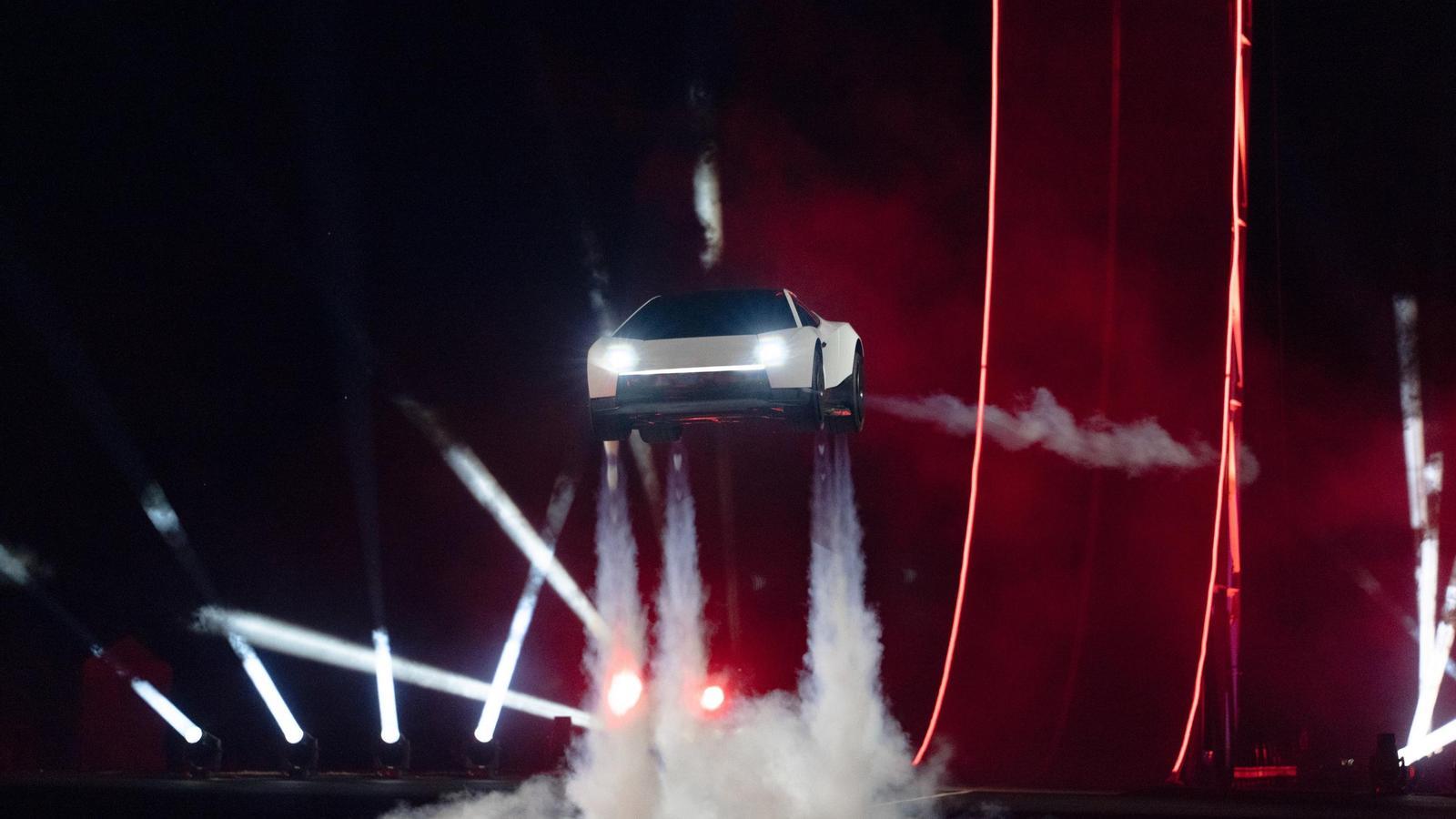
BarcelonaLast week Tesla left the automotive world stunned during the presentation (with nine years of delays) of the Tesla Roadster. A roadster is, by definition, a two-seater, lightweight, and sporty car, a type of vehicle quite far from the car that Tesla presented. But setting aside that point, the passing of days and the evolution of events have made it clear that the presentation of the first flying car has been a great smoke screen intended to divert the public's attention from what is really important: Tesla makes money (less than Musk would like) while SpaceX does not. And Musk's plan to solve this mess is to propose the merger of the two companies into one.
A flashy, but useless invention
The new Tesla Roadster has been a masterful smokescreen, with the goal of attracting the attention of the general public and positioning Tesla at the pinnacle of automotive innovation and improvement on a global scale. Nothing could be further from the truth.
The idea of flying cars may seem very futuristic or dystopian, but for years there have been drones capable of lifting a person, and even more years since helicopters were invented. The great novelty of Tesla's Roadster is its propulsion system developed with SpaceX, an innovation that brings many problems to which it does not know how (or cannot) provide an answer.

Gas thrusters and fans that suck air under the vehicle to generate downforce are a technical solution with little real-world utility. They can launch stones, dust, sand, leaves, or dirt from streets and roads toward other vehicles or pedestrians, or even toward the vehicle itself. At this moment, it is hard to imagine a Tesla Roadster activating its flying system at a school gate and generating an airflow that sends branches, stones, or dirt flying over the heads of children.
On the other hand, to be able to take off and fly a vehicle, one must have a specific pilot's license, as well as pass strict vehicle homologation controls and the relevant authorizations. This administrative and bureaucratic process is not easy to resolve in Europe and the United States; in fact, there are dozens of companies trying to certify and homologate drones capable of transporting people, so far without success.
A possible merger to boost the value of the shares
At this point, we can conclude that Tesla's flying car is, in reality, a propaganda operation that paved the way for Elon Musk's big announcement this past weekend: a possible merger between Tesla and SpaceX.
Stock markets have received Musk's announcement with joy and optimism, with a 5.21% revaluation of Tesla shares during yesterday and a growth forecast that would exceed 20% of the value of last Friday's shares, according to Barclays analysts.
It is worth remembering that the South African-born entrepreneur stated that a merger between Tesla and SpaceX "could be a good idea" and that it would entail "many advantages", while at the same time announcing the creation of a committee to "study the feasibility of a merger". Musk in no case stated that the merger operation had to take place, nor did he present a calendar with actions and evaluation indicators.

In short, we are facing another masterful theatrical stroke by Elon Musk, a genius at promising and convincing investors to increase his personal fortune while, it is worth remembering, the Roadster remains without a definitive launch date with a nine-year delay. In other words, nine years ago a series of clients made a payment to reserve a car that will ultimately not be a roadster or a light convertible coupe, and which has been transforming based on the business interests and stock market fluctuations of Elon Musk's companies.
